
Local service guide
Carpet Cleaning in Milwaukee: Plan and Compare Quotes
Arrange Carpet Cleaning in Milwaukee by requesting written quotes for the same rooms, stairs, stains and furniture responsibilities, then agree on access and drying before booking. Describe any water damage when you first contact the provider. EPA recommends a professional experienced in contaminated-water cleanup when sewage or other contaminated water caused the damage. [3]
Describe the rooms and the problem
Send each provider the same room list, approximate dimensions, stair count and photographs of stains. Identify the carpet material if you know it and share manufacturer care instructions. State whether you want cleaning around furniture or furniture moving, and ask which items you must move yourself.
Describe tracked-in dirt, drink spills, pet accidents and musty smells separately. Include any spot-cleaning products you have used and whether a stain returned after previous treatment. Ask the provider to explain the expected result and any areas they cannot promise to restore. Require your approval before they add treatments or expand the job.
Compare the complete written quote
Request the charging basis, any minimum visit charge, stair charges and furniture responsibilities. Have the provider separate optional stain treatments, odor work and other additions from the cleaning price. If they need an inspection before setting the total, ask when you will receive the final quote and how you will approve it.
Confirm the business name and who will perform the work. Request proof of liability insurance. For a valuable rug or an unfamiliar fiber, ask about experience with that material, request relevant references and discuss the proposed method before authorizing treatment. Treat this as a hiring precaution rather than a promise that a provider can remove every mark.
Ask the provider to explain any tax on the quote using your service address. The Department of Revenue lists Milwaukee city tax for taxable services sourced to a location within the city and notes that Milwaukee extends into multiple counties. Check the county and city lines rather than assuming one combined rate covers every Milwaukee address. [1]
Arrange access and a drying plan
Explain parking restrictions, stairs, elevators and building-entry arrangements before scheduling. Ask where the technician will place equipment and whether they need access to water or electricity. For a condo or rental, coordinate shared-area access with the building manager. Confirm how the provider will protect nearby walls and floors.
Get a drying estimate for your carpet, cleaning method and room conditions. Ask when you can walk on the carpet, return furniture and allow children or pets into the room. Agree on who supplies any recommended drying equipment and whom you should contact if the carpet remains damp beyond the estimate.
EPA recommends indoor relative humidity below 60%, ideally between 30% and 50%, and suggests air conditioning or dehumidifiers when needed. If you plan to clean a basement room, discuss how you will manage moisture during drying. These home-moisture recommendations do not specify the drying time for a cleaning appointment. [3]
Choose water-damage assessment when needed
Tell the provider where the water came from and when the carpet became wet. EPA advises drying water-damaged areas and items within 24–48 hours to help prevent mold growth. That guidance concerns leaks and water damage; ask your cleaner for a separate estimate for routine cleaning. Request assessment of the padding and moisture source if water has soaked the floor covering. [3]
Wisconsin DHS warns that floodwater can contain sewage. Its cleanup guidance lists carpeting, padding and rugs among contaminated items that may require disposal when they cannot be washed and disinfected. EPA also advises that moldy porous carpet may require disposal. Discuss assessment and possible removal before authorizing deodorizing or stain treatment. [2] [3]
For sewage or other contaminated-water damage, EPA recommends a professional with experience cleaning and fixing affected buildings. When hiring someone for mold cleanup, EPA advises checking references and relevant cleanup experience. Ask the provider to explain what they will inspect, what they propose to keep or remove, and how they will address the water problem. [3]
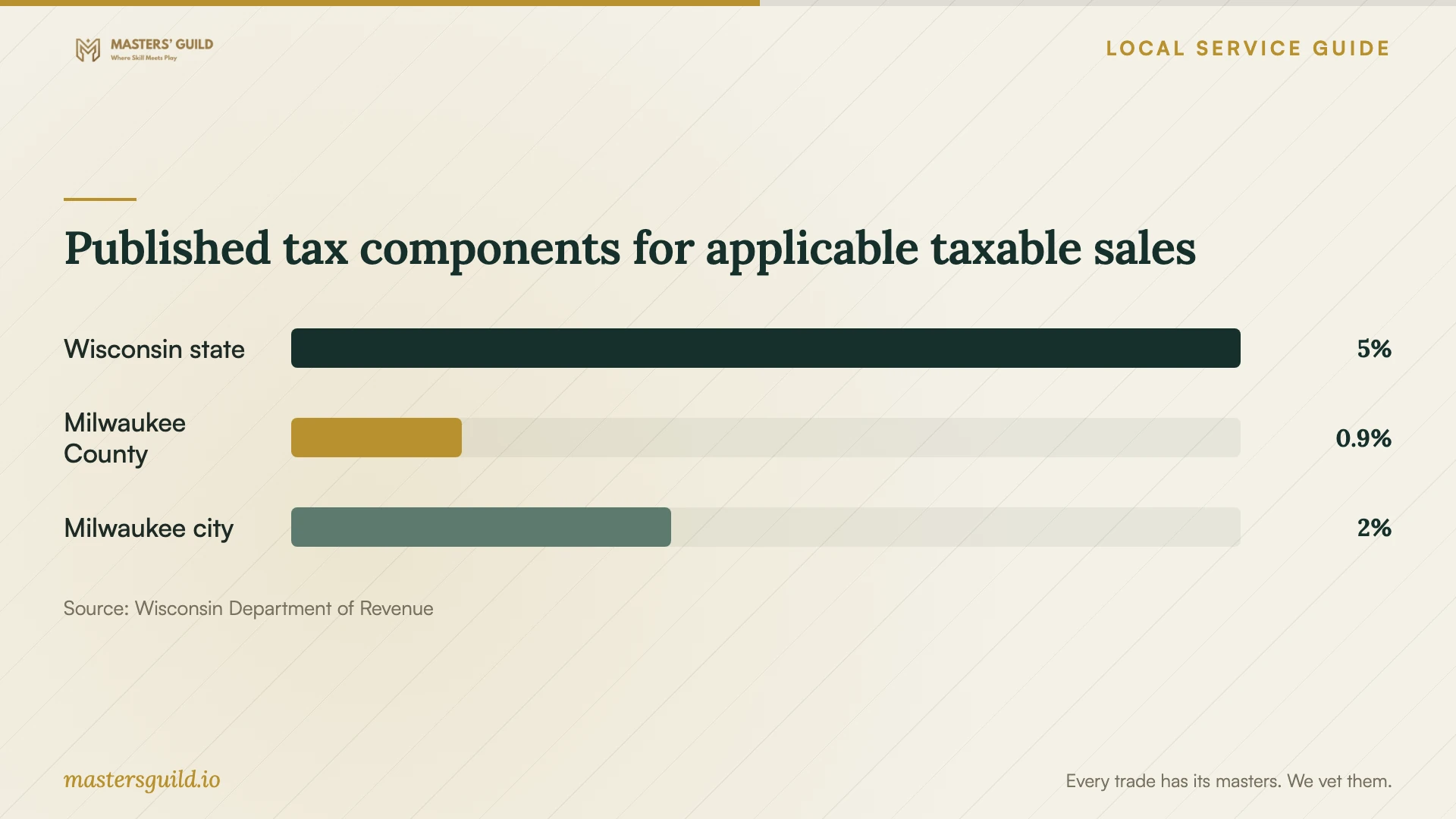
Published tax components for applicable taxable sales
Local details that affect your job
Check the service address for Milwaukee tax
Wisconsin's Department of Revenue states that Milwaukee city tax applies to taxable services sourced to a city location, and it notes that the city spans multiple counties. Give the provider the exact job address. Ask them to identify the county, explain whether your charges are taxable and itemize any applicable tax before you approve the total. [1]
Use Wisconsin guidance for contaminated carpet
Wisconsin DHS includes carpet, padding and rugs in its list of contaminated materials that may need removal if they cannot be washed and disinfected. For a Milwaukee home with sewage or floodwater exposure, disclose that history and ask for a salvage or removal assessment before booking ordinary cleaning. DHS directs residents to their local health department for cleanup questions. This is statewide guidance applicable here, rather than evidence of a particular neighborhood's flood risk. [2]
Match the booking to the carpet's condition
| Situation | Next step | Question for the provider |
|---|---|---|
| Routine soil or isolated spills | Request a cleaning quote for the listed areas. | Which preparation and spot treatments does the total include? |
| Valuable rug or uncertain fiber | Ask about material-specific experience and references. | What method do you propose for this material? |
| Carpet wet after a leak | Arrange assessment and drying; EPA advises drying water-damaged items within 24–48 hours. | Will you assess the padding and help identify the moisture source? |
| Sewage or floodwater exposure | Seek contaminated-water cleanup experience and discuss whether materials can be washed and disinfected. | What assessment will you make before proposing salvage or removal? |
| Moldy carpet | Seek assessment of the moisture problem and possible disposal of porous material. | What affected materials will you inspect, and how will you address the water problem? |
Your hiring checklist
- Send matching room dimensions, stair counts and stain photographs to each provider.
- Disclose previous cleaning products, leaks and any sewage or floodwater exposure.
- Request a written scope and total with optional treatments separated.
- Confirm the business name, technician arrangements and proof of liability insurance.
- Resolve parking, building access, equipment needs and furniture responsibilities.
- Agree on drying instructions, room-use restrictions and a follow-up contact.
- Review the completed work with the technician and retain the final invoice.
Frequently Asked Questions
How should I set a carpet-cleaning budget?
Obtain written quotes for your measured rooms and stairs. Ask for the charging basis and any minimum charge, then compare furniture moving, stain treatments and the final total. Require approval for changes after inspection so you can decide before work begins.
Should my quote include Milwaukee sales tax?
Ask the provider to explain whether your charges are taxable and which rates apply at your service address. The Department of Revenue publishes jurisdiction-specific rates for taxable sales; its rate page does not determine carpet-cleaning taxability. [1]
How long should I keep the room out of use?
Ask the provider for a drying estimate and instructions for walking on the carpet, returning furniture and allowing children or pets back. Explain any scheduling constraint before booking, and arrange a follow-up contact if drying takes longer than the estimate.
Can a provider save carpet after sewage or flooding?
Seek an assessment from a professional experienced in contaminated-water damage. Wisconsin DHS says contaminated carpet and padding may require disposal if they cannot be washed and disinfected. Ask the provider to explain their assessment before accepting a salvage proposal. [2] [3]
Sources and scope
This guide combines the sources below with practical planning guidance. Figures apply to the stated geography and period; request a written quote for your property.