
Local service guide
Bathroom Remodeling in Milwaukee: Hiring and Planning
For Bathroom Remodeling in Milwaukee, prepare a written scope and request itemized bids before choosing a contractor. Resolve permit responsibility and demolition plans before signing. For contractor-obtained building permits on one- and two-family dwellings, Wisconsin requires contractor certification plus an individual qualifier credential. For demolition in a pre-1978 home, check the renovator’s and company’s lead-safe certifications. [1] [2]
Define the bathroom you want to rebuild
Write down which fixtures and surfaces you want to retain, remove, or replace. Include the toilet, tub, vanity, shower enclosure, flooring, and fixture locations. Give each bidder photos and the same priorities, such as easier shower entry, additional storage, or a handheld shower. Ask for separate prices for alternatives you have yet to choose.
For a shower rebuild, ask the contractor to name the waterproofing system, substrate, and drain connection they propose. Discuss corners, penetrations, and the installation instructions they will follow. Request photos before tile covers the work and ask what checks they propose before completing the enclosure.
Choose finish products before comparing final proposals, or ask bidders to use matching allowances. Record what each allowance covers and where the contractor includes installation. Ask who purchases the products, handles delivery, and resolves damaged or incorrect orders.
Separate contractor certification from the qualifier credential
Wisconsin DSPS describes two credentials for obtaining building permits on one- and two-family dwellings: a Dwelling Contractor or Dwelling Contractor Restricted certification, and a Dwelling Contractor Qualifier credential held by an individual. The permit applicant must hold the qualifier credential or employ someone who does. Ask the remodeler to identify the contractor certification and the individual qualifier, then check their status through the public LicensE lookup described by DSPS. [2]
DSPS describes an exception for an owner who resides or will reside in the dwelling and applies for a building permit to work on it. Before agreeing to apply yourself, discuss why the contractor proposes that arrangement. Put responsibility for inspections and correction work into the contract. [2]
Confirm permit requirements with the permitting authority serving your property using your written scope. Ask about fixture relocation, wiring, ventilation, and structural changes. Record who will submit applications, pay fees, schedule inspections, and obtain closeout documents. Request subcontractor names and proof of insurance before work begins.
Screen for lead-safe demolition before signing
Wisconsin DHS says renovation in pre-1978 properties can disturb lead-based paint and create harmful dust. Its hiring guidance requires a certified Lead-Safe Renovator when the project involves demolition or window replacement, or disturbs more than 6 square feet of interior painted surface per room or more than 20 square feet outside. Treat bathroom demolition as a separate screening question from the painted-surface thresholds. [1]
The certified lead-safe renovator must work for a certified lead company. DHS directs homeowners to check its current company list before signing or paying. Ask for copies of both certifications and include containment, lead-safe practices, cleanup, and cleaning verification in the proposal. [1]
Before work, the contractor must give you the Renovate Right pamphlet and obtain your acknowledgment. DHS also requires containment and lead-safe work practices during renovation, followed by thorough cleanup and cleaning verification. Keep the certifications, acknowledgment, work summary, and verification records that DHS recommends retaining. [1]
Discuss how you will reach other rooms during demolition and where the crew will carry debris. Agree on access routes and material storage. Ask the contractor to explain how the containment plan fits those arrangements before the crew arrives.
Compare complete bids and arrange bathroom downtime
Request current, itemized bids covering demolition, disposal, plumbing, electrical work, ventilation, waterproofing, tile, fixtures, painting, and cleanup. Have each contractor identify exclusions and items you must supply. Compare optional layout changes as separate line items so you can choose a scope within your budget.
Agree on a written change-order process. Ask how the contractor will document hidden damage, price repairs, and obtain your approval before proceeding. Request a schedule tied to deliveries and any required inspections. If this is your only bathroom, arrange an alternative and ask for anticipated loss-of-use dates in writing.
Before final payment, walk through the room with the contractor. Operate fixtures, inspect finishes, and record remaining work. Collect warranties, product information, photos of concealed work, and closeout records for permits obtained. Agree on completion dates for unresolved items.
Choose a showerhead using flow and performance criteria
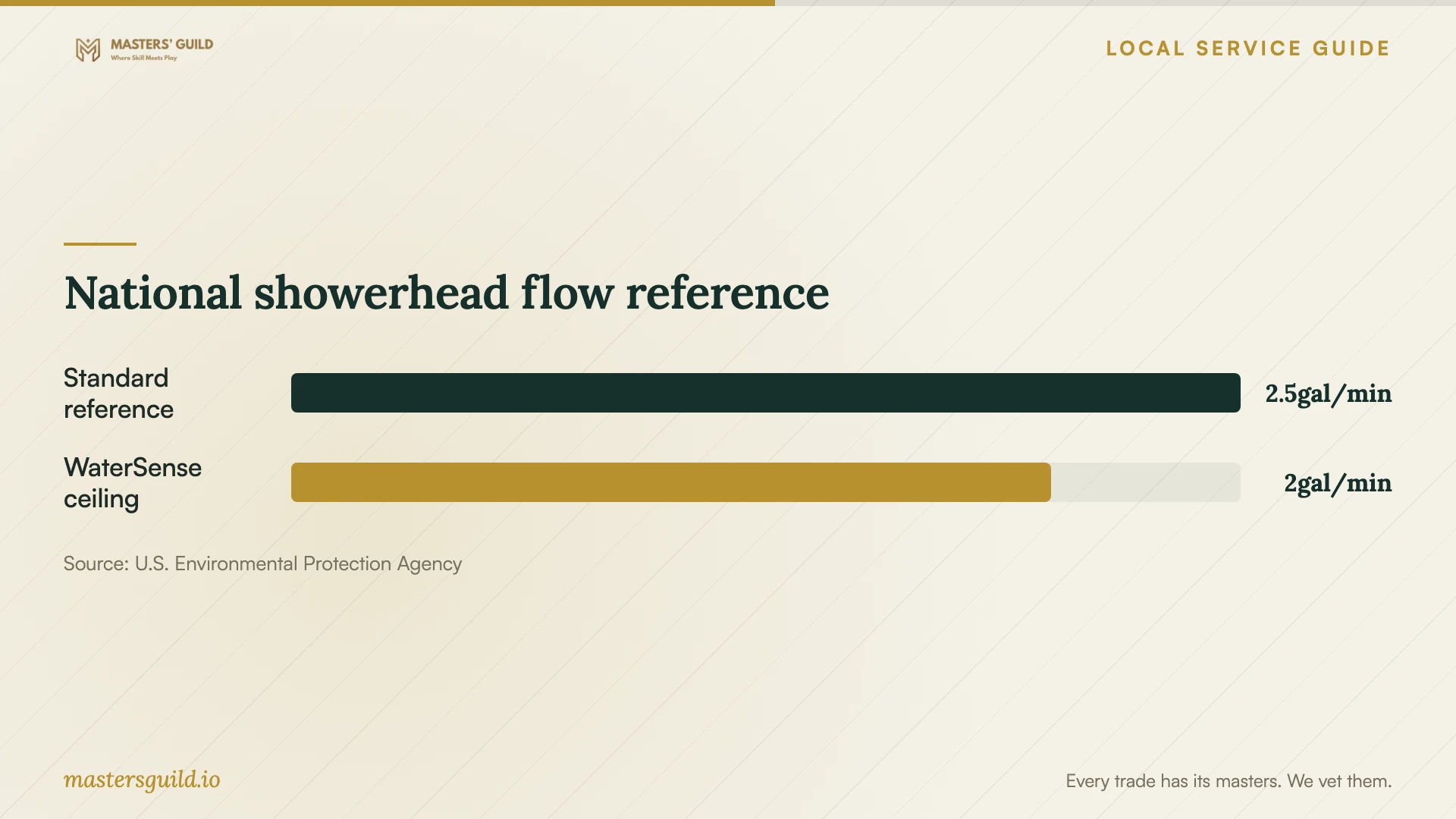
EPA identifies 2.5 gallons per minute as the standard showerhead flow rate. WaterSense showerheads must use no more than 2.0 gallons per minute and meet independently certified efficiency and performance criteria. EPA includes spray force, spray coverage, and pressure compensation in its performance requirements. [3]
Ask for the exact showerhead model, its stated flow rate, and confirmation of the WaterSense label. Discuss compatibility with your selected shower system. Use the national comparison below to evaluate specifications; do not use it as a forecast of your household consumption or water bill. [3]
National showerhead flow reference
Local details that affect your job
Wisconsin permit-applicant credentials apply here
For a Milwaukee one- or two-family dwelling, screen the contractor proposing to obtain a building permit under Wisconsin DSPS guidance. Request the Dwelling Contractor or restricted certification and the separate Dwelling Contractor Qualifier credential, which an individual holds. The applicant must hold that qualifier credential or employ its holder. Check status through DSPS’s public LicensE lookup and resolve any proposed resident-owner application before signing. [2]
Wisconsin lead-safe rules change demolition hiring
If your home predates 1978 and the bathroom work includes demolition, Wisconsin DHS directs you to hire a certified Lead-Safe Renovator working for a certified lead company. Check the individual certification and the current company list before signing or paying. Ask the bidder to specify containment and cleaning verification so you can review those tasks as part of the demolition scope. [1]
Questions to resolve before choosing a remodeler
| Your situation | Question to resolve | Next step |
|---|---|---|
| You want a cosmetic refresh | Which surfaces and fixtures will the crew remove or disturb? | Give bidders the same written scope and product selections. |
| Your pre-1978 bathroom needs demolition | Who is the certified lead-safe renovator, and which certified company employs them? | Check both certifications and review containment and cleaning verification. |
| A contractor will obtain a one- or two-family building permit | Which contractor certification and separate individual qualifier credential will the applicant use? | Check DSPS status; the applicant must hold the qualifier credential or employ its holder. |
| You are selecting a showerhead | Does the exact model carry the WaterSense label? | Review its flow specification and certified spray-performance criteria. |
Your hiring checklist
- 1. Prepare photos and list the fixtures, surfaces, and locations you want to retain or change.
- 2. Record the home’s construction year and discuss lead-safe demolition screening with bidders.
- 3. Confirm permit requirements with the authority serving your property and assign application and inspection responsibilities.
- 4. Request contractor and individual qualifier credential details, subcontractor names, and insurance documentation.
- 5. Compare itemized proposals using the same waterproofing scope, fixture selections, allowances, and exclusions.
- 6. Agree on written change orders, delivery milestones, access arrangements, and temporary bathroom use.
- 7. Review remaining work and collect product, warranty, renovation, and permit closeout records before final payment.
Frequently Asked Questions
How much should I budget for the remodel?
Request current, itemized bids for your bathroom and selections. Ask contractors to separate the base scope, optional layout changes, allowances, and exclusions. Decide which features you can change if proposals exceed your budget, and agree on how the contractor will price unexpected repairs.
Does a small bathroom demolition need a lead-safe contractor?
Wisconsin DHS lists demolition as a trigger for a certified Lead-Safe Renovator in pre-1978 properties. The renovator must work for a certified lead company. DHS lists the interior painted-surface threshold of more than 6 square feet per room separately; do not treat a small room as a demolition exemption. [1]
Can I obtain the building permit myself?
DSPS describes an exception for an owner who resides or will reside in the dwelling and applies for a building permit to work on it. For contractor applicants, its guidance requires contractor certification plus a separate individual qualifier credential held by the applicant or an employee. Confirm your arrangement with the permitting authority and document inspection responsibility. [2]
How can I evaluate a water-efficient showerhead?
Look for the exact model’s WaterSense certification. EPA requires a maximum flow of 2.0 gallons per minute and performance criteria covering spray force, coverage, and pressure compensation. Ask the installer about compatibility with your chosen shower system before ordering. [3]
Sources and scope
This guide combines the sources below with practical planning guidance. Figures apply to the stated geography and period; request a written quote for your property.