
Local service guide
Mold Removal in Miami: Hiring and Cleanup Planning
Arrange Mold Removal in Miami by asking the contractor to identify the moisture source, define which materials need cleaning or removal, and explain how you will confirm completion. Check Florida mold-related credentials and ask who will perform any assessment. Consider an experienced professional for hidden growth, suspected HVAC contamination, or sewage-related damage. EPA says homeowners can handle many patches smaller than about 10 square feet, subject to the water damage and health concerns involved. [1] [2] [3]
Decide who should handle the cleanup
Measure the visible patch without opening walls or pulling off wallpaper. EPA describes many areas smaller than about 10 square feet as suitable for homeowner cleanup. Extensive water damage, contaminated water, and suspected growth inside the air-conditioning system require a different response. For health concerns, consult a health professional before starting. [1]
For a small, accessible hard-surface patch, EPA recommends detergent and water followed by complete drying. Wear gloves, goggles, and a properly fitted N-95 respirator to limit exposure. Moldy porous materials such as carpet and ceiling tiles may need disposal. Avoid painting or caulking over growth. [1]
Tell the contractor about musty odors, earlier leaks, and any areas you cannot inspect. EPA recommends considering an experienced professional for suspected hidden mold because disturbing affected materials can release spores. Ask the contractor to explain any proposed opening before you authorize it. [1]
Request a written scope before comparing prices
Ask each bidder to describe the same rooms and materials. Request separate line items for investigation, cleanup, disposal, moisture-source repair, and rebuilding. Ask who will move belongings, protect adjacent rooms, and handle any discoveries behind finishes. Compare the included work and exclusions before comparing totals.
Name the person responsible for repairing the leak or controlling condensation. EPA says you must fix the water or moisture problem before considering remediation finished. Florida Health identifies roof and plumbing leaks, air-conditioner drain pans, condensation, and warm outdoor air among possible moisture sources. Ask the contractor which explanation fits the evidence in your home. [1] [3]
Before accepting a treatment based on killing mold, ask how the contractor will remove affected growth and materials. EPA does not recommend bleach as routine mold-cleanup practice and notes that dead mold can still cause allergic reactions. Florida Health advises against ozone generators for an existing indoor mold problem. [1] [3]
Coordinate air-conditioning work and drying
If you know or suspect that the HVAC system contains mold, EPA advises against running it because it could spread mold throughout the building. Florida Health acknowledges the discomfort of shutting down air conditioning in Florida weather and says the system should be off during cleaning or mold removal. Ask the remediator and HVAC professional to coordinate shutdown, drying, and restart. [1] [3]
Have the professional check relevant drain pans, drain lines, and air-handling components. Florida Health recommends examining the air-conditioning system for problems if you need a dehumidifier alongside central air conditioning to keep relative humidity below 60 percent. EPA recommends indoor humidity below 60 percent, ideally between 30 and 50 percent. [1] [3]
After a new leak, arrange drying without waiting for a mold-species result. EPA recommends drying water-damaged areas and items within 24 to 48 hours to help prevent growth. Ask for a drying plan and agree on what documentation you will receive before the contractor closes repaired surfaces. [1]
Agree on completion and follow-up
Use EPA's completion guidance when discussing handover: fix the moisture problem, remove visible mold, check for moldy odors, and revisit the affected areas for signs of water damage or renewed growth. Ask the contractor to document what they removed, cleaned, dried, and repaired. Arrange a follow-up that lets you inspect the area after normal use resumes. [1]
If someone proposes sampling, ask for its purpose and how they will interpret the result. EPA says visible growth usually makes sampling unnecessary and that no federal mold or mold-spore limits exist. Florida Health does not recommend testing to determine whether a home has a mold problem or identify its type. EPA notes that professional surface sampling may help evaluate cleanup. [1] [3]
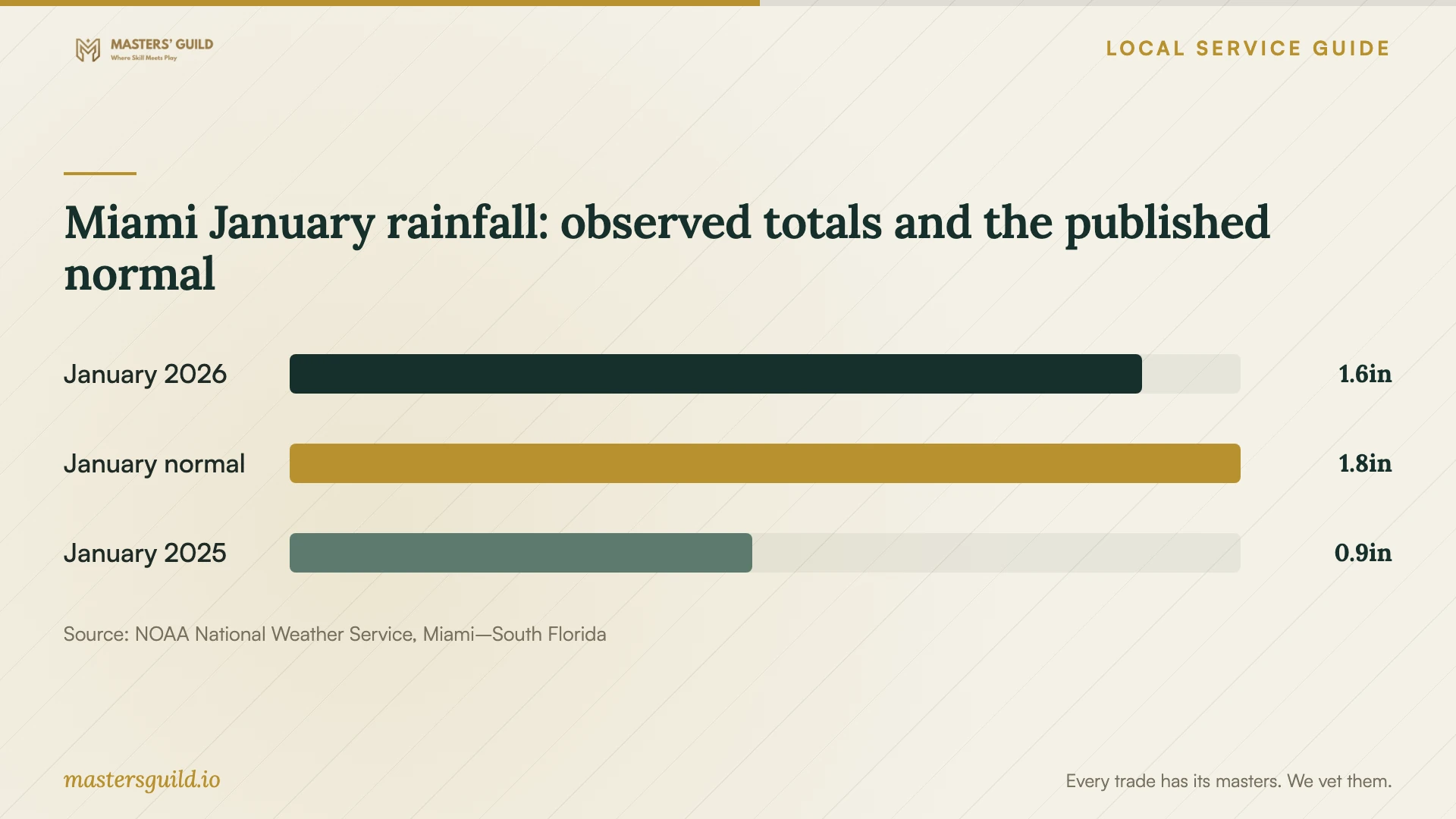
Miami January rainfall: observed totals and the published normal
Local details that affect your job
Florida credentials: check the role you are hiring
Florida Health identifies DBPR as the agency responsible for licensing mold assessors and remediators. For a Miami job, ask who will assess the problem and who will perform remediation, then check each person's applicable credential with DBPR. Ask for evidence of mold-cleanup experience and references as well; EPA recommends both when choosing a contractor. [1] [3]
Florida restrictions on bundled assessment and remediation
Florida's 2026 statute generally prohibits an assessor or the assessor's company from offering remediation on a structure they assessed within the preceding 12 months. It also restricts a remediator from assessing a structure they remediated during that period. The statute includes an exception for specified certified Division I contractors. Before accepting a bundled offer in Miami, ask about company ownership and the exception the provider claims; request that explanation in writing. [2]
Florida help with mold concerns
Florida Health offers mold and indoor-air guidance through local county health departments and its Indoor Air Program at 800-543-8279. Miami homeowners can use that route for health and cleanup questions. The department states that it does not provide mold testing, so arrange any justified professional assessment separately. [3]
Choose the next step for the problem you can observe
| Situation | Next step | What to clarify |
|---|---|---|
| Small hard-surface patch under about 10 square feet | Consider homeowner cleanup if water damage and health concerns allow | Identify the moisture source and dry the cleaned surface |
| Musty odor or suspected growth behind finishes | Consider an experienced professional before disturbing materials | Agree on inspection openings and repair responsibilities |
| Known or suspected HVAC contamination | Avoid running the system and arrange professional advice | Coordinate cleaning, moisture control, and restart |
| Sewage or other contaminated-water damage | Hire a professional experienced with contaminated-water cleanup | Ask how affected materials and disposal will be handled |
| Visible mold with an offered testing package | Ask what the sampling will change | Visible growth usually does not require sampling |
Your hiring checklist
- Photograph visible growth and water damage without disturbing materials.
- Write down leak dates, affected rooms, odors, and earlier repairs.
- Ask for the assessor's and remediator's names and relevant credentials.
- Ask about ownership links between the assessment and cleanup companies.
- Request a written scope with exclusions, repair responsibilities, and change-order terms.
- Agree on access, belongings, HVAC coordination, and any temporary accommodation before work starts.
- Request completion records and schedule a follow-up inspection.
Frequently Asked Questions
How much should I budget for cleanup?
Request an itemized quote after the provider examines the affected area. These sources do not establish Miami remediation prices. Ask bidders to price the same scope and separate cleanup from moisture repairs and rebuilding.
Can one company assess and remove the mold?
Florida restricts assessment and remediation on the same structure within a 12-month period, including work by the assessor's or remediator's company. The statute includes a specified Division I contractor exception. Ask the provider to explain how its proposed arrangement complies. [2]
Do I need to identify black mold before arranging cleanup?
Florida Health says homeowners do not need to identify the mold type to address a home mold problem. It recommends prompt removal of indoor growth regardless of type. Concentrate the inspection on affected materials and the moisture source. [3]
Can I stay home during remediation?
Ask the contractor which rooms you can use, how you will access essential facilities, and whether the work requires temporary accommodation. Discuss personal health concerns with a health professional before cleanup. EPA advises that consultation rather than offering a universal occupancy rule. [1]
Sources and scope
This guide combines the sources below with practical planning guidance. Figures apply to the stated geography and period; request a written quote for your property.