
Local service guide
Basement Remodeling in Miami: Plan Before You Hire
For Basement Remodeling in Miami, hire for a feasibility assessment before committing to a finished room. Ask the contractor and designer to review the existing space, intended use, water-entry history and floor elevation. Confirm your permit jurisdiction and property’s flood zone before approving plans: municipalities issue their own permits, and Miami-Dade identifies near-surface groundwater and flooding as regional concerns. [2] [3]
Define the space and proposed use
Tell each bidder whether you want storage, a recreation room, a bathroom or sleeping accommodation. Describe whether you already have an enclosed lower level or want to excavate beneath the house. Request a site assessment matched to that proposal, rather than accepting a finish package based on square footage alone.
Ask the designer to document floor height relative to surrounding ground, ceiling clearance, access, proposed exits and existing equipment. For a bedroom or separate accommodation, ask the permitting authority to confirm whether the proposed use is permissible before you order a layout. Do not treat an existing enclosure as proof that the authority approved residential occupancy.
Miami-Dade says the county lies close to sea level and its underground water supply sits just below the ground surface. Major rain events can leave water with nowhere to drain in some areas. Use that regional guidance to request a property-specific water and elevation assessment; it does not establish conditions beneath your house. [2]
Resolve flood and water questions before finishes
Look up your address through the county’s flood-map resource and confirm the official designation through the Flood Zone Hotline at 305-372-6466 or your insurance agent. The county also offers information about past floods, king tides and hazards outside the FEMA flood maps. Ask about those issues if you have seen water enter the space despite a lower-risk map designation. [2]
Gather photographs of water marks, previous repairs and entry points, plus any records of pumping or drainage work. Ask the assessor to distinguish rain entry, plumbing leaks and possible groundwater before recommending a remedy. Request a written explanation of the proposed repair and how the contractor will check its performance before enclosing walls.
An elevation certificate records how high the house sits relative to its flood zone. Miami-Dade says it requires certificates for new construction and substantial improvements. Before commissioning one, look for an existing record and ask the City’s reviewer which documents your proposal needs. [1]
Confirm the permit authority and review scope
Use the municipality that governs the property to identify your permitting office. Miami-Dade’s application guidance states that each municipality has its own Building Official who issues permits within that city’s limits. Its county application process applies to unincorporated properties with folios starting with 30. For a property within the City of Miami, confirm the project with the City’s permitting authority. [3]
The county guidance identifies wall removal and electrical or plumbing alterations as interior work requiring permits. Treat those examples as a reason to discuss the full remodel scope with your municipal reviewer. Ask which building and trade permits, drawings, floodplain reviews and inspections apply to your address. [3]
Ask the contractor to name the person responsible for drawings, applications, corrections and inspections in the contract. Have the contractor identify the proposed trade subcontractors and supply license and insurance documents for your review. Request a schedule that separates design, authority review, construction and closeout, with dependencies stated beside each stage.
Compare quotes without inventing a local price
Request itemized quotes after bidders inspect the same space and receive the same proposed use. Separate investigation and design from demolition, structural work, water management, electrical work, plumbing, ventilation and finishes. Ask bidders to identify exclusions, allowances and the conditions that would require a written change order.
For a bathroom proposal, ask how the contractor will establish the waste-pipe route and elevation before pricing the installation. For water-control work, request the proposed discharge destination, maintenance duties and access to equipment. Ask who will confirm that the design and discharge arrangement meet applicable requirements.
Choose a staged assessment if bidders cannot explain the existing conditions. Give each bidder the same request: price the investigation, describe the deliverable and state what you can decide from it. Approve the next phase after reviewing those findings, rather than choosing finishes while feasibility remains unresolved.
Plan weather exposure and project closeout
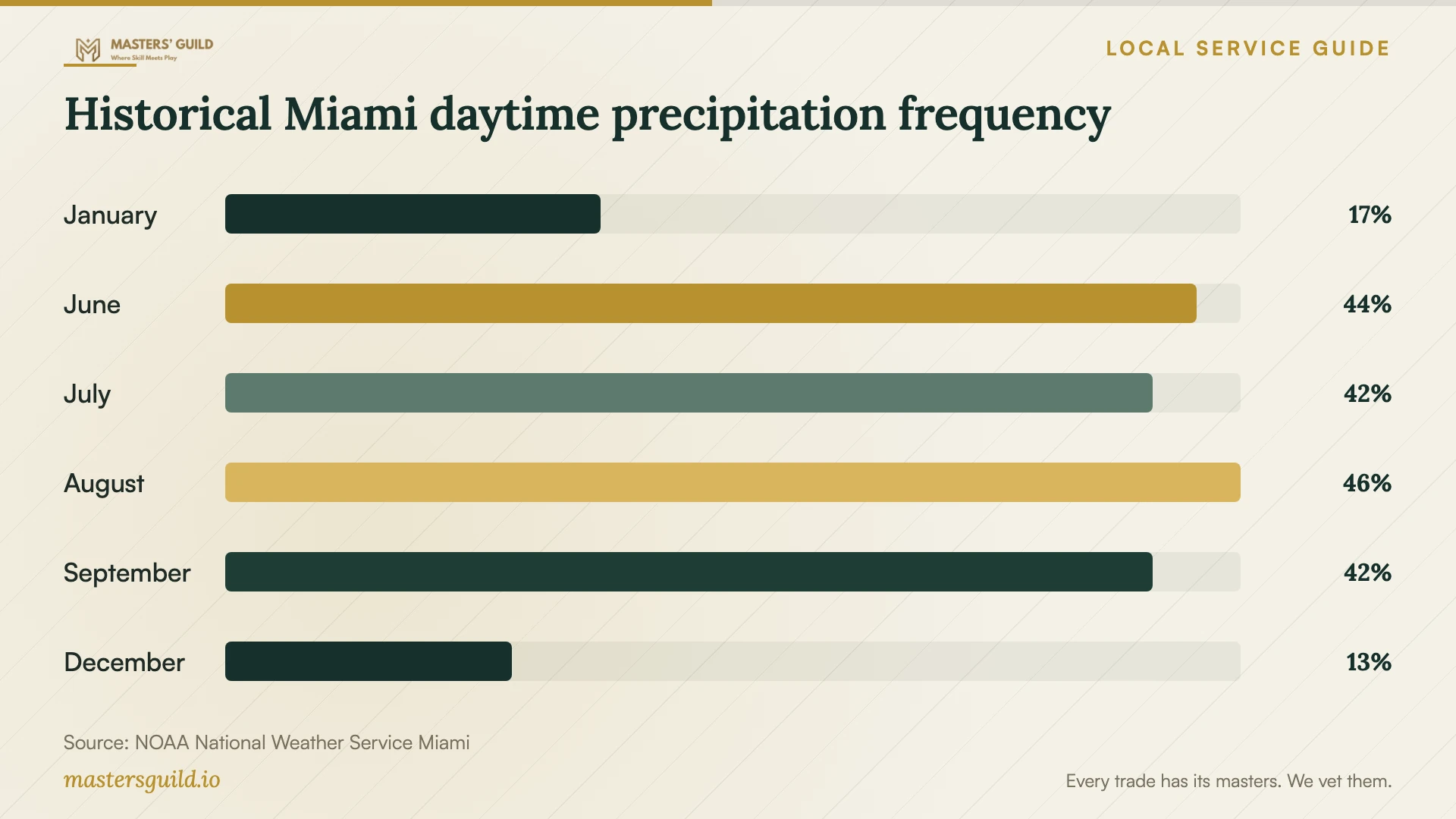
For exterior drainage work or excavation, ask the contractor how they will protect openings and unfinished work during rain. The historical NWS chart compares Miami daytime precipitation frequencies from 1985–1997. Use it as seasonal background for that conversation; choose work dates using current forecasts and the contractor’s protection plan. [4]
Include inspection records and closeout documents in the payment agreement. Miami-Dade’s homeowner guidance recommends obtaining proof of approved final inspections, or an applicable completion or occupancy certificate, before final payment. It also advises owners to obtain lien-release documents. Confirm the inspection record and documents appropriate to your municipal project. [3]
Before handover, walk through the space with the contractor. Locate equipment access panels, demonstrate controls and record unfinished items. Collect warranties, maintenance instructions and photographs of concealed work. Ask the contractor to explain whom you should contact if you notice water after completion.
Historical Miami daytime precipitation frequency
Local details that affect your job
Avoid the wrong permit application route
A Miami mailing address does not determine whether the county processes your permit. Miami-Dade limits its application process to unincorporated properties with folios beginning with 30 and directs owners to confirm their municipality through the Property Appraiser. Establish that jurisdiction before paying someone to prepare an application; municipal Building Officials issue permits within their own city limits. [3]
Request floodplain review before a substantial remodel
Miami-Dade’s elevation guidance says a house in a flood zone that sits below the required elevation may need raising when damage or improvements exceed 50% of its market value. Ask the City’s reviewer how substantial-improvement rules, valuation and elevation requirements apply to your proposed scope. Obtain that assessment before committing to a large finish contract; do not calculate approval eligibility from your purchase price alone. [1]
Ask about flooding beyond the map
The county’s Flood Zone Hotline, 305-372-6466, provides information about past floods, king tide flooding and sea-level vulnerability as well as official flood designations. Ask about address-specific hazards when planning a lower-level conversion, and share the response with your designer. [2]
Choose the next step for your existing space
| Situation | Next step | Ask before committing |
|---|---|---|
| Water-entry history remains unexplained | Commission an assessment before finishes | What evidence supports the proposed repair, and how will you check it? |
| Flood zone or floor elevation remains uncertain | Confirm the designation and discuss elevation documentation | Does the reviewer need an existing certificate or a new survey? |
| Property lies within City of Miami limits | Confirm requirements with the municipal permitting authority | Which permits and reviews apply to the proposed use? |
| You propose a major improvement to a low-elevation house in a flood zone | Request substantial-improvement review before committing to construction | How will the authority assess project value and elevation compliance? |
| Contractor requests final payment | Review final inspection approvals and appropriate lien documents | Can you provide the closeout records for this project? |
Your hiring checklist
- Write down the intended use and whether the project involves an existing room or new excavation.
- Confirm the governing municipality before commissioning permit documents.
- Gather flood-zone information, any elevation certificate and records of previous water entry.
- Request a written feasibility and water-management assessment before selecting finishes.
- Give bidders the same scope and ask for itemized prices, exclusions and allowances.
- Review contractor and trade documents and assign permit responsibilities in writing.
- Agree on weather protection, inspection milestones and written change-order approval.
- Collect closeout records, maintenance instructions and appropriate lien releases before final payment.
Frequently Asked Questions
Can I turn the space into a bedroom or rental unit?
Ask the municipal permitting authority to assess the proposed use before paying for finish plans. Bring the existing layout and elevation information, and ask your designer to address access, exits and flood constraints. Do not assume that an existing lower-level room has approval for sleeping accommodation.
Do I use Miami-Dade County’s permit portal?
The county’s application guidance applies to unincorporated properties with folios beginning with 30. Municipalities issue permits within their own limits. Confirm the municipality governing your property before choosing an application route. [3]
How much should I budget?
Start with an itemized assessment and design quote, then obtain construction bids for the confirmed scope. Ask each bidder to separate water management, structural work, trade work and finishes. Require written prices or allowances for unresolved conditions before signing.
Where can I find an elevation certificate?
Miami-Dade says owners of homes built after 1995 may find a certificate through its search application. For an older home without substantial improvements or damage, ask the prior owner or discuss hiring a surveyor. Confirm that your reviewer can use the document you obtain. [1]
Sources and scope
This guide combines the sources below with practical planning guidance. Figures apply to the stated geography and period; request a written quote for your property.