
Local service guide
Tree services in Mesa, AZ: Pruning or Removal?
Arrange tree services in Mesa by asking a certified arborist to identify the tree, assess your concern and recommend a written scope before you approve pruning or removal. For a browning canopy, include an irrigation review: University of Arizona Extension identifies leaf browning and branch dieback as possible heat or drought symptoms. For pruning, ask which branches the crew will remove and why. Chandler’s regional desert-tree guidance recommends certified arborists and warns homeowners against pruning near utility lines. [1] [3]
Choose an assessment, pruning or removal
Tell the arborist what you need to resolve: a damaged limb, branches over a walkway, declining foliage or concern about the whole tree. Chandler identifies dead or damaged branches, rubbing limbs, visibility problems and stability as legitimate pruning objectives. Ask the arborist to connect each proposed cut to your concern. [3]
If the arborist recommends removal, ask for the reason in writing and whether retaining the tree with targeted work is an option. Request an explanation of what the assessment established and what remains uncertain. For a tree you want to keep, ask for a care plan and a date to reassess it.
For browning or sparse foliage, describe recent watering changes before discussing canopy reduction. University of Arizona Extension lists wilting, leaf drop, branch dieback and sunscald among heat and drought symptoms. It also notes that recovery can take time and that effects can appear in subsequent years. [1]
Set a species-specific pruning date
Ask the arborist to identify your tree before booking routine pruning. Nearby Chandler recommends May to early June for native trees, January for non-native deciduous trees and conifers, March for non-native evergreens, and June for palms. It advises pruning citrus for hazards or health. These are regional desert-landscape recommendations, not Mesa regulations or a prescription for every tree. [3]
Discuss current heat and water stress alongside that calendar. University of Arizona Extension recommends avoiding or minimizing pruning during drought and excessive heat because removing shade can expose branches to sunscald and removing foliage reduces photosynthesis. Ask the arborist to distinguish necessary damaged-limb work from elective canopy shaping. [1]
Review watering before cutting back shade
Show the arborist where irrigation reaches the root zone, especially if you have removed turf or stopped watering a larger landscape area. University of Arizona Extension advises evaluating root locations when moving from whole-landscape watering to irrigation for individual trees. For established trees, it recommends applying water farther from the trunk, including outside the canopy drip line; palms need a different placement. [1]
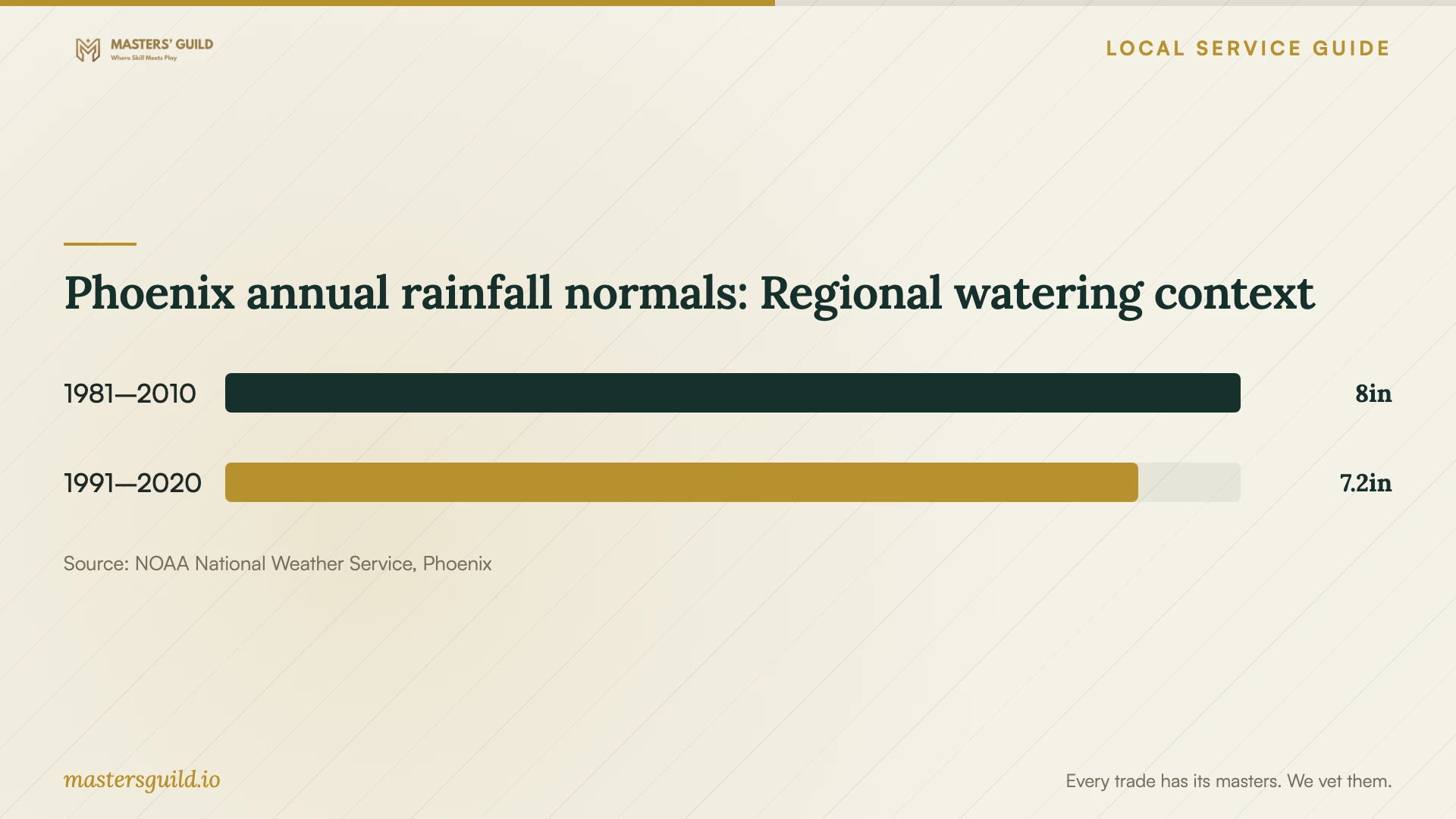
The rainfall chart provides regional context for that conversation. NWS reports a Phoenix annual rainfall normal of 7.22 inches for 1991–2020, compared with 8.03 inches for 1981–2010. These Phoenix station averages do not establish rainfall at your Mesa property or tell you when to water. Extension recommends checking moisture depth in the root zone before deciding whether rain has replaced irrigation. [1] [2]
Compare quotes for the same work
Ask each bidder to name the tree and describe the branches or whole-tree work included. For pruning, request the purpose, proposed cuts and intended amount of foliage removal. Chandler advises preserving natural form, avoiding topping and removing no more than one quarter of a mature tree’s leaves in a growing season. Treat that limit as a ceiling rather than a target. [3]
For removal, request separate descriptions of dismantling, hauling, stump grinding and final cleanup. Ask how the crew will protect gates, paving, irrigation and nearby structures. Have the bidder identify equipment access and any areas you must clear. Compare the total for matching work rather than choosing from prices with different exclusions.
Ask who will assess the tree and who will lead the crew. Request evidence of arborist certification and current insurance documents, then confirm the details before accepting the quote. Ask the provider to identify any permissions or utility coordination your particular site needs; do not assume a quote includes them.
Prepare the property and keep access safe
Send photos of the whole tree, the concern and the route from the street to the work area. Include gate measurements and point out irrigation lines or fixtures you know about. Agree on vehicle placement, cleanup boundaries and where the crew will leave wood if you want to retain it.
Leave climbing and ladder pruning to the hired crew. Chandler’s homeowner guidance advises against climbing trees or using ladders to prune and says not to prune trees touching or near utility lines. If branches approach a line, contact the utility before arranging cutting and ask the provider how it will coordinate the work. [3]
Phoenix annual rainfall normals: Regional watering context
Local details that affect your job
Desert species change the booking decision
Use Chandler’s nearby municipal guidance to question a blanket autumn pruning recommendation. Its calendar places native-tree pruning in May to early June and conifer pruning in January, while citrus pruning addresses hazards or health. For your Mesa tree, ask the arborist to identify the species and explain any departure from that regional guidance before you book. [3]
Turf removal changes the assessment
If you stopped lawn or flood irrigation, include that change in the job brief. University of Arizona Extension says transitions from broad landscape watering require attention to where tree roots receive water. Ask the arborist to review root-zone coverage before proposing removal for declining foliage, and request a watering plan suited to the tree and soil. [1]
Choose the next step for your tree
| Your concern | Next step | Question to ask |
|---|---|---|
| Browning or thinning foliage | Request a tree-health and irrigation assessment; Extension identifies these as possible stress symptoms. | Could heat, drought or changed watering explain the decline? |
| Dead, damaged or rubbing branches | Request targeted pruning; Chandler lists these as reasons to prune. | Which branches will you remove, and what will you retain? |
| Routine shaping | Discuss species-specific timing and selective cuts; Chandler advises against topping. | How much foliage will you remove, and why now? |
| Branches near a utility line | Contact the utility before arranging cutting; Chandler warns homeowners against pruning near lines. | Who must coordinate or perform this work? |
| Proposed whole-tree removal | Request a written rationale and a complete removal scope. | What supports removal, and does the quote include the stump? |
Your hiring checklist
- Photograph the whole tree, damaged areas and equipment access.
- Describe your goal and any recent watering or landscape changes.
- Ask the arborist to identify the species and explain the recommended timing.
- Request the assessor’s credentials and the provider’s insurance documents.
- Get a written scope covering cuts, hauling, stump work and cleanup.
- Flag nearby utility lines and confirm coordination before cutting.
- Agree on property protection, vehicle placement and final inspection.
Frequently Asked Questions
Is autumn the right time to prune my tree?
Ask for a species-specific recommendation. Chandler’s regional guidance places different tree groups in different pruning windows, including January for conifers and May to early June for native trees. Extension also advises minimizing pruning during drought and excessive heat. Discuss the tree’s condition before choosing a date. [1] [3]
Does a brown canopy mean I need removal?
Ask for an assessment before approving removal. University of Arizona Extension identifies browning, leaf loss and branch dieback as possible heat or drought symptoms. Describe your irrigation history and ask the arborist to explain the diagnosis, available care options and reason for any removal recommendation. [1]
Should I accept a quote to top the tree?
Ask for a selective pruning alternative. Chandler warns that topping stresses trees by removing foliage and produces shoots with weak attachments. Request a proposal that names the branches to remove and explains how those cuts address your concern. [3]
How should I compare removal prices?
Compare written quotes for the same tree and scope. Ask each provider to specify equipment access, hauling, stump treatment, property protection and cleanup. Request a separate price for optional work so you can choose what to include.
Sources and scope
This guide combines the sources below with practical planning guidance. Figures apply to the stated geography and period; request a written quote for your property.