
Local service guide
Gardening in Mesa: Hiring and Planting Guide
For gardening in Mesa, hire against a written scope that separates cleanup, planting, irrigation checks, and follow-up care. Before approving grass removal, check the city's xeriscape incentive eligibility; before approving herbicide treatment, ask which product the gardener plans to use and whether the work requires licensing. For a vegetable garden, request a planting plan suited to the University of Arizona's 1,000–2,000-foot elevation guidance, which includes Mesa. [1] [2] [3]
Define the work before comparing quotes
Send each gardener the same photos, bed dimensions, plant list, and description of the result you want. Mark plants you want to keep. Specify whether the job includes hand weeding, shrub trimming, planting, mulch, irrigation inspection, and hauling away debris. Ask the gardener to list exclusions and obtain your approval before adding work.
Request separate amounts for labor, plants, soil or planting medium, mulch, delivery, disposal, and irrigation parts. For hourly work, agree on a spending limit and a check-in before the gardener exceeds it. For recurring service, define the tasks at each visit, access arrangements, and who handles watering between visits.
Ask for proof of liability insurance and examples of comparable garden work. Discuss who selects replacement plants, whether the quote includes a return visit, and any written replacement policy. For an edible garden, tell the gardener which beds contain food crops before discussing weed or pest treatment.
Choose a planting plan for the season and site
The University of Arizona lists Mesa at 1,225 feet. Its suggested planting dates for the 1,000–2,000-foot band include September 1–December 1 for broccoli and kale, September 1–March 1 for carrots and leaf lettuce, and September 1–February 1 for spinach. These windows support an October cool-season vegetable plan; confirm crop varieties and site conditions with the gardener before buying plants. [1]
Ask the gardener to assess morning sun, afternoon shade, drainage, and access to water. Extension recommends six to eight hours of full sun for most vegetables, especially fruiting crops, while leafy and root vegetables tolerate partial shade. It also advises keeping vegetable beds away from tree and large-shrub roots that compete for water and nutrients. [1]
For patio containers, specify the mature plant size and drainage needs in the quote. Extension explains that small containers dry out faster and experience greater temperature swings. It advises using a well-draining planting medium, avoiding native high-clay desert soil in containers, and keeping the container shaded while leaves receive appropriate light. [5]
Include irrigation in the handover
Have the gardener run the irrigation stations serving the work area and identify missing or clogged emitters, leaks, and water placement. The regional Water Use It Wisely guide recommends moving emitters toward the outer canopy edge as established plants grow and grouping plants with similar watering needs. [4]
Request a written watering plan that names the plants, stations, emitter output, run time, and frequency. The Phoenix-metro guide bases scheduling on plant type, size, establishment, and soil. Its calendar calls for adjusting the controller for fall in October and conducting a thorough irrigation check in November. [4]
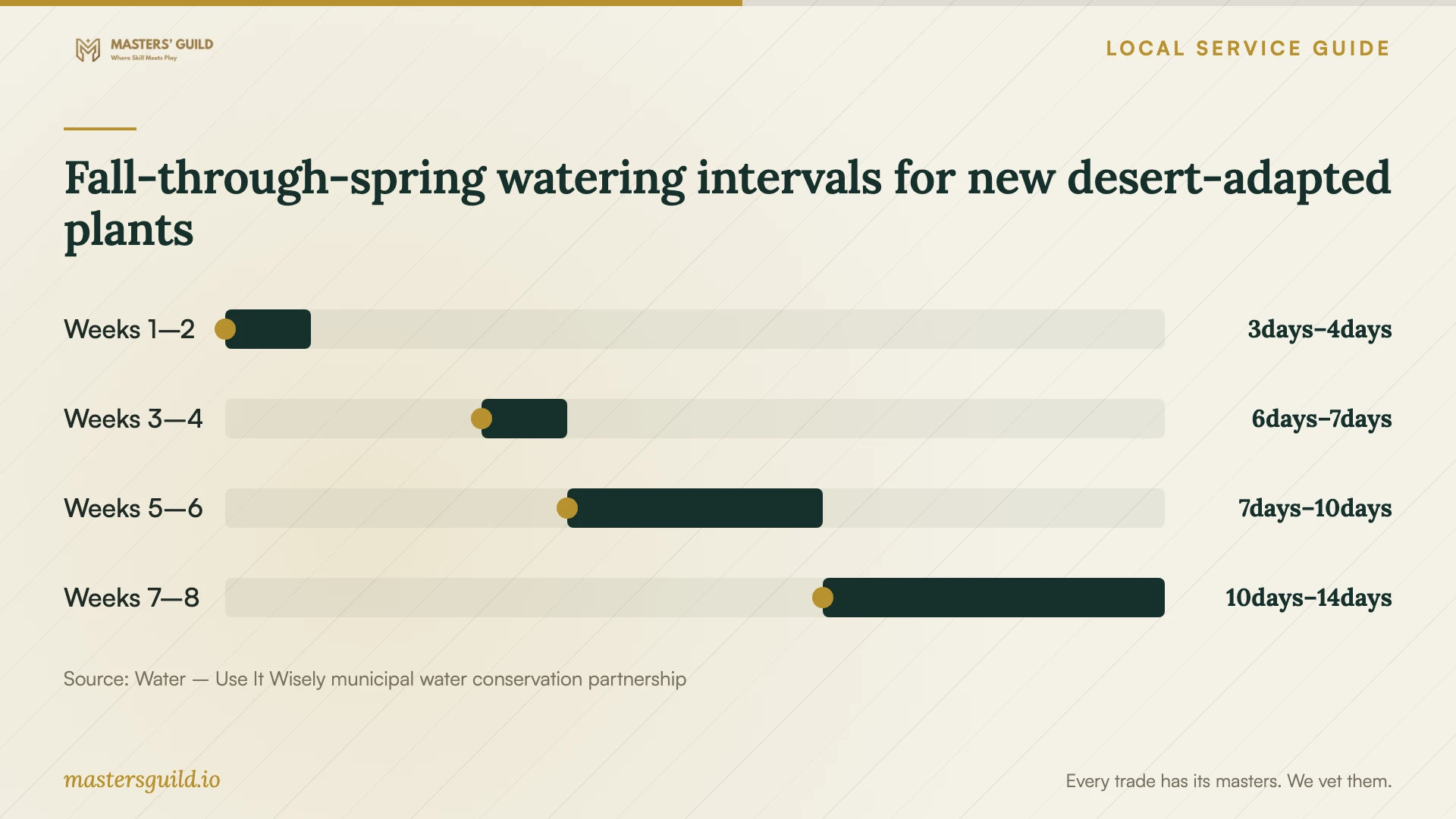
Use the chart as a discussion aid for newly planted desert-adapted landscape plants. Ask who will make the next adjustment and check soil moisture between visits. Keep vegetable beds and containers on a plan suited to those plants: Extension notes that containers need more frequent watering than in-ground gardens. [4] [5]
Set boundaries for chemical weed treatment
Ask whether the gardener proposes hand removal or an herbicide application. Arizona law provides a limited licensure and registration exemption for people who perform lawn, garden, shrub, or tree maintenance and apply herbicides for weed management. Do not assume that exemption covers the proposed treatment. [3]
The statute requires licensure and registration in specified situations, including preemergent or sterilant use, products labeled restricted use or danger, and offering weed management as a primary service or advertising it. It also lists equipment-volume, quantity, crew-size, location, and same-day maintenance conditions. Ask the provider to explain the authorization that covers the exact job. [3]
An exempt applicator must give you a treatment record identifying the address, date, herbicide name, amount applied, and applicator. Keep that record with your garden notes. For home vegetable gardens, Extension generally recommends against chemical herbicides; ask for a hand-weeding and mulch plan before agreeing to spraying. [1] [3]
Fall-through-spring watering intervals for new desert-adapted plants
Local details that affect your job
Check Mesa's grass-conversion eligibility before work
Mesa's xeriscape questionnaire advertises an incentive of up to $2,100 and excludes completed projects. It requires at least 500 square feet of living grass. Before authorizing removal, complete the city's eligibility questionnaire and confirm application requirements and timing with the city. Do not subtract an assumed incentive from the contractor's price. [2]
Specify canopy coverage in a conversion quote
Mesa requires at least 50% low-water-use plant canopy coverage within the grass area being converted. Plants beside that area do not count; existing low-water-use plants within it can count. Artificial turf alone does not qualify. Ask for a planting layout that identifies the conversion boundary and explains how the proposed plants meet coverage requirements. [2]
Use the correct regional watering schedule
Water Use It Wisely designed its guide for the Phoenix metro area. For newly planted desert-adapted plants during fall through spring, it recommends watering every 3–4 days in weeks 1–2, extending to every 10–14 days in weeks 7–8. Ask for a follow-up plan that accounts for these stages, soil, and weather rather than leaving one controller setting in place. [4]
Choose the scope that matches your garden
| Your goal | Request in the quote | Resolve before approval |
|---|---|---|
| Restore an overgrown bed | Hand weeding, retained-plant list, mulch, and debris removal | Confirm whether the provider proposes herbicides and which authorization applies. |
| Start fall vegetables | Crop list, bed preparation, planting, and watering handover | Use Mesa's 1,000–2,000-foot planting guidance and assess sun and drainage. |
| Replace living grass | Measured conversion boundary and low-water-use planting layout | Check Mesa eligibility before work and account for required canopy coverage. |
| Plant patio containers | Container sizes, drainage, planting medium, and watering plan | Allow for mature roots and the more frequent watering containers require. |
| Maintain existing planting | Visit tasks, irrigation checks, and seasonal controller adjustments | Assign responsibility for watering and changes between visits. |
Your hiring checklist
- Photograph each work area and mark plants to retain.
- Measure beds and the proposed grass-removal area.
- Confirm city incentive requirements before authorizing a conversion.
- Give each bidder the same task list and material specifications.
- Ask for separate cleanup, planting, disposal, and follow-up amounts.
- Confirm any herbicide product and the provider's applicable authorization.
- Arrange a controller demonstration and written watering handover.
- Agree on change approval, access, and the next visit before work starts.
Frequently Asked Questions
How should I compare gardening prices?
Compare written quotes for the same tasks, materials, and disposal arrangements. Ask whether the price covers an initial cleanup or recurring maintenance, and whether plants and irrigation parts cost extra. For hourly work, agree on a spending limit before the gardener starts.
Can I claim the xeriscape incentive after removing the grass?
Mesa's questionnaire says completed projects are ineligible. Check eligibility and application requirements before removal. The city requires at least 500 square feet of living grass and qualifying low-water-use plant coverage; the advertised maximum does not establish your award. [2]
Does a gardener need a license to spray weeds?
Arizona allows a limited exemption for herbicide use alongside maintenance, but specified activities require licensure and registration. Preemergent use and advertised weed-management services are among the exceptions. Ask about the product, service scope, and authorization. Exempt applicators must still provide treatment records. [3]
Can I arrange vegetable planting in October?
Extension's suggested dates for Mesa's elevation band include October for broccoli, kale, carrots, leaf lettuce, and spinach. Ask the gardener to select suitable varieties and check the site's light, drainage, and water supply before ordering seeds or transplants. [1]
Sources and scope
This guide combines the sources below with practical planning guidance. Figures apply to the stated geography and period; request a written quote for your property.