
Local service guide
Duct cleaning in Mesa, AZ: scope and hiring guide
Arrange duct cleaning in Mesa after a contractor shows you the affected areas and provides a written scope and total price. EPA's 1997 consumer guidance advises considering cleaning for substantial visible mold inside hard-surface ducts or on other heating and cooling components, pest infestation, or ducts clogged with excessive dust or debris and/or particles actually released into the home from supply registers. Wet or moldy duct insulation needs removal and replacement. Have the contractor explain the cause and how they will address it before approving work. [2]
Decide whether cleaning addresses your problem
Start with an inspection and request photographs identifying the affected component. In its October 1997 consumer guidance, EPA lists substantial visible mold inside hard-surface ducts or on other system components, vermin, and ducts clogged with excessive dust or debris and/or particles actually released into the home from supply registers as reasons to consider cleaning. Have the inspector distinguish dust on a grille from deposits clogging the ducts. Describe any particles you see leaving supply vents. [2]
Request confirmation before accepting a mold diagnosis. EPA says an expert must identify suspected mold and may need laboratory analysis. If the contractor finds wet or moldy duct insulation, EPA advises removal and replacement because cleaning cannot address that material. Identify who will correct the moisture problem before approving cleaning or replacement. [2]
Discuss persistent symptoms with your doctor and consider other indoor pollution sources. EPA says duct cleaning has not been shown to prevent health problems, and it identifies little evidence that cleaning ducts alone improves system efficiency. Choose work for a documented condition rather than a promised allergy cure or lower electric bill. [2]
Compare the same scope in each estimate
Give each bidder the same description of your concern and request a component-by-component scope. EPA describes duct cleaning as work that can include supply and return ducts, registers, grilles, coils, drain pans, fans and air-handler housing. The agency warns that leaving a contaminated component uncleaned can lead to contamination of the system again. Have the provider explain any component they propose to leave out. [2]
Find out how the crew will collect debris. EPA advises using equipment that exhausts particles outside or HEPA vacuum equipment when the exhaust stays indoors. Discuss furnishing protection, access, and sealing and reinsulating any openings the crew makes. Have the provider identify the duct material and choose a compatible method; EPA specifies soft-bristled brushes for fiberglass duct board and fiberglass-lined metal ducts. [2]
Get comparable written quotes for your system. Request a total price, exclusions, estimated work time and a process for approving changes. Have the contractor price proposed repairs and chemical treatments as separate items so you can decide on each. For hourly work, EPA advises requesting an estimated duration and finding out whether the crew expects interruptions. [2]
Request references, proof of insurance and any relevant current license information. EPA says it does not certify or endorse duct-cleaning companies. Its 1997 guidance includes a licensing list dated 1996; that list does not establish today's Arizona requirements. Have the provider explain the credentials that cover your proposed work. [2]
Prepare for access and cooling downtime
Before the appointment, agree on access to registers, the air handler and any attic entry. Move fragile items from the work route and arrange a place for pets away from the crew. Confirm how long the system will remain off and when you can resume cooling. Tell the provider about access limits before accepting the quote.
After dusty renovation work, have the inspector check for construction debris before deciding on whole-system cleaning. For future dust-producing work, EPA advises sealing supply and return registers and keeping the system off until workers finish cleaning up the dust. Coordinate that plan with your contractor and your household's cooling needs. [2]
Require an explanation before approving a disinfectant, ozone treatment or internal coating. EPA's 1997 guidance describes unresolved questions about these treatments and reports no registered biocides for fiberglass duct board or fiberglass-lined ducts. Do not use that historical statement to establish a product's current registration. Request the proposed product label, confirmation that its permitted use covers your duct material, and an explanation of why physical cleaning and moisture control would not suffice. [2]
Inspect the result and plan filter care
Agree on completion evidence before the crew starts. EPA advises a visual inspection and having the provider show each cleaned component. Request photographs of areas you cannot access, check that the crew has reattached registers, and have them demonstrate system operation. Request correction of visible debris or unfinished access repairs before you accept completion. [2]
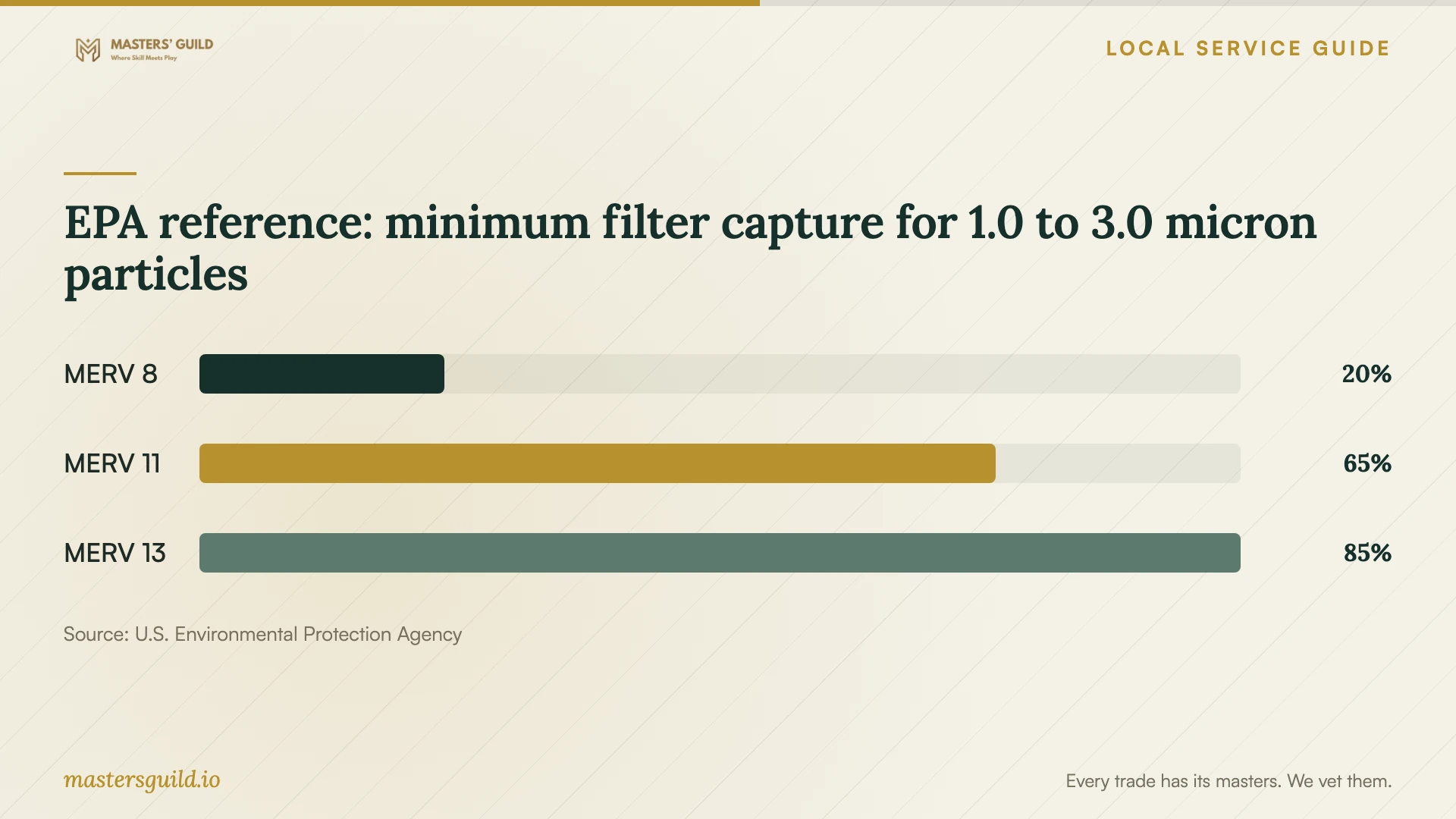
Review filter fit and replacement instructions during the visit. EPA advises using the highest efficiency filter your equipment manufacturer recommends, changing filters and preventing air from bypassing them. Its separate MERV guidance recommends MERV 13, or the highest rating the fan and filter slot can accommodate, when upgrading. Have an HVAC technician confirm compatibility before changing filter type. [2] [3]
EPA reference: minimum filter capture for 1.0 to 3.0 micron particles
Local details that affect your job
Plan service around regional dust-storm precautions
Maricopa County advises closing doors and windows and considering stopping heating or air conditioning until a dust storm passes. For a Mesa appointment during an active storm, confirm whether the crew needs open doors for equipment setup and agree on a rescheduling plan. After the storm, have the provider assess contamination using EPA's condition-specific guidance before you approve cleaning. [1] [2]
Include insulation checks and a heat contingency
Maricopa County's extreme-heat preparation guidance calls for checking air-conditioning ducts for proper insulation. For your service visit, request an insulation check and separate any proposed repair from the cleaning scope. Identify who will handle damaged insulation and discuss cooling downtime before choosing an appointment. If a power outage interrupts your plans during extreme heat, the county advises going to a designated public shelter. [1]
Choose the next step from the condition you find
| Condition | Next step | Question to ask |
|---|---|---|
| Dust on a return grille | Clean the accessible grille and check for further evidence. | Can you show deposits clogging the ducts or particles entering the home from supply registers? |
| Ducts clogged with excessive dust or debris and/or particles released into the home from supply registers | Arrange an inspection and consider cleaning if confirmed. | What caused the contamination, and which components need cleaning? |
| Suspected mold inside hard-surface ducts or on system components | Request identification and correction of the moisture cause before deciding on cleaning. | What evidence confirms mold, and who will fix the moisture problem? |
| Wet or moldy duct insulation | Discuss removal and replacement with a qualified heating and cooling contractor. | Which material needs replacement, and how will you prevent recurrence? |
| Pests inside ducts | Address the infestation and its cause before considering cleaning. | How will you prevent pests from entering again? |
Your hiring checklist
- Describe the concern and have the inspector show where it occurs.
- Give each bidder the same component list and request written exclusions.
- Confirm the duct material, cleaning method and vacuum exhaust arrangement.
- Agree on the total price and require approval before added work.
- Plan access, pet arrangements and the period without cooling.
- Agree on a storm rescheduling plan and a cooling contingency.
- Request documentation of cleaned components and repaired access openings.
- Review the finished work and have the crew demonstrate system operation.
Frequently Asked Questions
Do I need duct cleaning every year?
EPA's consumer guidance advises against routine duct cleaning and says to consider it for specified contamination conditions. Request evidence before booking. Continue filter changes and equipment maintenance according to the manufacturer's instructions. [2] [3]
Can cleaning solve a musty smell?
Request an inspection that identifies the source of the smell and any moisture. EPA says homeowners must correct the cause of mold growth to prevent recurrence and replace wet or moldy insulation. Have the provider explain how the proposed work addresses the underlying condition. [2]
Should I upgrade the filter during the visit?
Have the technician check the fan, filter slot and manufacturer guidance first. EPA recommends MERV 13 or the highest rating your system can accommodate when upgrading. Follow the manufacturer's replacement instructions after choosing a compatible filter. [3]
Does the quote include the dryer vent?
Have the provider list dryer-vent work as a separate scope and price if you want it included. EPA's residential air-duct guidance describes the forced-air heating and cooling system. Confirm which exhaust routes the crew will clean before accepting the quote. [2]
Sources and scope
This guide combines the sources below with practical planning guidance. Figures apply to the stated geography and period; request a written quote for your property.