
Local service guide
Gardening in Manchester NH: Hiring and Fall Planning
Gardening in Manchester NH starts with a clear job scope: name the beds and plants you want cared for, specify debris removal, and agree on who handles watering afterward. For an October booking, separate cleanup from new tree or shrub planting. UNH Extension recommends early October as a general planting deadline, so ask the gardener to assess the species and establishment time before you approve planting now. [2]
Define the work before requesting quotes
Walk through the garden and divide your request into cleanup, ongoing maintenance, and planting. Mark plants you want to keep and areas you want left alone. Send photographs and approximate bed dimensions, then explain whether you want hand weeding, edging, leaf removal, mulch work, or replacement plants. Ask the gardener to identify uncertain plants before removing them.
For a one-time visit, agree on a completion list. For recurring care, name the tasks included at each visit and ask how the gardener handles extra work. Confirm access through gates, parking, water availability, and where workers may stage materials. Request proof of liability insurance and ask for examples of similar garden work.
Compare the full quote
Request a written quote that separates labor from materials and disposal. For hourly work, ask whether the rate covers one person or a crew, whether there is a minimum charge, and what spending limit requires your approval. For a fixed price, list the beds, tasks, and exclusions. Ask who buys plants and how the gardener will handle substitutions.
Give each gardener the same property photographs, bed dimensions, and task list, then request itemized prices for that scope. Include hauling, delivery, sampling, and return visits in the comparison. If you need to reduce the budget, choose which tasks to defer and ask each gardener to price the same smaller job.
Arrange cleanup around Manchester collection rules
Manchester requires residents to keep yard waste separate from regular trash and avoid sweeping it into the street. The city lists weekly spring and fall collection, every-other-week summer collection, and a winter pause apart from holiday trees. Check the street-address schedule before choosing a cleanup date or promising the gardener curbside disposal. [1]
For curbside preparation, the city accepts biodegradable paper bags, barrels up to 33 gallons with an official orange yard-waste sticker, and bundles tied with biodegradable ties. Bundles may measure no more than 3 feet long and 2 feet across. Individual branches or stumps may not exceed 3 inches in diameter or 3 feet in length, and each bag, barrel, or bundle must weigh no more than 75 pounds. Ask the gardener to quote another disposal route for oversized material. [1]
Decide whether planting should wait
UNH Extension's New Hampshire guidance recommends at least six weeks of mild weather before freezing temperatures for fall tree and shrub root growth, with early October as a general deadline. For a booking on October 10, ask the gardener to explain the remaining establishment window. This guidance does not predict the first freeze at your property. [2]
UNH identifies deciduous plants as more suitable for fall planting than evergreens and recommends spring for magnolia, tuliptree, oak, and ginkgo. Ask for the species and size in writing before approving purchases. If you defer installation, use the current visit to document the planting area, arrange soil testing, and agree on a spring plan. [2]
Specify planting quality and aftercare
Ask the gardener to describe how they will inspect roots, locate the root flare, and set planting depth. After locating the flare and removing excess soil above it, UNH recommends a hole only as deep as the root ball and two to three times as wide. It advises spreading mulch two to three inches deep and pulling it back a few inches from the trunk or stem. Include those details in the planting scope. [5]
Agree on who waters after installation and who checks moisture during follow-up visits. UNH says watering needs depend on plant size, weather, soil, and drainage, and warns against relying on lawn sprinklers for new trees and shrubs. Ask for written care instructions that match the plants and conditions at your property. [5]
Before approving lime or fertilizer, ask whether the gardener will collect a soil sample and review the recommendations with you. UNH provides crop-specific soil analysis and fertilizer recommendations, accepts samples by mail and in person, and estimates about three weeks from receipt for results. Clarify who pays the laboratory fee, handles submission, and prices any amendments afterward. [4]
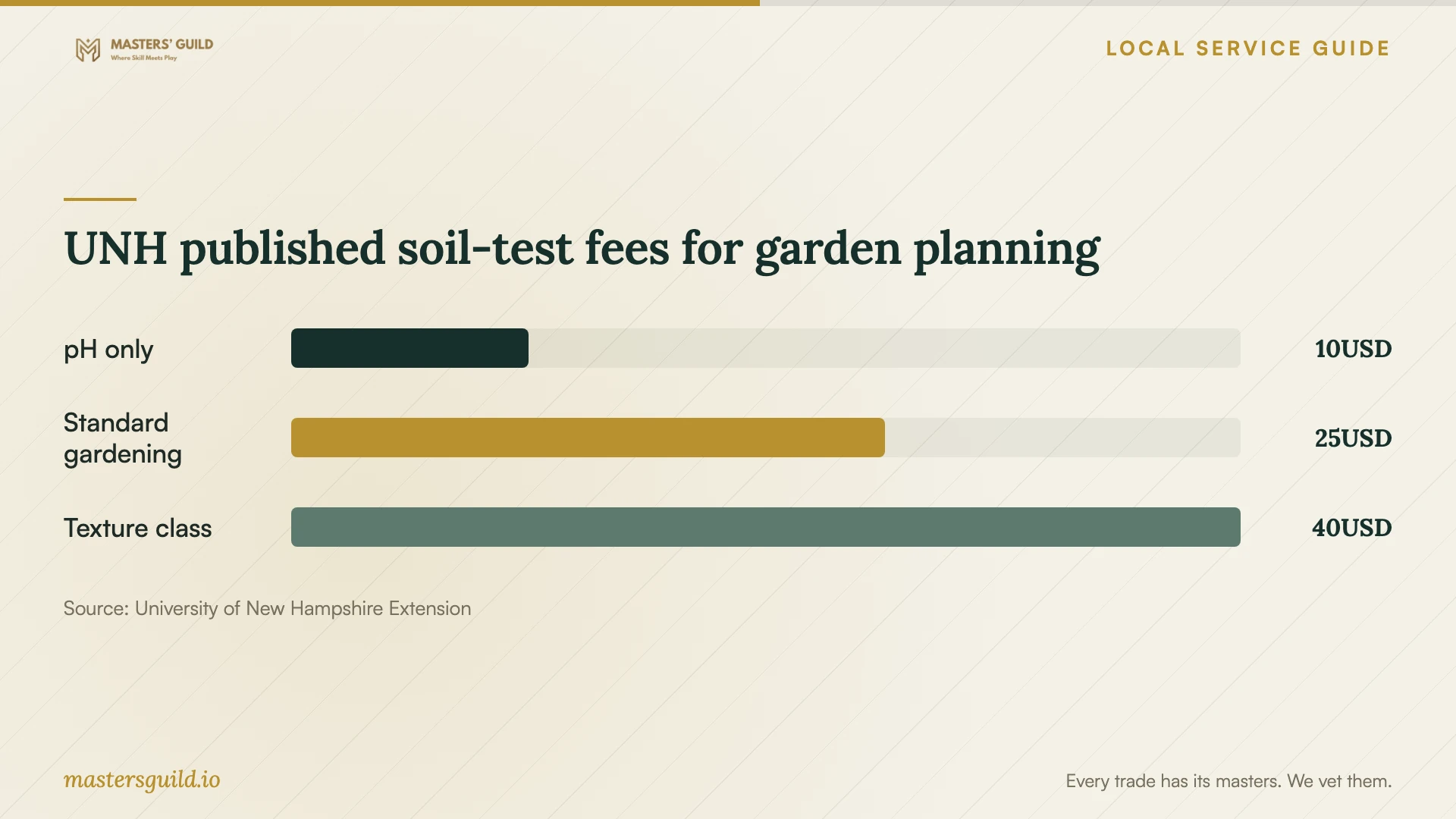
UNH published soil-test fees for garden planning
Local details that affect your job
Choose curbside preparation or hauling
Manchester requires yard waste at the property's street edge by 7:00 AM on the designated collection day without obstructing sidewalks or recycling-cart access. Plastic bags do not qualify. Ask the gardener to include paper bags or approved barrel and bundle preparation in the quote, and confirm who moves the finished containers to the street edge. [1]
Use New Hampshire planting guidance for an October booking
UNH's regional guidance puts the general fall tree and shrub planting deadline in early October. At an October 10 appointment, request a species-specific recommendation before purchasing plants. Consider scheduling spring installation for the species UNH identifies as better suited to spring, including oak and magnolia. [2]
Budget time for UNH soil testing
Manchester homeowners can mail samples to UNH Extension Soil Testing Service, Barton Hall B206, 34 Sage Way, Durham, NH 03824. UNH estimates approximately three weeks after receiving samples. Arrange sampling before the gardener orders amendments, and ask who will interpret the crop-specific recommendations. [4]
Choose the scope for your next garden visit
| Your situation | Work to request | Decision before booking |
|---|---|---|
| Leaves and eligible small branches need removal | Cleanup with approved bags, barrels, or bundles | Check the address-specific collection day and assign curbside placement. |
| Cleanup includes oversized branches or stumps | A separate hauling quote | City curbside limits are 3 inches in diameter and 3 feet in length for individual branches or stumps. |
| You want trees or shrubs planted in October | A species and establishment assessment | UNH recommends six weeks of mild weather and an early-October general deadline. |
| You plan lime or fertilizer application | Soil sampling and a review of recommendations | Allow approximately three weeks after UNH receives the samples. |
| You need recurring bed care | A written visit schedule and task list | Agree on included work, spending limits, and how to approve changes. |
Your hiring checklist
- Photograph each work area and mark plants the gardener should keep.
- Write separate task lists for cleanup, maintenance, and planting.
- Confirm gate access, parking, water access, and material staging.
- Request an itemized quote and a limit for unapproved extra work.
- Agree on curbside preparation or hauling before cleanup starts.
- Request plant names, sizes, and approval of substitutions.
- Assign responsibility for soil-sample submission and result review.
- Agree on watering, follow-up visits, and completion photographs.
Frequently Asked Questions
How much should I budget for a gardener?
Request itemized quotes for your bed sizes, task list, and disposal needs. Compare total charges for the same scope, including materials, hauling, and follow-up visits. For hourly work, ask for an expected total and agree on a spending limit before the visit.
Can the gardener leave debris for city pickup?
Arrange that before booking. Manchester accepts qualifying yard waste in paper bags, approved stickered barrels, or compliant bundles. Check the collection schedule and ask who will place the containers at the street edge by 7:00 AM. [1]
Is October too late to plant shrubs?
Ask for a species-specific assessment. UNH recommends early October as a general deadline and at least six weeks of mild weather for root growth. Its guidance favors deciduous plants over evergreens for fall planting. [2]
Should soil testing form part of the job?
Consider it before approving amendments or a planting renovation. UNH offers crop-specific recommendations and charges $25 per sample for a standard gardening test. Ask the gardener to separate laboratory fees from sampling labor and submission costs. [3] [4]
Sources and scope
This guide combines the sources below with practical planning guidance. Figures apply to the stated geography and period; request a written quote for your property.