
Local service guide
Window Cleaning in Madison, WI: Plan Your Job
For Window Cleaning in Madison, choose a provider who gives you a written scope covering glass, screens, tracks, existing stains, and access. Discuss rinse water and drying because the municipal utility reports hard water and mineral residue after evaporation. If the crew proposes equipment on or over public space, confirm permit arrangements before setting the start date. [1] [2]
Get a quote you can compare
Send each bidder photos of the house and a room-by-room window list. Include storm windows, divided panes, skylights, and glass you cannot reach from the ground. Have the provider explain how they count a window so you can reconcile the quote with your list.
Choose exterior glass alone or both sides. Request separate scope entries for screen washing, track cleaning, frame wiping, and stain treatment. Get a total for your chosen work and agree on how you will approve additional charges. Before accepting an offer, check whether the provider has included access equipment and any return visit in the price.
Discuss mineral spots and rinse water
Madison Water Utility describes its tap water as very hard, with 18–20 grains of hardness per gallon. The utility explains that minerals leave white residue or spots when water evaporates. Use that information to ask which water source the crew will use and how they will rinse and dry the glass. [1]
Photograph existing spots before requesting a quote. Identify windows near sprinklers and describe any cleaning you have tried. Request an inspection and a separate proposal for treating those marks. Have the cleaner explain the method, propose a small test area, and describe the result they expect before you approve treatment.
Avoid diagnosing the marks from their appearance alone. Ask the provider to distinguish what they expect to remove during the basic wash from anything requiring additional treatment. Record any existing scratches or damaged glass during the initial walkthrough.
Confirm access and public-space arrangements
Have the provider describe how the crew will reach upper-floor glass and where they will place equipment. Share photos of narrow side yards, locked gates, porches, and other access constraints. Request current insurance documentation and agree on whom to contact if the crew damages glass, screens, or other property.
Madison requires a Street Occupancy Permit when a project places materials or machinery on or over streets, terraces, sidewalks, alleys, or public grounds. The city requires a site plan showing the proposed occupied area and insurance documentation for review. If the proposed cleaning setup uses those spaces, identify who will manage the application, assessed fees, and traffic-control arrangements. [2]
The city asks applicants to submit at least one week before occupancy or closure. That submission interval does not promise approval within a week. Before confirming the appointment, have the provider establish the permit status and equipment placement with Traffic Engineering. [2]
Arrange a weather fallback for exterior work
Agree on the provider’s weather limits and postponement terms. The National Weather Service’s historical table lists May 3 as Madison’s average last spring day at 32°F or lower and October 7 as its average first autumn day at that threshold. NWS labels the data preliminary, without final quality control, and subject to revision. The table does not state the averaging baseline or complete observation period. [3]
Use those historical figures as background when planning flexibility. Check the forecast with the provider before the visit and follow their agreed operating limits. If you need clean windows for an event, leave room to move the exterior appointment. Discuss whether the crew can complete interior work during a separate visit and whether that changes the total price.
Prepare the house and review the finish
Move fragile objects from sills and clear the agreed route to interior windows. Arrange for pets, unlock the relevant gates, and identify windows or screens you do not want the crew to open. Point out cracks, torn screens, and stiff hardware before work begins.
Agree on a walkthrough before the crew leaves. Use your quoted window list to check coverage, then discuss any remaining marks with the cleaner. If the provider recommends further treatment, request the method and added charge in writing before approving it. Keep the original scope and any approved changes together for future appointments.
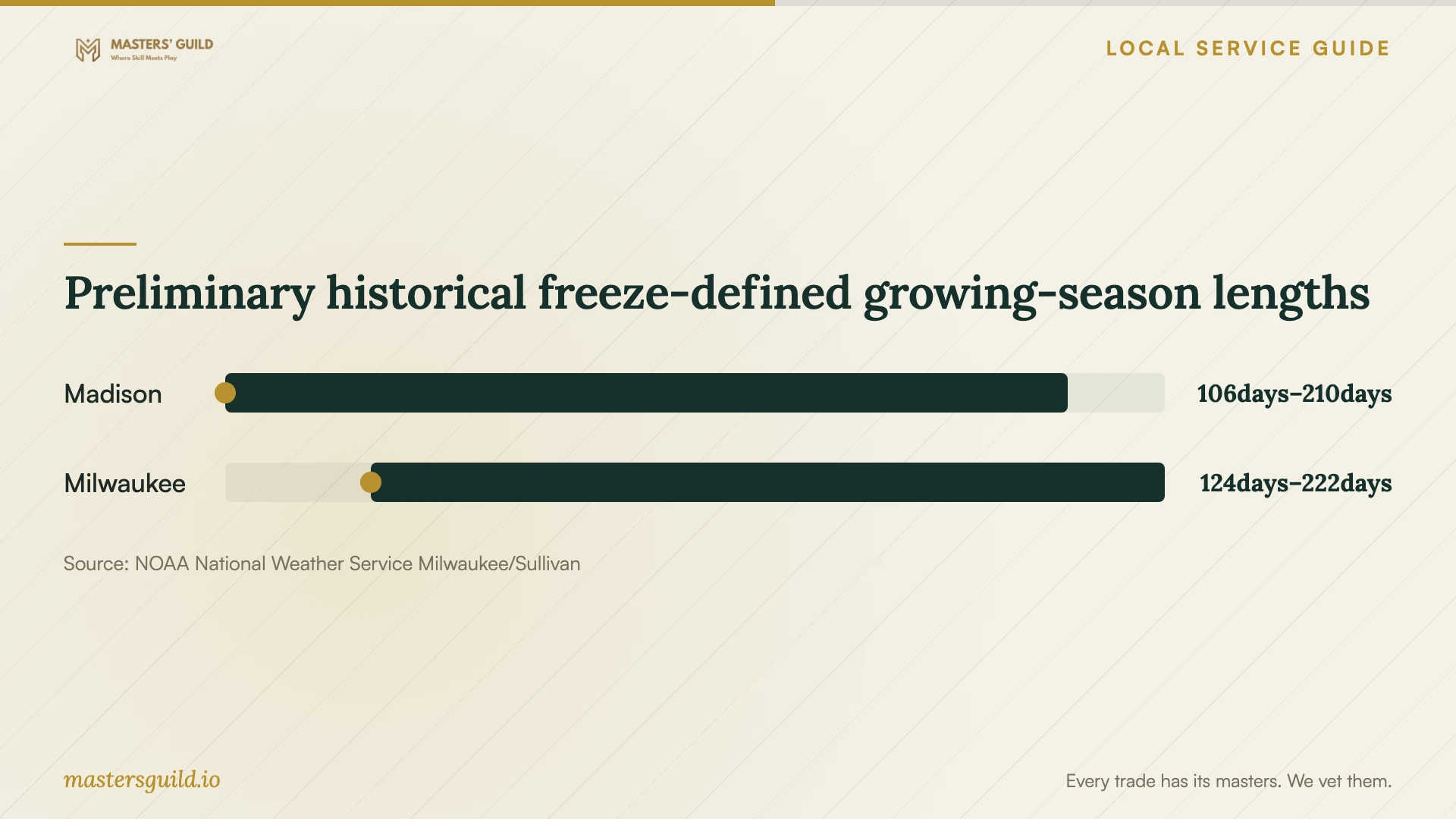
Preliminary historical freeze-defined growing-season lengths
Local details that affect your job
Turn the utility’s hardness figure into a quote question
Madison Water Utility reports 18–20 grains of hardness per gallon and mineral residue after evaporation. Include a question about rinse water and drying in your request. Have bidders separate their plan for avoiding fresh residue from their proposal for treating existing spots; the utility’s information does not diagnose a particular mark on your glass. [1]
Plan sidewalk equipment before committing to a date
For machinery on or over a public sidewalk or another listed public space, use Madison’s Street Occupancy Permit process. Submit at least one week before occupancy or closure. Identify the applicant and account for a dimensioned site plan, insurance review, and assessed fees. Contact Traffic Engineering at 608-266-4761 to clarify the proposed setup and application requirements. [2]
Match the quote to your property
| Your situation | Request before booking | Decision to make |
|---|---|---|
| You want exterior glass cleaned | A window list and written inclusions | Choose whether screens, tracks, and frames belong in the scope. |
| You see existing white spots | An inspection and separate treatment proposal | Approve the proposed method and test area before adding treatment. |
| You need upper-floor access | An equipment plan and insurance documentation | Check whether the proposed setup fits your property. |
| Machinery will sit on or extend over a public sidewalk | A Street Occupancy Permit plan | Assign application responsibility and submit at least one week before occupancy or closure. |
| You want an autumn exterior appointment | Weather limits and rescheduling terms | Decide whether to split interior and exterior work if the provider postpones. |
Your hiring checklist
- Send each bidder the same exterior photos and window list.
- Choose exterior-only or inside-and-outside cleaning.
- Request separate scope entries for screens, tracks, and existing stains.
- Discuss the water source, rinse method, and drying method.
- Confirm upper-floor access, equipment placement, and insurance documentation.
- Assign responsibility for any public-space application and assessed fees.
- Agree on postponements and any charge for splitting the visit.
- Clear access and review completed work against the written scope.
Frequently Asked Questions
How should I compare window-cleaning quotes?
Give each bidder the same window list and cleaning scope. Have them explain how they count windows and itemize screens, tracks, stain treatment, and access equipment. Request a written total and an approval process for extra work.
Should I mention Madison’s hard water?
Yes. Madison Water Utility reports 18–20 grains of hardness per gallon and mineral residue after evaporation. Discuss how the provider will finish the glass and assess existing spots. Avoid assuming that municipal water caused every mark or that the crew will use untreated tap water. [1]
Does cleaning equipment on a public sidewalk need a permit?
Madison requires a Street Occupancy Permit for project machinery or materials on or over sidewalks and other listed public spaces. Have the provider confirm the proposed placement with Traffic Engineering and identify who will manage the application. The city requests submission at least one week before occupancy or closure. [2]
How should I plan an autumn exterior appointment?
Agree on weather limits, postponements, and any split-visit charge. NWS lists October 7 as Madison’s historical average first autumn day at 32°F or lower, but labels its data preliminary, without final quality control, and subject to revision. It does not state the averaging baseline or complete observation period. Check the appointment forecast with your provider. [3]
Sources and scope
This guide combines the sources below with practical planning guidance. Figures apply to the stated geography and period; request a written quote for your property.