
Local service guide
Arrange lawn mowing in Madison, WI
Arrange lawn mowing in Madison, WI by asking for a written scope covering cutting height, growth-based visits, terrace mowing, trimming, and clipping cleanup. Wisconsin Extension recommends keeping lawns 2½–3½ inches tall and removing no more than one-third of the leaf tissue per cut. Madison requires grass to stay below eight inches. Agree on how the provider will handle wet-weather delays and an overdue first cut before accepting a recurring plan. [1] [4]
Compare quotes for the same work
Send each provider the same description and photos. Identify the front and back lawn, grass on the terrace, gate access, slopes, planted beds, and areas you want left untouched. Ask the provider to confirm which areas they will mow and where they will trim. Mark intentional plantings so the crew can distinguish them from unwanted growth.
Request separate prices for the first visit and recurring visits. Ask whether the quote includes trimming around fences and beds, edging along pavement, clearing clippings from walking surfaces, and hauling collected material. If the lawn is overgrown, request a recovery plan that follows the one-third rule rather than asking the crew to take it down to the usual height in one cut. [4]
Obtain property-specific quotes for the agreed scope, including any disposal charge. Before booking, request proof of insurance and written terms for cancellation, missed visits, property damage, and work that needs your approval. Ask whether the provider charges per completed visit or for a seasonal package, and how skipped visits affect your bill.
Choose a schedule around grass growth
Ask the provider to use grass height and growth when deciding whether a visit is due. Wisconsin Extension recommends mowing when needed because temperature, season, water, and soil fertility affect growth. A fixed weekly or biweekly arrangement needs a way to add, postpone, or skip visits when conditions change. [4]
Specify a finished height within the Extension's 2½–3½-inch range and ask how the crew will avoid removing more than one-third of the leaf tissue. If you choose a three-inch target, discuss when the provider should check the lawn rather than waiting for it to approach the city's eight-inch limit. [1] [4]
Agree on a wet-weather delay procedure and how the provider will notify you about the replacement visit. Extension recommends cutting dry turf because wet clippings form clumps and wet slopes can endanger the operator. Ask the provider to explain any additional charge before performing extra passes after a delay. [4]
Specify where clippings will go
For routine mowing, consider leaving small clippings on the lawn. Extension recommends collecting them only when you need them for compost or mulch, or when thick deposits could smother the turf. Ask the crew to inspect the finished lawn for clumps and agree on how they will handle material from an overgrown first cut. [4]
If you want bagging and removal, ask for the disposal destination and hauling charge in writing. Madison reserves municipal drop-off sites for residents and taxpayers and prohibits contractors from using them for their projects. Do not accept a disposal plan that assumes the crew can use your resident access. [2]
If you plan to use municipal yard-waste collection, check your address-specific set-out date before scheduling cleanup. The city counts grass clippings as yard waste, requires you to separate yard waste and leaves from brush, and will not collect mixed piles. Set-out dates fall on Sundays, with collection during the following work week. [3]
Arrange fall mowing and leaf work together
For an October booking, ask whether leaf work is part of the mowing visit or a separate service. Extension recommends removing or mulching fallen leaves promptly in shaded lawns. It says mulched leaves can remain without harming the grass when grass blades extend one to two inches above the mulched leaves. Have the provider assess whether the leaf layer permits that approach. [4]
Avoid choosing the final mowing date from the calendar alone. Extension recommends maintaining a 2½–3½-inch height until winter dormancy to avoid excessively long grass lying over and increasing snow-mold risk. Ask how the provider will decide that mowing has finished and whether later leaf cleanup requires another booking. [4]
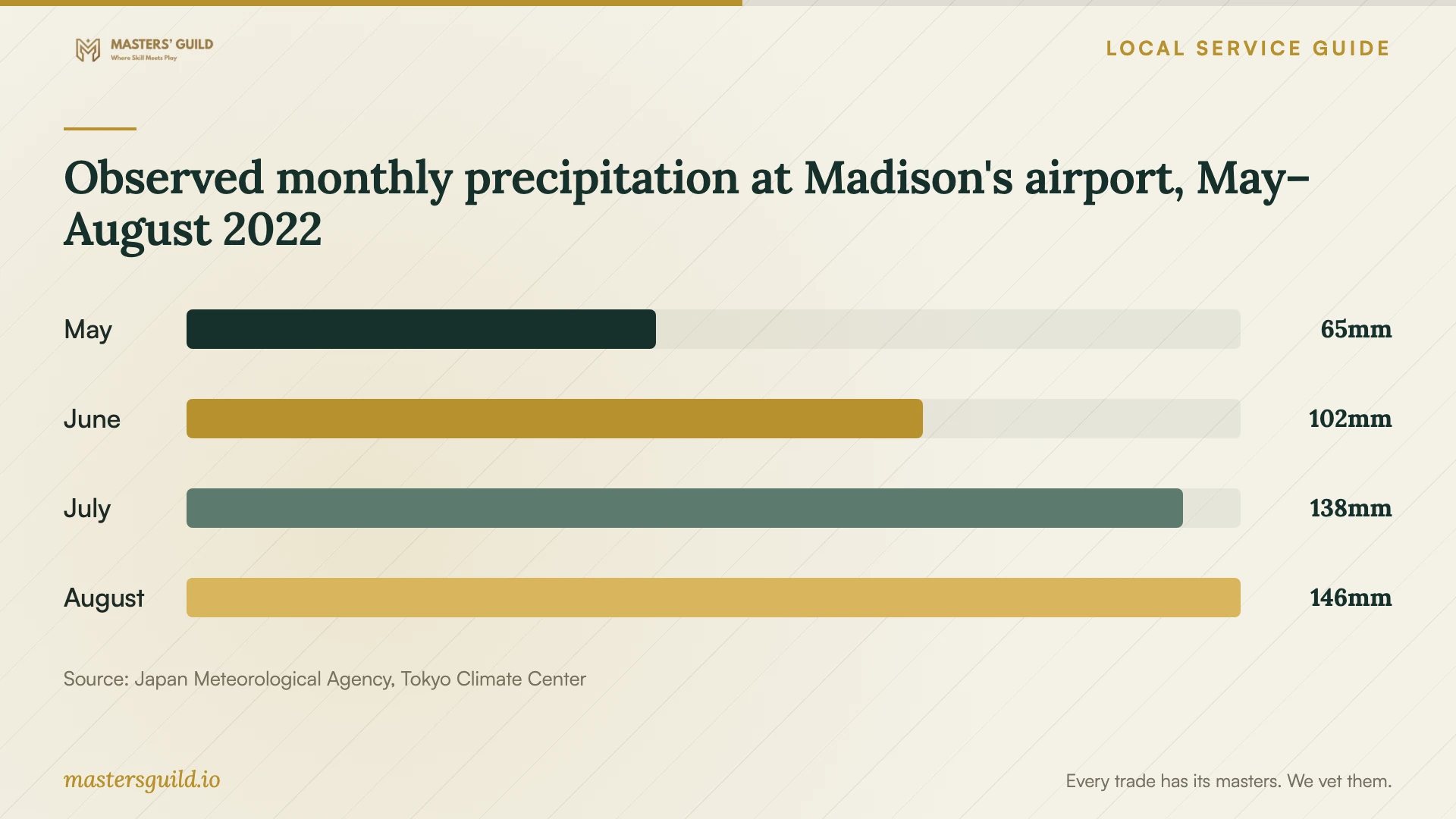
The precipitation chart gives historical context for discussing weather flexibility. It uses airport observations from 2022, not this season's conditions. Before each visit, check the lawn itself and discuss wet ground or slow growth with your provider rather than using monthly precipitation as a mowing timetable. [5]
Observed monthly precipitation at Madison's airport, May–August 2022
Local details that affect your job
Include the terrace and protect sidewalk clearance
Madison requires grass, weeds, and unintended plants to remain below eight inches and prohibits plantings from growing into the sidewalk area. The city describes the terrace as land between the roadway and property line. Include its grass in your service sketch and identify intentional beds. Terrace trees are public trees maintained by the city, so keep tree work separate from your mowing request. [1]
Confirm contractor disposal before paying for hauling
Contractors cannot use Madison's municipal drop-off sites for their projects. Ask a provider offering bagging or fall cleanup where they will take collected material and whether disposal is included. Resident eligibility at these sites does not authorize contractor use. [2]
Match cleanup to your address's collection date
Use the city's address lookup to find the Sunday set-out date for yard waste. Madison collects during the following work week and warns that missing the set-out date may mean missing pickup. Keep grass clippings and leaves separate from brush; the city will not collect mixed piles. Agree who will place the material out and when. [3]
Choose the service arrangement that fits your lawn
| Your situation | Arrangement to request | Point to confirm |
|---|---|---|
| Grass grows fast between visits | Flexible recurring mowing | Adjust visits to follow the one-third rule. |
| Growth slows during hot, dry weather | Height checks with permission to skip | Extension advises mowing when needed rather than using a fixed schedule. |
| Grass is tall or leaves thick clippings | First-cut recovery and clipping assessment | Limit removal per cut and collect deposits that could smother turf. |
| You want bagging and hauling | Mowing with a written disposal plan | Contractors cannot use municipal drop-off sites for their projects. |
| You want municipal yard-waste pickup | Cleanup coordinated with your address's date | Separate yard waste from brush and meet the Sunday set-out date. |
Your hiring checklist
- Photograph all lawn areas and identify terrace grass, intentional beds, slopes, and gate access.
- Request a written scope for mowing, trimming, edging, and pavement cleanup.
- Agree on the finished cutting height and an approach for an overgrown first visit.
- Choose notification and approval terms for weather delays, skipped visits, and extra work.
- Specify mulching, bagging, or hauling and confirm the disposal destination.
- Ask for proof of insurance and written cancellation and damage terms.
- For fall work, identify leaf coverage and agree who will handle set-out or removal.
Frequently Asked Questions
Should I book weekly or biweekly mowing?
Choose a plan that allows changes with growth. Wisconsin Extension says lawns may need two cuts a week in spring or a cut every two weeks in a hot, dry summer. Ask the provider how they will keep each cut within the one-third rule and obtain your approval for schedule changes. [4]
How tall can grass get in Madison?
The city requires grass to remain below eight inches. It applies the height rule to weeds and unintended plants too. For routine lawn care, Wisconsin Extension recommends a finished height of 2½–3½ inches. Use that care range when discussing the mower setting. [1] [4]
Can my mowing contractor take clippings to a city drop-off site?
Madison prohibits contractors from using municipal drop-off sites for their projects. Ask for another disposal destination if you purchase hauling. If you arrange municipal collection, check the address-specific set-out date and keep yard waste separate from brush. [2] [3]
Should the last cut before winter be shorter?
Wisconsin Extension recommends keeping lawns at 2½–3½ inches until winter dormancy. Ask the provider to maintain that range and assess remaining growth before ending service. Arrange leaf handling as part of the visit or as a separate cleanup. [4]
Sources and scope
This guide combines the sources below with practical planning guidance. Figures apply to the stated geography and period; request a written quote for your property.