
Local service guide
Gardening in Madison: Plan the Job Before Hiring
Arrange Gardening in Madison by asking for a written scope that separates bed maintenance, plants and mulch, and debris handling. Before hiring, decide which plants the gardener should keep, whether the work includes your terrace, and who will remove the waste. Madison has terrace planting restrictions and address-based yard-waste set-out dates. If you want chemical weed or pest treatment, check the applicator’s certification, individual license and business license before authorizing that work. [1] [2] [5]
Give the gardener a clear scope
Walk through the garden before requesting quotes. Photograph each bed and label plants you want to retain, move or remove. Tell the gardener whether you want hand weeding, planting, mulch spreading, shrub work or a cleanup. Ask them to identify unfamiliar plants before pulling them. For an overgrown bed, agree on the first cleanup before committing to repeat visits.
Request separate amounts for labor, plants, mulch, delivery and waste removal. Ask whether the gardener charges by the hour or by the job, and agree on a spending limit for hourly work. Specify who buys materials and whether the gardener needs your approval before substitutions. These sources provide municipal material fees and program charges, but they do not establish a local gardening labor rate. [3] [4]
For ongoing care, describe the result you expect after each visit: weeded beds, clear paths, watered new plants or removal of agreed trimmings. Ask who will water between visits and how the gardener will handle weather-related changes. Request proof of liability insurance and examples of comparable planting or maintenance work. Put excluded tasks in the quote so neither person assumes they are included.
Check terrace and sidewalk restrictions
Madison allows non-woody plants common to gardens or landscaping on terraces. The city also allows protective materials such as mulch or small rocks, provided the landscaping remains stable, non-hazardous and easy to remove. Plantings must stay out of the sidewalk area. Ask the gardener to distinguish terrace work from work inside your property before selecting plants or ordering materials. [1]
The city requires grass, weeds and plants you did not intend to grow to remain below eight inches. Its noxious-weed requirement applies regardless of height or quantity: owners must destroy those weeds before they bloom. Avoid asking a gardener to cut all vegetation to lawn height without identifying your intentional plantings and the weeds that need removal. [1]
Corner-lot planting needs a separate check. Within a vision clearance triangle, the city requires clearance between 30 inches and ten feet above the curb. Ask Building Inspection to clarify the affected area before approving tall plants. Leave terrace-tree work to the city, which maintains those public trees. [1]
Arrange cleanup and waste handling
Look up your address’s yard-waste set-out date before agreeing on a cleanup appointment. Madison instructs residents to put material out on the assigned Sunday, with collection during the following work week. A later set-out can miss that collection opportunity. The address lookup shows dates, not the location of crews or confirmation that they have collected your pile. [2]
Write the disposal arrangement into the quote. For city collection, place leaves and yard waste on the terrace or grass at the street edge, keep them out of the street, and leave five feet from trees, cars, poles, mailboxes, hydrants and other obstructions. Separate brush from leaves and yard waste because crews will not collect mixed piles. [2]
If collection timing does not fit your job, agree on composting or hauling before work starts. The city directs residents to home composting or a drop-off site outside collection periods and prohibits yard waste in trash or recycling carts. Ask the gardener to explain their disposal destination and any hauling charge. [2]
Choose materials and treatment before work starts
For a small mulch project, Madison residents can collect up to 30 gallons free at the Quann-Olin drop-off site, subject to supply. Bring your own shovel and containers. For purchased mulch, the city lists one to three yards at $20 and loads truck beds or trailers with a loader. It does not load through SUV hatches or trunk openings, and it offers no delivery for small amounts. [3]
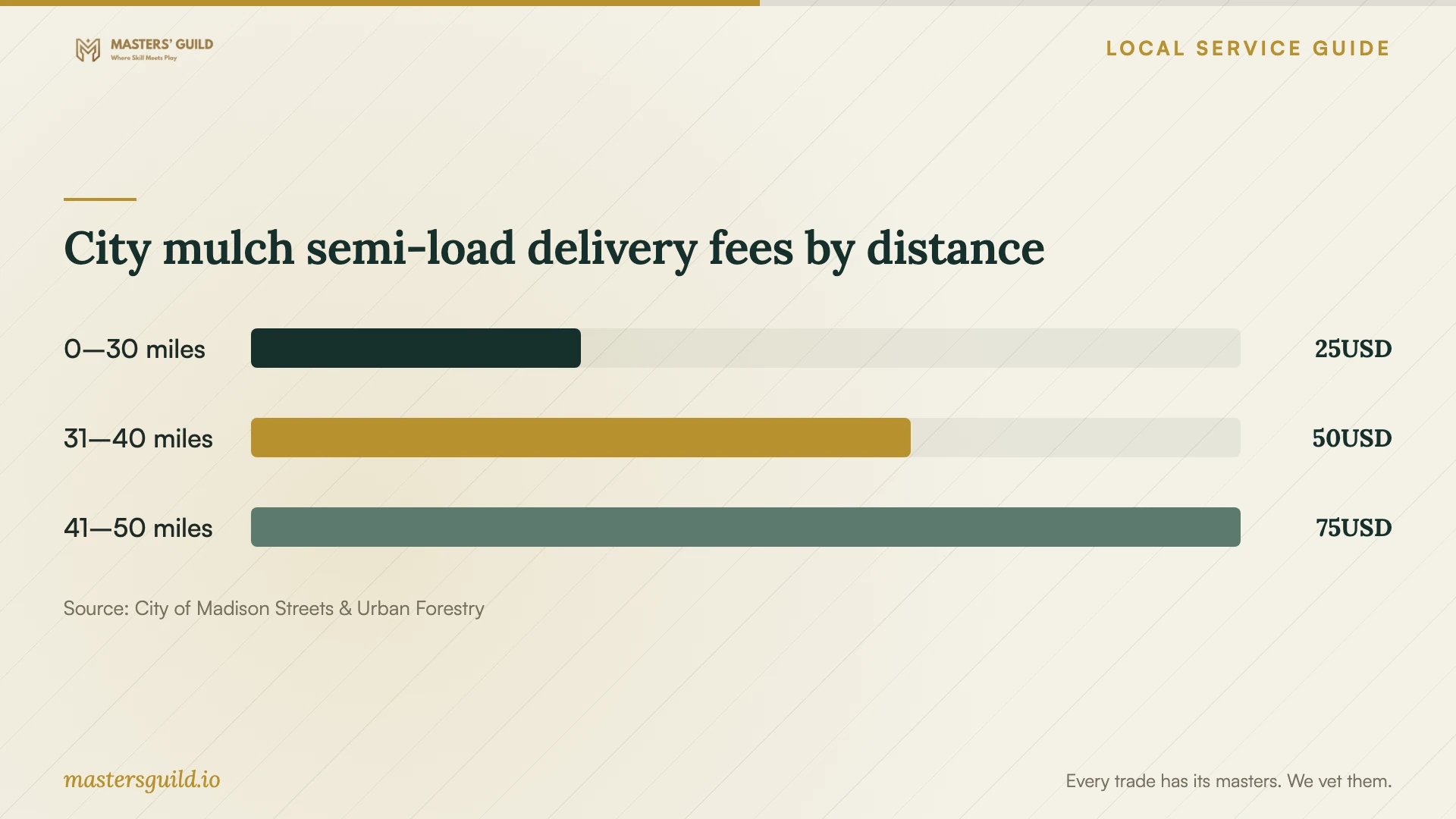
Ask the gardener to measure the area, propose the material quantity and quote pickup and spreading. Confirm availability and vehicle arrangements before treating city mulch as your supply plan. The delivery-fee chart concerns semi-load purchases, about 75 yards, so use it only if you are considering a project of that scale. [3]
Decide whether the job includes pesticide application. Wisconsin DATCP requires for-hire applicators to hold certification in the appropriate category, an Individual Commercial Applicators License, and to work for or hold a Pesticide Business License. Ask who will apply the product and request those credentials. You can also specify hand weeding and require your approval before any chemical treatment. [5]
City mulch semi-load delivery fees by distance
Local details that affect your job
Investigate the city terrace rain-garden program first
Before commissioning private terrace excavation, ask City Engineering whether your terrace qualifies for its rain-garden program. The city lists a minimum terrace width of ten feet, clearance of at least 15 feet from tree bases, and restrictions where gas or water mains lie below the terrace. Its published $100 homeowner contribution covers native plant plugs, planting labor and mulch, with payment through a special assessment on the property tax bill. Confirm eligibility and project availability before budgeting around this program; the charge is not a private gardener’s installation price. [4]
Keep retained leaves away from the street
You can ask the gardener to retain some leaves for garden mulch instead of removing all of them. Madison’s guidance recommends leaf mulch around two inches deep and clearing street gutters before rain to reduce nutrients entering storm drains that lead to the lakes. Mark the areas where you want leaves retained and include gutter clearing and correct set-out placement in the cleanup scope. [2]
Choose the next step for your garden project
| Your project | Next step | Detail to settle before hiring |
|---|---|---|
| Private bed cleanup | Request a defined cleanup quote | Identify retained plants and agree on waste handling. |
| Terrace planting | Check the planting plan against city rules | Use allowed non-woody plants and preserve sidewalk and sightline clearance. |
| Terrace rain garden | Ask City Engineering about eligibility | Confirm site restrictions and program availability before private excavation. |
| Mulch spreading | Compare material sourcing and transport | City small-quantity mulch has loading restrictions and no delivery. |
| Chemical weed treatment | Request applicator credentials | Check category certification, individual licensing and business licensing. |
Your hiring checklist
- Photograph the beds and label plants to keep, move or remove.
- Separate private beds, terrace planting and tree work in your request.
- Ask for itemized labor, materials, transport and disposal charges.
- Agree on material substitutions and an approval process for extra work.
- Check your address’s yard-waste set-out date before scheduling cleanup.
- Confirm who supplies mulch, collects it and spreads it.
- Request pesticide credentials if the gardener proposes chemical treatment.
- Agree on watering duties and the condition you expect at completion.
Frequently Asked Questions
Can my gardener put cleanup debris out for city collection?
Agree on that task in the quote and check your address’s set-out date. Madison requires separate brush and yard-waste piles, placement outside the street and five feet of clearance from obstructions. Collection follows the assigned Sunday during the work week. [2]
Can I plant flowers on my terrace?
Madison allows non-woody plants common to gardens or landscaping. Keep plants out of the sidewalk and check vision clearance restrictions before choosing tall plants on a corner lot. The city maintains terrace trees. [1]
Does the $100 rain-garden program cover my private garden?
The cited $100 contribution applies to the city terrace rain-garden program. It covers native plugs, planting labor and mulch. Ask City Engineering about your terrace’s eligibility and program availability before using that amount in your budget. [4]
What should I check before paying someone to spray weeds?
Ask for the actual applicator’s category certification and Individual Commercial Applicators License, plus the Pesticide Business License for the business they work for. Wisconsin DATCP requires all three for for-hire commercial application. [5]
Sources and scope
This guide combines the sources below with practical planning guidance. Figures apply to the stated geography and period; request a written quote for your property.