
Local service guide
Business Plan Consulting in Madison, WI
Arrange Business Plan Consulting in Madison by identifying who will read your plan, asking that lender or program manager for requirements, and choosing help for the work you need. Start with UW–Madison SBDC’s no-cost, confidential business and financial planning support. If you commission paid work, agree on the written plan, editable financial model, research sources and revision process before signing. [1]
Choose the help that matches your purpose
Write a short brief describing your business, the decision you need to make, the intended reader and your deadline. Separate questions about business viability from requests to write or format a submission. Ask a prospective consultant to explain what you must supply and what they will produce.
UW–Madison SBDC works one-on-one with startups and existing businesses across industries. Its assistance includes business planning, financial planning for capital access, marketing and sales growth, and business management. Request a consultation to discuss your needs before deciding which tasks to commission. [1]
For an internal plan, focus your brief on customers, pricing, operating costs and the decisions you want to test. For a funding submission, ask the recipient for its document checklist and projection format. Have the consultant name any missing information before quoting the engagement.
Define the financial work before requesting quotes
UW–Madison’s financial-projections guidance identifies preparation inputs including a defined business model, potential market size, startup and operating costs, personal resources, and historical financial statements for an expansion or business purchase. Gather those inputs, and mark assumptions that still need research. [4]
Ask the consultant to connect the narrative to the numbers. Specify how they should document sales volumes, pricing, staffing, startup purchases and funding. Request an assumptions sheet and an explanation of how changing an input affects your cash needs. Agree with the intended recipient on the projection period and level of detail.
The SBDC’s free online projections course teaches the inputs and terminology needed to work with different templates and service providers. It includes a workbook and sample lender documents. Use it to prepare questions for your consultant and identify gaps in your own information. [4]
Compare paid proposals by deliverable
Request proposals against the same brief. Ask each consultant to separate interviews, market research, writing, financial modeling and revisions. Require a delivery schedule that names your own deadlines for providing records and reviewing drafts. Ask how they price additional work after you approve the scope.
Before signing, request a redacted sample relevant to your business stage and ask who will perform the work. Agree on confidentiality, file ownership, editable formats, payment milestones and the number of review rounds. Include a handover meeting where you can question the assumptions and practice explaining the plan.
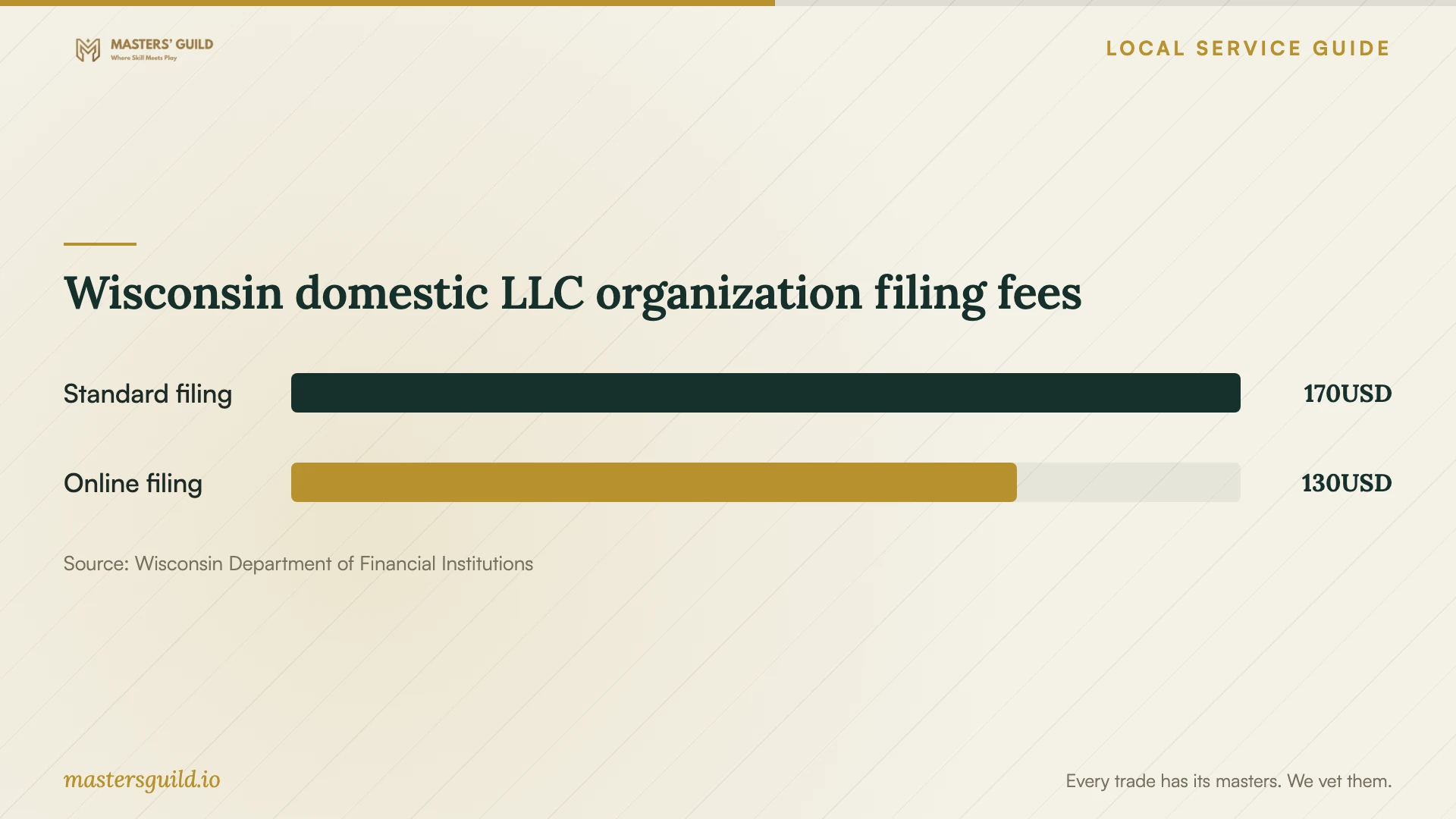
For your budget, obtain a written fee tied to these deliverables. The published amounts below cover Wisconsin LLC filing choices. Keep government filing charges separate from the consultant’s fee and ask the consultant to itemize any filing assistance. [5]
Check property-financing eligibility before commissioning a plan
Madison’s Commercial Ownership Assistance program supports qualifying existing businesses moving toward commercial property ownership or development. The city lists assistance of up to $250,000 or 25% of the building price or project cost, whichever is less. It requires applicants to demonstrate business viability through a business plan, financial statements and/or other documentation. [2]
Contact the program manager before asking a consultant to prepare a package. The city reviews eligibility first, then requests detailed underwriting and project-feasibility information from eligible businesses. Ask which documents your project needs, and make that confirmed list part of the consulting agreement. [2]
Wisconsin domestic LLC organization filing fees
Local details that affect your job
Local no-cost support and intake
UW–Madison SBDC primarily serves Dane, Sauk and Columbia counties. Call 608-263-2221 to discuss business-planning support. On its consulting request form, the center instructs applicants to select pre-venture unless they have both made a business transaction and filed their entity type. Use that instruction when describing your stage so the intake matches your situation. [1]
Madison ownership assistance has location and applicant restrictions
The city requires a Madison resident with a business and proposed commercial building within the city, at least two years of for-profit operating experience, and no other property ownership beyond a primary residence. It also lists prior-funding, substantial-expansion and geographic requirements. Your business must lie in or within half a mile of a listed tax increment district. Ask program manager Michael Miller at 608-267-8721 to confirm the address and full eligibility before commissioning application work. The city receives applications quarterly, due by noon on the third Friday of January, April, July and October. [2]
A scheduled workbook option for Wisconsin businesses
As checked October 10, 2026, UW–Madison lists October 14 as the fall Entrepreneurial Training Program registration deadline. The $250 program includes five live virtual sessions beginning October 15 and an in-person session November 20. Completion requires attendance at four of five virtual sessions, at least 75% of the in-person session, and completion of the workbook. Check registration availability and your attendance commitments before choosing this route; the program’s stated goal is a comprehensive rough draft. [3]
Choose your next planning step
| Your situation | Next step | Scope to confirm |
|---|---|---|
| You need help defining or reviewing the business | Request no-cost UW–Madison SBDC consulting | Discuss business planning and financial planning for capital access |
| You want structure while writing your own plan | Consider the $250 Entrepreneurial Training Program | Check eligibility, attendance and workbook requirements |
| You need to understand projection inputs | Use the free SBDC online projections course | Prepare your model, market and cost information |
| You are pursuing Madison commercial ownership assistance | Contact the city program manager first | Confirm location, eligibility and underwriting documents |
| You want someone to produce a defined submission | Request a paid proposal against your recipient’s checklist | Specify writing, research, editable projections and revisions |
Your hiring checklist
- Name the intended reader, funding purpose and submission deadline.
- Request the lender’s or program manager’s document checklist before seeking proposals.
- Gather financial statements, startup quotes, operating-cost estimates and evidence for sales assumptions.
- Discuss your planning needs with UW–Madison SBDC.
- Send prospective consultants the same scope and request itemized deliverables.
- Agree on confidentiality, editable files, revisions, payment milestones and delivery dates.
- Review the model with the consultant and practice explaining the assumptions before submission.
Frequently Asked Questions
Can I get business-planning help without paying a consultant?
UW–Madison SBDC offers no-cost, confidential consulting for startups and existing businesses. Its listed assistance includes business planning and financial planning for capital access. Ask the center how it can support your particular project. [1]
Will the Entrepreneurial Training Program produce a finished funding submission?
The program describes its goal as a comprehensive rough draft in a written workbook. Compare your completed workbook with the recipient’s requirements and arrange any additional writing or financial work you need. [3]
What should I bring to a financial-planning consultation?
Prepare your business model, potential market size, startup and operating costs, and personal-resource information. For an expansion or business purchase, gather historical financial statements. These match the preparation inputs in UW–Madison’s projections guidance. [4]
Does a business plan establish eligibility for city ownership assistance?
The city considers business viability alongside applicant, business, property and location requirements. Contact the program manager for an eligibility discussion before paying for application preparation. Eligible applicants then proceed to detailed underwriting and project-feasibility review. [2]
Sources and scope
This guide combines the sources below with practical planning guidance. Figures apply to the stated geography and period; request a written quote for your property.