
Local service guide
Appliance installation in Madison, WI
Appliance installation in Madison starts with checking whether your new appliance can use the existing connections. Send the installer the model number, opening measurements, and hookup photos before accepting a quote. Ask who will handle connection changes, permit questions, testing, and removal. Madison provides separate plumbing and electrical permit routes; confirm requirements for your exact scope with Building Inspection before scheduling altered hookups. [3]
Define the job before comparing installers
Give each bidder the appliance type, manufacturer and model, existing fuel or power connection, and water and drain connections. State whether you want the old unit removed. Photograph accessible hookups without disturbing them. If you cannot see a connection, request an assessment rather than pulling the appliance forward yourself.
Measure the opening and delivery route, including doorways, turns, and stairs. Ask the installer to compare the manufacturer's installation instructions with those measurements. For a dishwasher, include the opening height beneath the counter and the floor level in front of it. For laundry equipment, identify the vent route and whether you plan to stack the units.
Request a written list of included materials and work. Separate placement and connection from cabinet alterations, wiring, plumbing changes, and disposal. Ask which contractor will perform each part and request credentials and insurance appropriate to that work. Agree on an approval process for corrections before accepting an allowance for extra work.
Check drainage and outlets before delivery
Madison's rental-housing guidance identifies dishwasher drains missing a proper air gap, leaking or improperly installed plumbing fixtures, improperly grounded three-prong outlets, and kitchen outlets missing GFCI protection as common violations. Use this rental-housing guidance to frame questions for your installer and ask them to assess the requirements for your home. [1]
Ask the bidder to describe the dishwasher drain arrangement and inspect accessible supply valves and connections. Have an electrical contractor assess a questionable outlet or proposed circuit change. Report leaks, damaged fittings, and inaccessible connections before the appointment. Request a separate price and scope for any correction.
Resolve permit and utility questions first
Madison's Permit Applications page provides electrical and plumbing datasheets and routes for upgrades and replacements. Applicants use datasheets after plan approval or for projects that do not require plan review. The city also directs people planning general repairs over $500 to contact Building Inspection at 608-266-4551. [3]
Describe your proposed work when you call: an existing-connection replacement, relocated water line, new outlet or circuit, or gas-appliance conversion. Ask whether the scope requires a permit or plan review, who should apply, and which inspections affect scheduling. Record the answer and assign responsibility in the quote.
For an MGE-served property, involve the utility if your contractor identifies a need to relocate, add, or modify permanent utility service. MGE requests 30 business days of notice for those permanent-service projects and asks for gas load and electric service requirements in its application. It also specifies an additional two to four weeks for engineering on multifamily and commercial or industrial projects. These timelines concern utility service work, rather than routine appliance hookup appointments. [4]
Compare the full quote and removal plan
Compare labor, connection materials, trade corrections, permit handling, and haul-away as separate items. Confirm whether the installer will disconnect the old unit, protect floors, move it out of the home, and remove packaging. Ask how they will price unexpected work and obtain your approval before starting it.
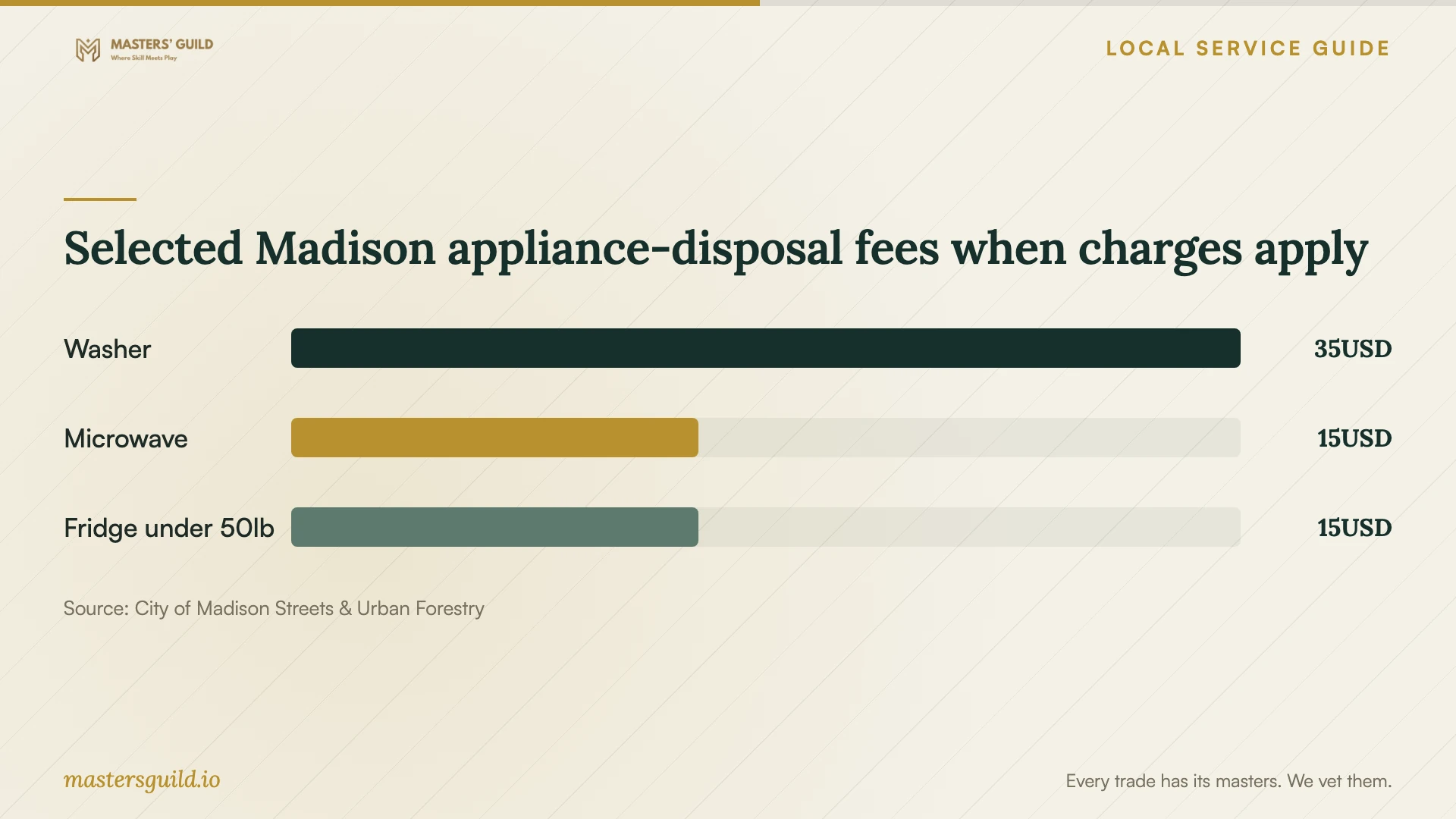
Madison lists dishwashers, washers, dryers, and ranges in its $35 disposal fee category. It lists microwaves and refrigeration devices weighing less than 50 pounds in a $15 category. The city says only residents who do not receive Streets Division curbside recycling must pay these fees. Complete a large-item work order before setting an appliance out for collection. [2]
Before declining installer haul-away, decide who will move the old appliance to the collection location and where you will keep it until pickup. Check your address through the city's work order process to determine whether fees apply. The city lists door removal for freezers and for refrigerators weighing over 50 pounds. [2]
Agree on testing and handover
Ask the installer to follow the manufacturer's commissioning steps and demonstrate the appliance before leaving. For a water-connected unit, request a check of accessible connections during operation. For laundry equipment, ask them to explain leveling, restraints or stacking hardware, and the vent connection. Include these checks in the agreed scope.
Keep the model and serial numbers, installation receipt, materials list, and any permit or inspection records. Ask whom to contact for an installation problem and whom to contact for an appliance fault. Review unfinished work before final payment and document any follow-up appointment in writing.
Selected Madison appliance-disposal fees when charges apply
Local details that affect your job
Use Madison's scope-specific permit route
Building Inspection provides plumbing and electrical datasheets plus upgrade and replacement routes. Contact the office at 608-266-4551 with the connection changes you propose. Ask your bidder to include application and inspection responsibilities in the quote, and confirm permit requirements for the work before booking delivery. [3]
Check recycling service before paying for disposal
Madison charges listed large-item fees only to residents who do not receive Streets Division curbside recycling. Its work order system determines whether payment applies and lets residents schedule collection before setting items out. Use that address-specific result when choosing between city collection and installer haul-away. [2]
Plan around permanent utility service changes
MGE requests 30 business days of notice for relocation, modification, or addition of permanent utility service. It specifies an additional two to four engineering weeks for multifamily and commercial or industrial projects. If your appliance project requires permanent-service work at an MGE-served property, coordinate the utility application before committing to delivery. [4]
Choose the next step for your installation
| Your situation | Next step | Include in the quote |
|---|---|---|
| You plan to use existing connections | Ask an installer to review the model instructions and hookup photos. | Placement, connection materials, testing, and removal. |
| You need plumbing or electrical changes | Confirm the city's permit route with Building Inspection. | Trade work, application responsibility, and inspection coordination. |
| The dishwasher drain needs assessment | Ask about the air gap; Madison lists missing proper air gaps as a rental-housing violation. | A separate scope and price for drainage corrections. |
| Your contractor identifies an MGE permanent-service change | Coordinate with MGE; it requests 30 business days of notice for permanent service relocation, modification, or addition. Multifamily projects need an additional two to four engineering weeks. | Utility coordination and a schedule tied to service readiness. |
| You want city collection of the old appliance | Complete the large-item work order before setting it out and check whether fees apply. | Who disconnects and moves the old unit to the collection location. |
Your hiring checklist
- Send each bidder the model number, installation instructions, hookup photos, and opening measurements.
- Measure doorways and stairs; identify access and floor-protection needs.
- Ask the installer to assess drainage, supply connections, electrical connections, and venting.
- Describe connection changes to Building Inspection and assign permit application responsibility.
- Ask your contractor whether the project needs permanent utility service changes before choosing a delivery date.
- Request separate prices for connections, alterations, materials, and haul-away.
- Check city collection arrangements before choosing your removal option.
- Agree on operational testing, documentation, and approval of extra work.
Frequently Asked Questions
Does an appliance replacement require a Madison permit?
Confirm with Building Inspection for your exact scope. The city publishes plumbing and electrical application routes, including upgrades and replacements, but its page does not establish a blanket exemption for appliance replacements. Describe any connection changes when you call. [3]
Should I accept a dishwasher quote without a drain assessment?
Ask the installer to assess the drain arrangement before agreeing to the scope. Madison lists dishwasher drains missing a proper air gap among common rental-housing violations. Have the bidder identify and price any correction. [1]
Will Madison charge $35 to collect my old washer?
Washers appear in the city's $35 category, but only residents without Streets Division curbside recycling must pay listed fees. Check your address in the large-item work order and schedule collection before setting the washer out. [2]
Does MGE's notice period apply to an ordinary hookup?
MGE specifies 30 business days of notice for relocation, modification, or addition of permanent utility service. That requirement concerns permanent-service projects rather than routine hookup appointments. Multifamily and commercial or industrial projects require an additional two to four engineering weeks. Ask your contractor whether your project needs utility service work before arranging delivery. [4]
Sources and scope
This guide combines the sources below with practical planning guidance. Figures apply to the stated geography and period; request a written quote for your property.