
Local service guide
Tree cutting in Louisville, KY: Hiring and Cleanup
Tree cutting in Louisville starts with checking whether branches approach power lines, then arranging an on-site assessment and a written scope for cutting, stump work and debris removal. Contact LG&E before arranging work near electrical lines: the utility prohibits trimming within 10 feet of high-voltage lines and offers service drops or covers for the lines feeding a home. Ask each contractor to explain the proposed work, provide insurance documentation and identify what cleanup the price includes. [1]
Decide what you want the arborist to assess
Ask for an assessment before committing to removal if your main concern is a branch over the roof, a change in the tree's appearance or uncertainty about its condition. Tell the arborist what you want to protect: the house, a driveway, a fence or usable garden space. Request an explanation of the options and the reasons for the proposed cuts.
For removal, identify the exact tree with a photograph or a site walk. Ask whether the proposal includes leaving a stump, grinding it or another agreed treatment. Have the contractor describe the finished ground surface and who will handle chips, soil and any later planting. Agree on those details before comparing totals.
Coordinate electrical-line work before booking
LG&E and KU advises homeowners to hire a professional tree-trimming service for limbs growing into the low-voltage service lines entering a home or business. The utility says it does not take responsibility for trimming those limbs. For high-voltage lines, its guidance prohibits trimming within 10 feet because of the danger. [1]
The utility offers a service drop or cover-up for the lines feeding your property. Its instructions direct customers to My Account, then the Service Orders tile or Additional Service in the navigation bar. Discuss that arrangement with the contractor before agreeing to a work date, and ask who will coordinate the request and confirm that the crew can proceed. [1]
Describe nearby wires when requesting an assessment. Do not approach them to measure clearance. Ask the contractor to explain the work sequence and any utility action needed before cutting begins, including who will confirm the utility arrangements.
Specify the cleanup after utility or storm work
LG&E and KU distinguishes routine vegetation work from storm restoration. After routine trimming, crews chip and haul smaller limbs but cut larger branches into manageable lengths and leave them for the property owner. During storm restoration, crews remove trees from affected lines and restore the lines; homeowners handle the tree debris. [2]
If utility crews have attended, ask the tree contractor to inspect what remains before quoting cleanup. Specify whether you want logs retained, branches chipped on site or all agreed material hauled away. Include chip removal and a final rake-up if that is the finish you expect. Ask the crew to confirm which areas it will clear.
Use disposal fees to understand the hauling quote
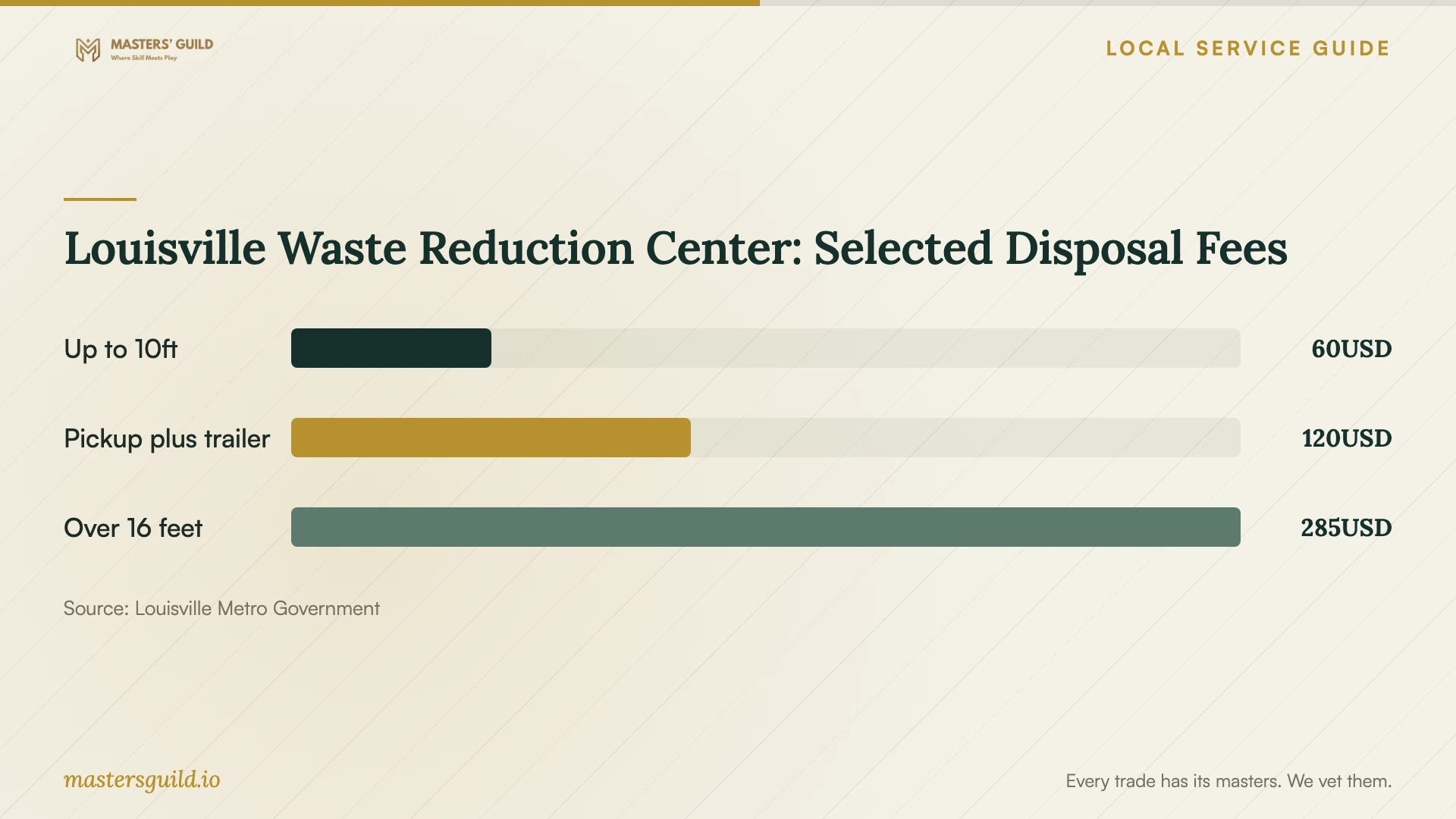
Louisville Metro's August 20, 2026 bulletin lists Waste Reduction Center fees by vehicle category. It gives a $60 fee for a pickup truck, van, box truck or trailer up to 10 feet in length; $120 for a loaded pickup plus a trailer up to 10 feet; and $285 for the listed vehicle categories over 16 feet. These are disposal charges, not arborist labor or complete hauling prices. [3]
Ask the contractor whether the hauling line includes loading, transport, disposal and the expected number of trips. Request the intended destination and ask the contractor to confirm that it accepts the material. Compare the agreed work and exclusions before deciding which quote fits your job.
The same bulletin advertised free residential storm-debris disposal for August 22, 2026 only and excluded contractors and businesses from that event. That date has passed. Confirm available disposal arrangements before choosing to handle debris yourself. [3]
Compare crews on the same written scope
Request current liability insurance documentation and ask how the company covers its workers. If a contractor presents an arborist credential, ask for the holder's name and a way to verify it. Explain whether you want a condition assessment, a pruning plan or removal, and ask who will perform that part of the job.
Give each bidder the same photographs and access information. Include gate width, parking arrangements, nearby structures and any access you hope to use through a neighbor's property. Ask how the crew will protect surfaces and where it plans to place equipment. Agree on access permission before work begins.
Before accepting, review the payment schedule, weather postponements and how the contractor will price additional work. Walk through the finished site with the crew and compare the result with the written scope before signing off.
Louisville Waste Reduction Center: Selected Disposal Fees
Local details that affect your job
Service-line branches require homeowner coordination
LG&E and KU advises professional trimming for branches growing into the service lines entering your home and offers a service drop or cover-up through My Account. Discuss utility coordination when booking so you can agree on responsibilities before the crew arrives. [1]
Power restoration leaves a separate debris job
LG&E and KU says homeowners must remove branches and large limbs left after storm restoration. Once the utility has addressed the lines, request a cleanup scope for the remaining material. [2]
Check the Waste Reduction Center before self-hauling
The August 20, 2026 city bulletin lists the Waste Reduction Center at 636 Meriwether Avenue, with entry from Bland Street, and says it accepts no cash. Confirm its current hours, accepted material and fees before loading a vehicle. [3]
Choose the next step for your tree job
| Situation | Next step | Confirm before booking |
|---|---|---|
| Branches approach electrical lines | Contact LG&E and discuss coordination with the contractor | High-voltage restriction and any service drop or cover-up |
| You are unsure whether removal is needed | Request an arborist assessment | Reasons for the recommendation and alternatives considered |
| Utility crews left storm debris | Request a separate cleanup quote | Logs, branches, chips and hauling included |
| You plan to haul debris yourself | Confirm disposal arrangements before loading | Accepted materials, vehicle category, fee and payment method |
| You want the site ready for planting | Request an explicit stump and ground-finish scope | Grinding, chip removal, fill and responsibility for planting |
Your hiring checklist
- Photograph the tree and surrounding area from a safe position.
- Describe nearby wires to the contractor and arrange any needed utility coordination before booking.
- Identify the exact tree and request reasons for the proposed pruning or removal.
- Request insurance documentation and verify any claimed arborist credential.
- Agree on equipment access, parking, surface protection and neighbor permissions.
- Separate cutting, stump treatment, chip handling and hauling in the written scope.
- Confirm the disposal destination and who pays for additional trips.
- Review payment terms and inspect the agreed cleanup before signing off.
Frequently Asked Questions
Will LG&E trim branches around the line entering my house?
LG&E and KU says it does not take responsibility for trimming limbs growing into low-voltage service lines entering a home or business. It advises hiring a professional tree-trimming service and offers a service drop or cover-up. Coordinate that arrangement before cutting. [1]
Does utility storm work include hauling away the tree?
LG&E and KU removes trees from affected power lines during storm restoration, but homeowners handle the resulting branches and large limbs. Ask for a separate debris-removal quote after the utility has addressed the lines. [2]
How much should I budget for tree removal?
Get an on-site written quote for your tree and access conditions. The city disposal fees shown here cover vehicle-based disposal charges, not a complete removal job. Ask the contractor to separate cutting, stump treatment and hauling so you can compare the same scope. [3]
Can my contractor use the advertised free storm-debris drop-off?
The city bulletin's free event ran on August 22, 2026 only and excluded contractors and businesses. That offer has expired. Ask your contractor to confirm the destination and disposal charge for your job. [3]
Sources and scope
This guide combines the sources below with practical planning guidance. Figures apply to the stated geography and period; request a written quote for your property.