
Local service guide
Gardening in Louisville: Plan the Job and Compare Quotes
Arrange Gardening in Louisville by defining the beds, plants, and tasks you want a gardener to handle, then request a written quote that separates labor, materials, and debris removal. Before approving fertilizer or lime, use the Jefferson County Conservation District soil-testing process. For planting intended to catch roof or driveway runoff, request a separate design and installation scope based on MSD guidance. [1] [2]
Define the first visit before comparing gardeners
Write a short brief for each bed: remove weeds, preserve named plants, trim selected shrubs, add planting, or clear accumulated debris. Mark anything the gardener should leave untouched. If you cannot identify a plant, request identification before removal and include that review in the scope.
Send the same photographs and task list to each gardener. Include approximate bed dimensions, gate access, steps, the water supply, and where materials can be unloaded. Find out whether the gardener will visit before quoting and who will do the work. Request examples of comparable planting or maintenance jobs, plus proof of liability insurance.
For an overgrown garden, request an initial cleanup quote and a separate maintenance proposal. Agree on which tasks take priority within your spending limit. Tell the gardener to seek approval before removing unidentified plants, disturbing buried edging, or starting work outside the brief.
Test the soil before buying amendments
The Jefferson County Conservation District advises testing soil to determine fertilizer needs. Its routine nutrient analysis includes soil pH, phosphorus, and potassium, with fertilization and liming recommendations. Have your gardener explain how their proposed amendments follow the results before you authorize purchases. [1]
Register with the district before delivering a sample if you want the testing cost waived. The published collection instructions call for 10 to 15 extractions from random locations in the testing area, removal of plant matter, and mixing the soil into a one-pint sample. Follow the program's instructions and ask Extension how to sample beds with different uses or soil conditions. [1]
Keep soil-test results with the garden brief. Request a quote that lists each amendment, its quantity, and its cost. Decide whether you will collect and deliver the sample or pay the gardener to handle those tasks. Have the gardener separate sample-handling charges from analysis fees.
Give runoff planting its own scope
MSD describes rain gardens as native plantings with deep, dense roots that capture and infiltrate stormwater. Its guidance addresses runoff from roofs and hard surfaces such as driveways and patios, and emphasizes proper sizing and construction. If runoff is your reason for hiring, tell the gardener before requesting a planting quote. [2]
Photograph where water travels during rain and mark the proposed garden location. Have the gardener explain which surfaces will drain toward it, how they will assess the site, and how they will size the garden. Request a written plan before approving excavation or changes to runoff routing.
MSD publishes a rain-garden handbook and plant guides. It also lists demonstration gardens, including the Louisville Nature Center at 3745 Illinois Avenue and Louisville Grows Healthy House at 641 Portland Avenue. Use those resources to discuss the appearance you want and the maintenance you are willing to arrange. [2]
Agree on planting and weather decisions
Request planting dates for the plants you choose and an explanation of when the gardener would postpone work. Specify who will water new plants between visits, how you will receive care instructions, and whether the quote includes a follow-up visit. Review written plant-replacement terms before buying materials.
The National Weather Service's 2020 regional review records a hard freeze in April and temperatures in the 20s in many locations on May 9. These historical observations cover the wider forecast region. They do not establish a Louisville planting deadline or describe this year's forecast. When scheduling tender plants, ask how the gardener will respond to a cold forecast. [3]
Compare the full quote and authorize changes
Request separate charges for labor, plants, mulch or amendments, delivery, and debris removal. For hourly work, clarify how the gardener counts crew time and set an approval limit. For a fixed price, list the included beds and tasks, the cleanup standard, and the process for pricing extra work.
Compare itemized quotes for the same gardening tasks; soil-test fees cover analysis only. If a proposal includes chemical treatment, ask the provider to identify the product and explain how you can verify their current authorization before approving that part of the work. [1]
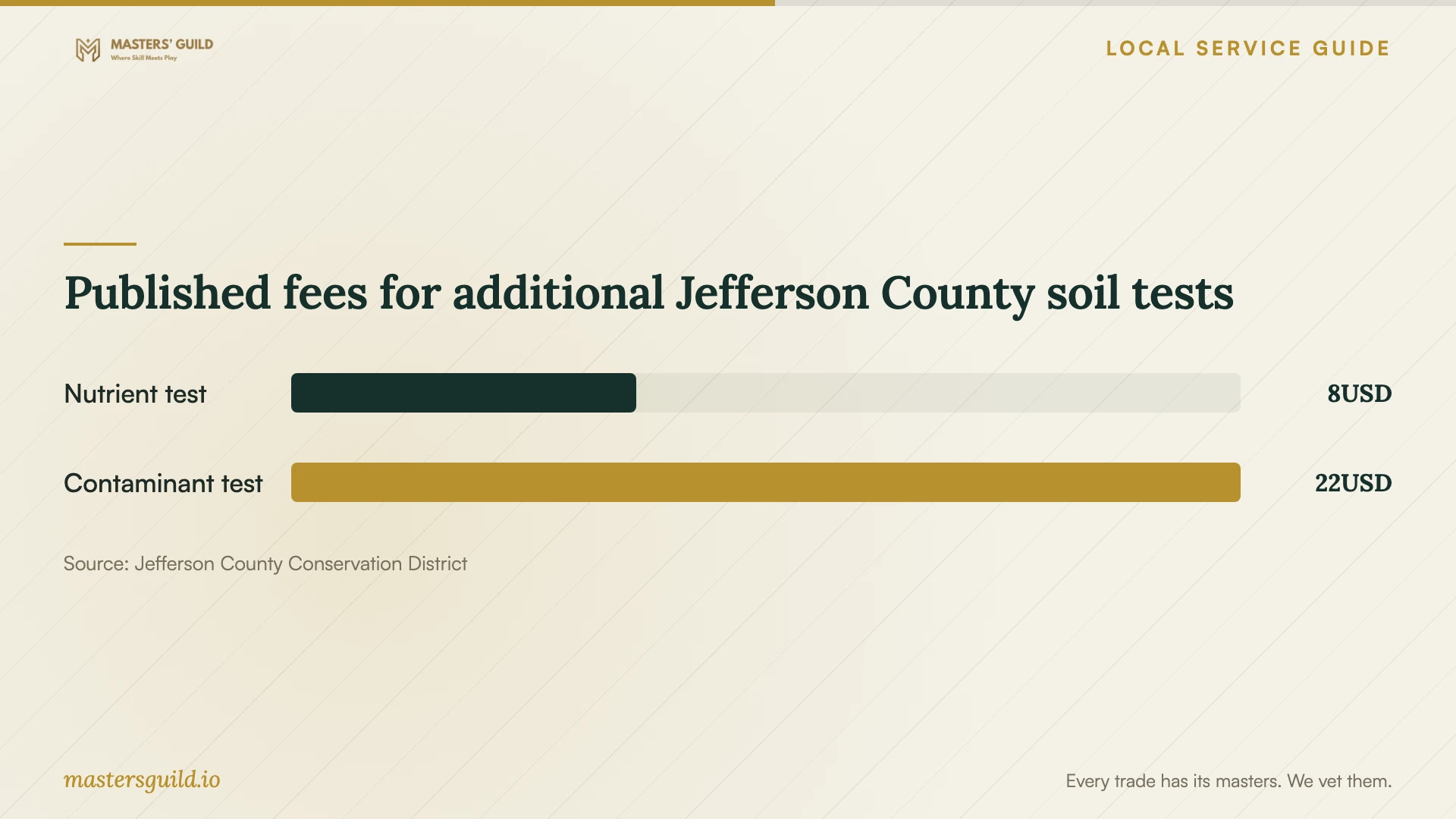
Published fees for additional Jefferson County soil tests
Local details that affect your job
Register before delivering a free soil sample
The district offers Louisville Metro residents up to two free tests per household per year from an allocation of 250 tests between July and June, on a first-come basis. Register first and confirm availability. Deliver samples to Jefferson County Extension at 4200 Gardiner View Avenue, Suite 101, Louisville, KY 40213. The district lists a turnaround of about three weeks, so allow for results before approving amendments. [1]
Use MSD resources before approving a rain garden
Review MSD's rain-garden handbook and plant guidance with your gardener. MSD offers printed handbooks through Customer Relations at 502-540-6000. Its example describes 935 gallons from one inch of rain over a 30-by-50-foot roof surface. Use that example to discuss which roof or paved area your garden will receive runoff from and how the gardener will account for it in the design. [2]
Choose the scope that fits your garden
| Your goal | Scope to request | Before you approve |
|---|---|---|
| Clear overgrown beds | Initial cleanup with plants to preserve identified | Agree on removal boundaries and debris disposal. |
| Keep beds maintained | Recurring visits with a written task list | Specify visit frequency and how you approve extra work. |
| Add new plants | Plant selection, installation, and care instructions | Decide who supplies plants and handles watering. |
| Apply fertilizer or lime | Amendment proposal informed by soil testing | Review nutrient results and application recommendations. |
| Capture roof or patio runoff | Rain-garden design, construction, and planting | Ask how the gardener will size the garden for the contributing surfaces. |
Your hiring checklist
- Photograph the beds and mark plants to keep.
- Write the first visit's tasks in priority order.
- Describe access, unloading space, and water availability.
- Arrange soil testing before authorizing fertilizer or lime.
- Request a separate plan for planting intended to receive runoff.
- Compare itemized quotes for the same work.
- Agree on watering, debris removal, and approval of extra charges.
Frequently Asked Questions
Can I get a free soil test before hiring a gardener?
Louisville Metro households can request up to two free tests per year through the Conservation District, subject to its annual allocation. Register before taking your sample to Extension and confirm that free tests remain available. [1]
How long should I allow for soil-test results?
The district says it mails results in about three weeks. Arrange collection and delivery before the visit at which you want to decide on fertilizer or lime. Have the gardener keep amendment purchases pending until you review the recommendations. [1]
What should I ask a gardener about a rain garden?
Ask how they will assess the location, identify contributing runoff surfaces, size and construct the garden, and select plants. MSD's guidance emphasizes proper sizing and construction; request a written plan that addresses those points. [2]
Should I book ongoing maintenance with the cleanup?
Request separate proposals so you can review the cleanup outcome before choosing a recurring schedule. Define the ongoing tasks, visit frequency, spending limit, and arrangements for watering and material purchases.
Sources and scope
This guide combines the sources below with practical planning guidance. Figures apply to the stated geography and period; request a written quote for your property.