
Local service guide
Pressure Washing in Los Angeles: Plan Before Booking
Arrange Pressure Washing in Los Angeles by asking each bidder to specify the cleaning method, water-use compliance and wash-water disposal route before you book. LADWP’s conservation FAQ restricts water use on driveways, sidewalks and other hard surfaces, with a water-broom exception. Ask the provider to explain how the proposed equipment fits that exception, then agree on the surfaces, stain treatment and cleanup in writing. [1]
Confirm the cleaning method before choosing a bidder
Start with the driveway, patio or exterior surface you want cleaned, rather than requesting a machine or pressure setting. Send photographs that show the whole area, close-ups of stains and any damaged finish. Ask the bidder to name the equipment, cleaning products and test area they propose. Keep roof work and upper-level surfaces as separate items so you can review the access plan.
For hard surfaces, LADWP’s conservation FAQ says customers should not use water on sidewalks, walkways, driveways or parking areas, except with water brooms. It also states that customers must comply with Phase 2 of the Emergency Water Conservation Plan Ordinance. A bidder should explain how their proposed method meets those restrictions. Do not assume that a description such as pressure cleaning establishes compliance. [1]
If a bidder proposes an attachment they describe as a water broom, ask them to identify it in the quote. For an unclear method or a claimed exception beyond the FAQ, seek clarification from LADWP before scheduling. You can reach the utility at 1-800-342-5397. Keep the response with your job notes and give competing bidders the same instructions. [1]
Agree on wash-water collection and disposal
Walk the site with the provider and identify the driveway slope, gutter, catch basin and private drains. Ask the provider to describe how they will collect the wash water and where they intend to take or discharge it. Request a specific destination and the steps they will use to confirm that destination accepts the water from your job.
The Bureau of Engineering defines the city’s storm-drain system to include streets, gutters, drains and channels. Its permit guidance identifies discharge prohibitions and exemptions, and describes industrial-wastewater permits with specific discharge requirements. Treat a gutter or drain as a destination that needs checking. Ask the provider to confirm the applicable requirements with the city rather than approving a disposal route yourself. [3]
Separate surface cleaning from drainage construction. The city requires a Storm Drain Connection Permit for a physical connection into its storm-drain system. For construction in the public right-of-way, its guidance requires an approved Bonded Sewer Contractor and city inspection. Those requirements concern connection work; the guidance does not establish that an ordinary cleaning visit requires that construction permit. [3]
Compare the complete scope and price
Ask for a written total based on the area the bidder inspected or measured. Include the surface material, stains you want treated, furniture moving, access, cleaning products, collection equipment and disposal. Request separate prices for adjoining walls, steps or another patio. This makes it easier to choose the scope you want without guessing what a lower quote leaves out.
Agree on the finish you will accept. Ask the provider to distinguish general cleaning from treatment of a specific stain, and to list any marks they expect to remain. Request a small test before they clean the full surface. Record existing cracks, peeling coatings and damaged joints in photographs, then agree on when you will inspect the completed work.
Ask for evidence of insurance and the name of the business responsible for the job. Clarify who will operate the equipment, who will approve a change in scope and how the provider will handle a damage concern. These are hiring questions, not a substitute for checking any requirements that apply to added repair or construction work.
Plan the rinse and prepare the property
Ask how the provider will handle the final rinse near windows, metal finishes and other surfaces where you care about visible spotting. LADWP explains that dissolved minerals contribute to water hardness and lists fewer water spots on air-dried dishes and automobile finishes as an advantage of softened water. Use that information to discuss finish expectations, rather than requiring a whole-house softener for this job. [2]
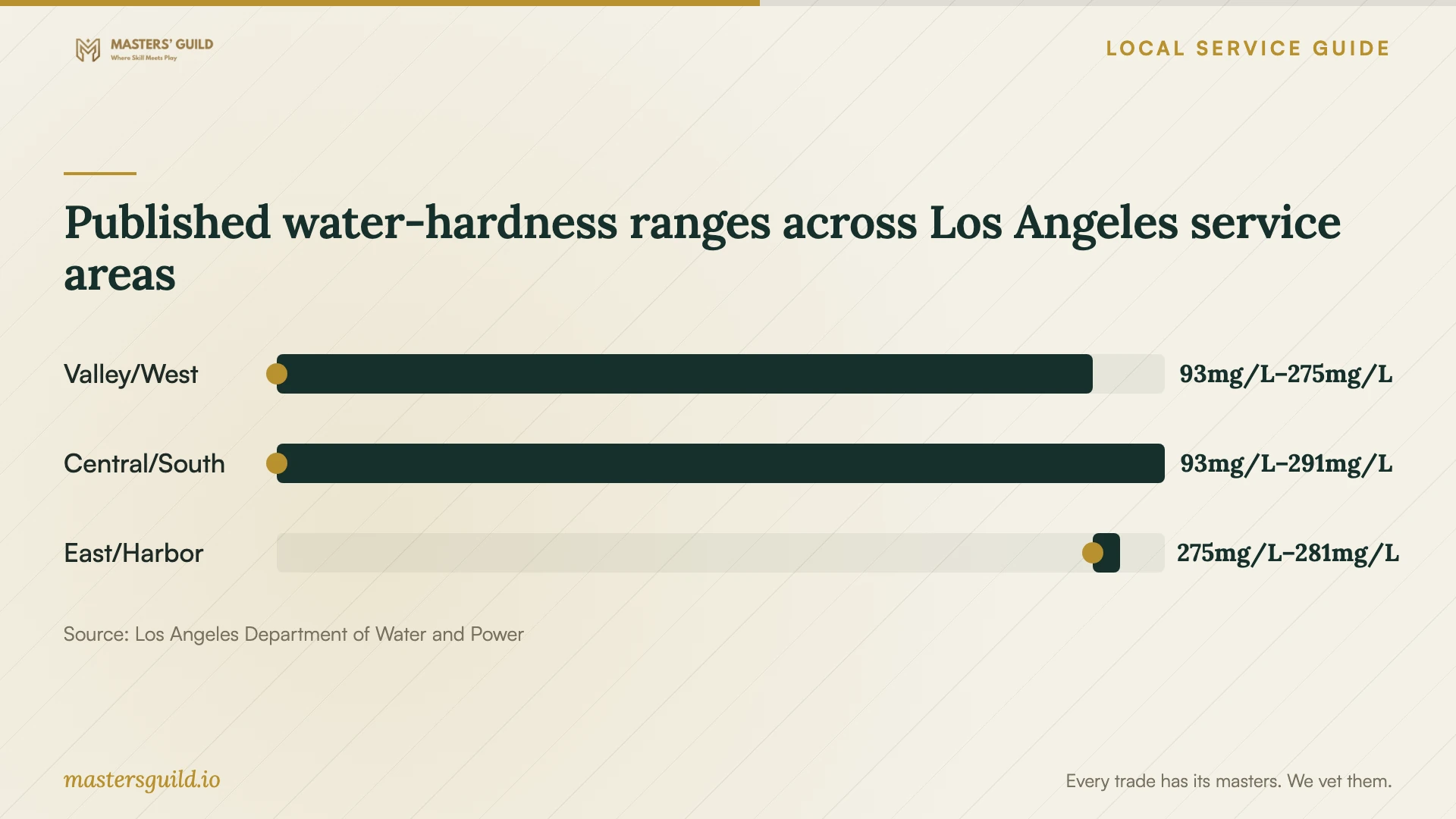
LADWP’s published 2022 hardness ranges cover broad water-quality areas, not individual addresses. The utility says water hardness varies across the city and that most areas can receive different supplies during repairs, maintenance or unusual events. The chart provides historical context for a rinse discussion; it does not measure the water at your hose connection today. [2]
Before the appointment, move vehicles and loose belongings from the agreed work area. Show the provider the water connection, gates and any access restrictions. Point out nearby plants, exterior outlets, damaged finishes and areas you want excluded. Agree on who will move heavier items and when household members can use the cleaned area again.
Published water-hardness ranges across Los Angeles service areas
Local details that affect your job
LADWP’s hard-surface water-use restriction
LADWP’s conservation FAQ lists a water-broom exception for cleaning sidewalks, walkways, driveways and parking areas. Before booking one of those surfaces, ask the bidder to identify the equipment and explain its compliance. If they propose another method, ask LADWP to clarify whether the proposed use qualifies before you authorize it. [1]
A storm-drain connection is a separate project
The Bureau of Engineering requires a Storm Drain Connection Permit for a physical connection into the city’s system. It also requires an approved Bonded Sewer Contractor for construction in the public right-of-way. If a provider adds a drain connection to the cleaning proposal, pause that addition and confirm the permit and contractor arrangements with the city. [3]
Resolve these points before accepting a quote
| Your job | Ask the provider | Next step |
|---|---|---|
| Driveway or walkway cleaning | Which equipment fits LADWP’s water-broom exception? | Clarify compliance before booking. |
| Wash water could reach a gutter or drain | How will you collect it, and what disposal destination will you use? | Ask the provider to confirm applicable city discharge requirements. |
| Glass or finished surfaces beside the work | What rinse and drying approach will you use? | Agree on finish expectations and a test area. |
| Cleaning plus a new storm-drain connection | Who will arrange the Storm Drain Connection Permit and any public-right-of-way construction? | Separate the construction scope and verify the city’s requirements. |
Your hiring checklist
- Send photographs of the full work area, stains and existing damage.
- Ask the bidder to identify the hard-surface cleaning equipment and confirm the applicable water-use rules.
- Request a written wash-water collection plan and disposal destination.
- Compare totals for the same measured area and included treatments.
- Agree on a test area, excluded surfaces and expected remaining marks.
- Check insurance documentation and identify the business responsible for the work.
- Move vehicles and belongings, arrange gate access and identify the water connection.
- Agree on the final inspection and when you can use the area again.
Frequently Asked Questions
Can I book pressure washing for my driveway?
Check the proposed method first. LADWP’s FAQ restricts water use on driveways and other hard surfaces, with a water-broom exception. Ask the bidder to identify the equipment and explain compliance. Seek clarification from LADWP if the proposed method does not clearly fit the published guidance. [1]
Does a cleaning job need a storm-drain connection permit?
The cited city guidance requires that permit for a physical connection into the storm-drain system. It does not establish a construction-permit requirement for an ordinary cleaning visit. If the quote includes connection work, confirm the separate permit scope with the Bureau of Engineering. [3]
Should I require softened water for the wash?
Use the hardness information to discuss rinsing and spotting with the provider. LADWP’s figures describe broad areas in 2022, and supplies can change. Ask the provider to propose a finish-care approach for your surfaces rather than treating the chart as a current test at your address. [2]
How do I compare two prices?
Give both bidders the same photographs and surface measurements. Ask each to include stain treatment, access, protection, wash-water collection, disposal and cleanup. Compare the written total and exclusions, then resolve any difference in scope before choosing.
Sources and scope
This guide combines the sources below with practical planning guidance. Figures apply to the stated geography and period; request a written quote for your property.