
Local service guide
Mold Removal in Los Angeles: Plan the Right Scope
Arrange Mold Removal in Los Angeles by asking the contractor to identify the moisture source, explain which materials need cleaning or replacement, and separate cleanup from repairs in the quote. Los Angeles County advises removing mold and fixing the damp conditions that caused it. If the proposed work includes cutting out building materials, ask about South Coast AQMD asbestos survey requirements before authorizing demolition. [1] [2]
Choose cleanup or an assessment before buying tests
Start with the visible damage and moisture history. Los Angeles County says sampling and testing are unnecessary to know the health risk because people respond to mold exposure differently. Its guidance favors removing mold and preventing future growth. Ask anyone proposing tests to explain the specific decision the results would help you make. [1]
The county says homeowners can handle an affected area smaller than about 10 square feet in most cases. It describes cleaning hard surfaces with soap and water and notes that moldy absorbent materials, including carpet and ceiling tiles, may need replacement. Ask for an assessment if you cannot determine the affected area or identify the moisture source. [1]
Consider who would perform cleanup. The county notes that people with mold allergies can have more severe reactions, and people with compromised immune systems or chronic lung illnesses can develop serious lung infections after exposure. If those concerns apply in your household, discuss exposure with a healthcare professional before arranging hands-on work. [1]
Request a quote you can compare
Obtain a site-specific quote and schedule. Ask each contractor to describe the rooms and materials covered, how they will protect surrounding spaces, what they will remove, and who will handle disposal. Request separate prices for assessment, cleanup, moisture repair and rebuilding so you can compare the same work across proposals.
Ask the contractor to identify any areas they have not inspected. Agree on how they will document additional damage and obtain your approval before expanding the work. Request photographs and a written explanation with any change proposal. Decide who will coordinate the leak repair if another contractor must perform it.
For completion, ask how the contractor will document the cleaned areas, the materials replaced and the moisture problem addressed. Keep those records with the repair invoice. Los Angeles County recommends both cleaning mold and fixing the plumbing leak or other factor that created damp conditions. [1]
Resolve asbestos questions before material removal
South Coast AQMD states that demolition and renovation activities require a prior asbestos survey by a Cal/OSHA Certified Asbestos Consultant, subject to applicable exemptions. For renovation, the survey covers construction materials that the work may disturb. If your mold-removal proposal includes opening walls or removing flooring, ask the contractor to explain how these requirements apply to that scope. [2] [3]
Do not assume that living in the home exempts hired work. AQMD limits its owner-occupant exemption to qualifying residents of a residential single-unit dwelling who perform the renovation themselves. It excludes work performed by laborers, friends or family members, and identifies apartments, condominiums, townhouses and rental properties as outside that dwelling category. [3]
Ask who will arrange the survey, which materials it will cover, and whether the quote includes it. AQMD requires certified consultants to prepare asbestos survey reports without a conflict of interest in the renovation or demolition project. Request the report before approving material disturbance and ask the contractor to explain any resulting changes to the work plan. [2]
Prepare access and trace the water history
Before the visit, photograph visible spots and water damage. Note when you first noticed them, whether they followed rain or a plumbing incident, and whether anyone has cleaned or painted the area. Give the contractor access to the relevant rooms and ask which belongings you should move before work starts.
The county advises investigating soft spots, sagging ceilings, warped or cracked flooring and mold or mildew odors. It recommends fixing leaky roofs, windows and pipes, ventilating shower, laundry and cooking areas, and cleaning and drying after flooding. Use those locations to organize your inspection notes rather than assuming the visible patch marks the full problem. [1]
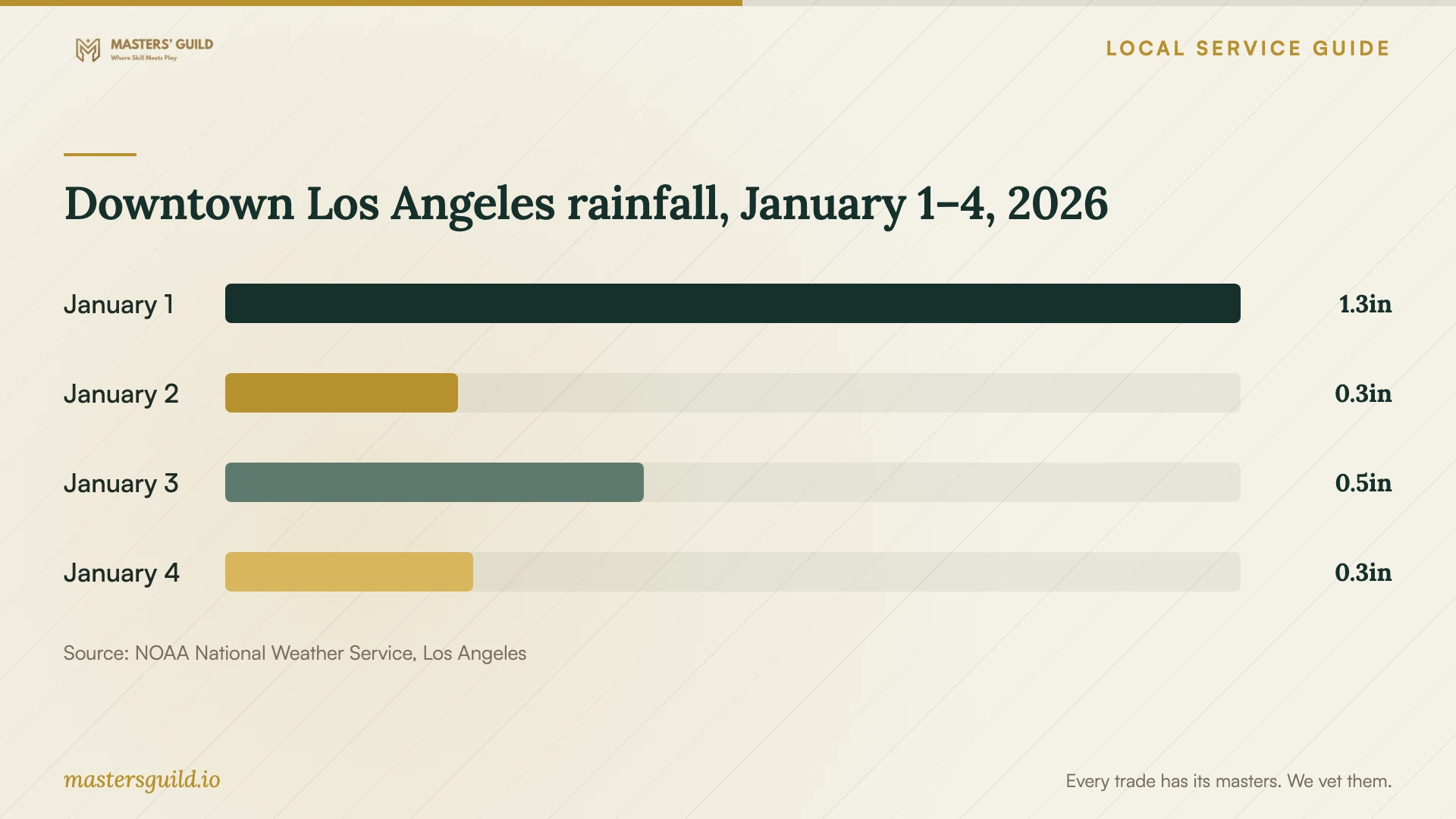
The rainfall chart records four days at the Downtown Los Angeles station in January 2026. Use a rain-related damage history to ask about roof or window leaks during the assessment. The observations cannot establish whether your home leaked or whether rain caused its mold. [4]
Downtown Los Angeles rainfall, January 1–4, 2026
Local details that affect your job
County reporting route for rental homes
If you rent in Los Angeles County, notify the property owner and keep a dated record of the condition and your correspondence. County Public Health accepts mold reports at 888-700-9995 and through an online reporting option. It says an inspector may visit and determine whether the owner must solve a mold problem. Ask the owner to arrange assessment and repairs before you commission destructive work. [1]
Regional survey rules change contractor-led work
For a Los Angeles project involving removal of building materials, discuss South Coast AQMD requirements before setting a demolition date. Its renovation survey guidance covers affected construction materials, and its owner-occupant exemption requires the qualifying homeowner to perform the work personally. Hiring a contractor does not fit that exemption. Ask for the survey arrangements and any applicable exemption explanation in writing. [2] [3]
Choose your next step from the proposed work
| Situation | Relevant guidance | Next step |
|---|---|---|
| Small patch on a hard surface | County guidance allows homeowner cleanup in most cases below about 10 square feet. | Consider exposure, identify the dampness source and review cleanup precautions. |
| Moldy carpet or ceiling tiles | The county says absorbent materials may need replacement. | Ask which materials the quote includes for removal and replacement. |
| Contractor proposes opening walls or removing flooring | AQMD renovation survey guidance covers materials that the work may disturb. | Resolve survey requirements before authorizing removal. |
| Mold in a rental home | County Environmental Health accepts reports and may inspect. | Notify the owner, document the issue and use the county reporting route if needed. |
Your hiring checklist
- Photograph the affected surfaces and write down the water-damage history.
- List the rooms and materials you want the contractor to inspect.
- Ask who will identify and repair the moisture source.
- Request separate quote items for cleanup, disposal, repairs and rebuilding.
- Ask the contractor to resolve asbestos survey applicability before disturbing building materials.
- Agree on written approval for additional work and changes to the schedule.
- Request completion photographs and records of the moisture repair.
Frequently Asked Questions
Do I need mold testing before hiring someone?
Los Angeles County says sampling and testing are unnecessary to know the health risk. Ask a contractor proposing tests to explain what decision the results would change. You can request an assessment of the visible damage and moisture source without assuming you need a testing package. [1]
Can I clean a small patch myself?
The county says homeowners can handle moldy areas smaller than about 10 square feet in most cases. It recommends gloves, goggles and exposure precautions. Hard surfaces and absorbent materials need different treatment, and household health concerns should inform who performs the work. [1]
Does an owner-occupied house qualify for an asbestos exemption?
AQMD describes a narrow exemption for qualifying owner-occupants who personally renovate their residential single-unit dwelling. It does not extend that exemption to hired laborers, friends or family members. Ask how the rules apply before a contractor disturbs building materials. [3]
How should I compare costs and schedules?
Obtain a site-specific quote and schedule. Give contractors the same requested scope and ask them to separate assessment, cleanup, disposal, moisture repair and rebuilding. Clarify who approves additional work and whether survey arrangements must precede material removal.
Sources and scope
This guide combines the sources below with practical planning guidance. Figures apply to the stated geography and period; request a written quote for your property.