
Local service guide
Los Angeles childcare: choosing care that fits
Choose childcare by matching your child's age, required hours and daily travel route, then confirm an opening before paying a deposit. In Los Angeles, start with the city's ZIP-code resource and referral service. For licensed programs, review state records and visit in person; for a nanny, agree on duties, screening, wages and backup care before the first day. [1] [2]
Start with your schedule and ZIP code
Write down the earliest drop-off, latest pickup, days of care and start date you need. Include school holidays and any evening work. Test the trip at your expected travel times before choosing a program. Ask how staff handle late pickup and who may collect your child.
The city's Finding Child Care page lets families locate their resource and referral agency by ZIP code. Agency staff can explain care options, connect families with programs and help determine financial-assistance eligibility. Ask for options that match your child's age, language needs and hours, then contact each program to confirm availability. [1]
The city reports that many families begin looking 6 to 12 months before they need care. Use that as a planning reference, not a promised wait time. If you need care sooner, ask about current openings and prepare a temporary arrangement while you evaluate a longer-term option. [1]
Compare settings before paying application fees
Shortlist settings that fit your routine: a child care center, a family child care home, a school-based program or care with a family member, nanny or neighbor. The city distinguishes licensed programs from family, friend and neighbor care. Ask each provider to explain which arrangement they offer and how you can verify it. [1]
For school-based early childhood options, the city directs families to LAUSD's Early Childhood Education Division at 213-241-0415. Its guidance says LAUSD programs typically serve ages 2 to 5, with Cal-SAFE providing infant and toddler care. Confirm the specific program's eligibility, hours and location before treating it as a match. [1]
Request a written fee sheet covering tuition, registration, deposits, meals, closures and late pickup. Ask whether the provider charges to join a waitlist; the city notes that some programs do. Compare the total payment for the same schedule, and obtain the refund and withdrawal terms before paying. [1]
Check licensing records and tour your shortlist
Ask a licensed provider for its facility number and use California's Community Care Licensing search to review visits, inspections, citations and complaints. The city explains that you can search by the nine-digit facility number or by facility type, name and location. Confirm that the record matches the address where your child will receive care. [1]
CDSS publishes five years of facility information online. Contact the regional office listed with the facility for more details about citations or other records. During your visit, ask to see the most current licensing information; CDSS says facilities must provide it. You can also subscribe to notifications when facility information changes. [2]
During the tour, ask who will care for your child, who covers staff absences and how staff communicate injuries or concerns. Discuss allergies, medication instructions, emergency contacts and authorized pickup. Ask the provider to describe a normal day, including meals, rest and outdoor time, and compare those answers with your child's needs.
Screen a nanny or informal caregiver
The city describes family, friend and neighbor care as license-exempt care that may be paid or unpaid. Its guidance says license-exempt providers may care for their own children and children from one other family. If you are considering a shared arrangement, ask your resource and referral agency how the proposed setting fits the applicable rules. [1]
The city encourages family, friend and neighbor caregivers to register with TrustLine, California's background-check database. To check registration, call 800-822-8490. The city says the check includes criminal-history information and substantiated child-abuse reports. Also speak with references and ask the caregiver to explain their experience with children of your child's age. [1]
Put the arrangement in writing: days, hours, pay, duties, communication and sick-day plans. Discuss screen time, outings, transportation and who may enter the home during care. Ask about current pediatric first-aid and CPR training, and agree on emergency instructions before leaving your child with the caregiver.
Budget for wages, duties and extended days
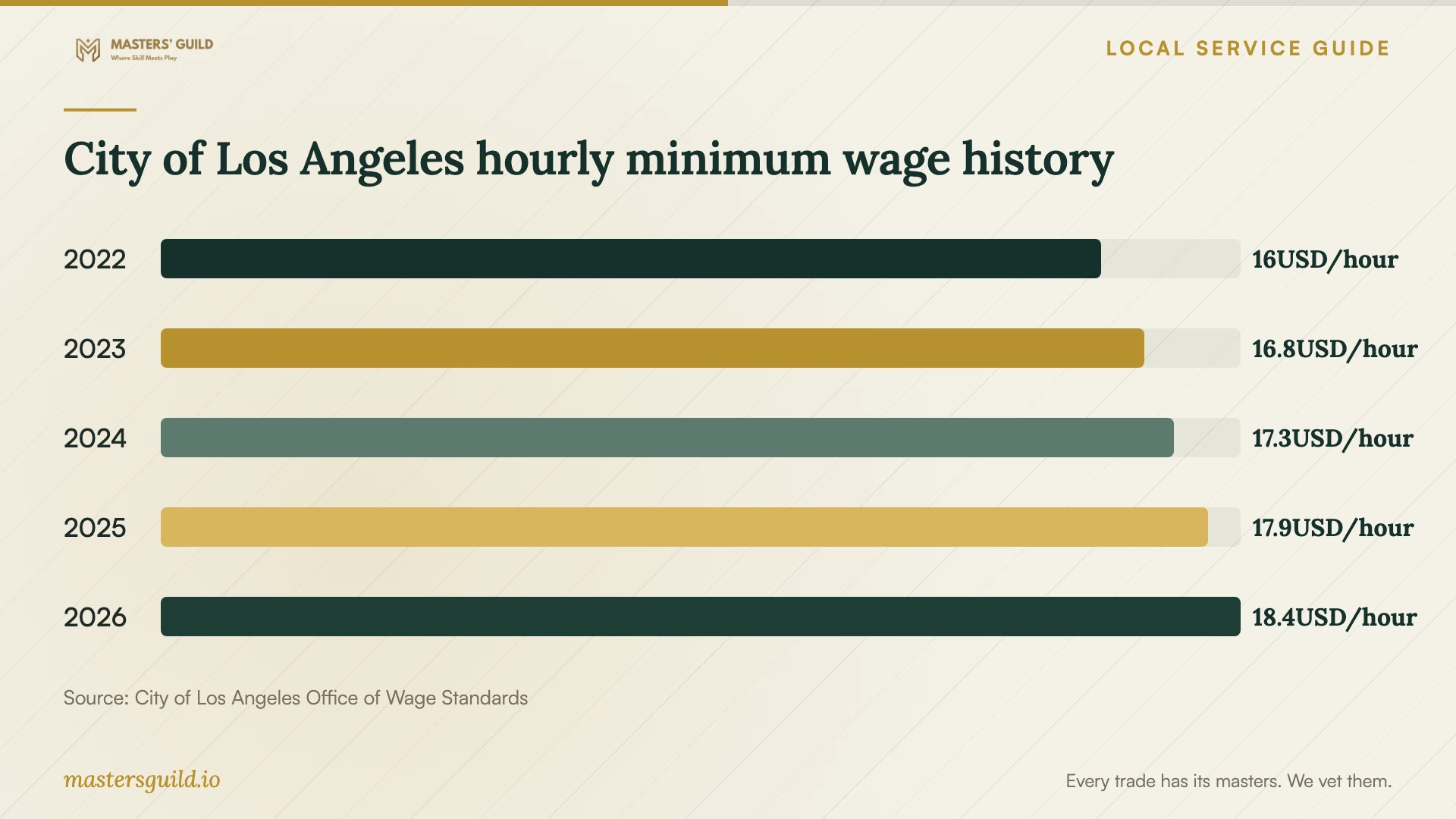
The City of Los Angeles minimum wage is $18.42 per hour effective July 1, 2026. The city's ordinance covers an employee who performs at least two hours of work in a particular week within city boundaries and is entitled to California minimum wage. Check the work address and coverage before applying this rate to your arrangement. [3]
California includes nannies and childcare providers among domestic workers. For covered personal attendants in private households, overtime is 1.5 times the regular rate after nine hours in a day or 45 hours in a week. The state lists exceptions, including casual babysitters and babysitters under 18, so confirm the rules for your specific caregiver. [4]
Duties affect overtime classification. The state says a worker who spends more than 20 percent of their time on tasks other than supervising, feeding and dressing the person receiving care is not a personal attendant. For non-live-in domestic workers outside that category, overtime starts after eight hours a day or 40 regular hours a week, with additional rules for double time and seventh-day work. [4]
Separate childcare duties from housekeeping in your written agreement. Ask about payroll administration and applicable sick leave before setting your budget. The city requires covered employers to provide paid sick leave and retain payroll records for four years. Obtain actual caregiver quotes and program fee sheets; the wage history below does not establish current childcare market prices. [3]
City of Los Angeles hourly minimum wage history
Local details that affect your job
Find the agency serving your ZIP code
LA City residents receive resource and referral support through five agencies. Use the city's ZIP-code locator to identify yours, then ask for programs matching your child's age and required hours and for help assessing payment assistance. Confirm openings with the programs before submitting applications. [1]
Check the care address against city boundaries
The Los Angeles city wage ordinance ties coverage to work performed within city boundaries, including its two-hour weekly threshold for employees entitled to California minimum wage. Use the Office of Wage Standards boundary resource before budgeting a directly employed caregiver's pay. Ask the office at 844-924-3752 about coverage questions. [3]
Ask LAUSD about age and program eligibility
For district early childhood care, call 213-241-0415 and ask about the program's hours, location and eligibility. The city's guide describes typical LAUSD coverage as ages 2 to 5 and identifies Cal-SAFE as an infant and toddler option. Confirm your family's eligibility before including a program in your shortlist. [1]
Choose your next search step
| Care option | Useful next step | Confirm before committing |
|---|---|---|
| Licensed center | Request local referrals and review the facility record | Age-specific opening, hours, fees and current licensing documents |
| Licensed family child care home | Review the facility record and tour the home | Care address, daily routine, absence coverage and pickup arrangements |
| LAUSD early childhood program | Call the Early Childhood Education Division | Eligibility, age coverage, location and operating hours |
| Nanny or informal caregiver | Discuss references, TrustLine registration and a written arrangement | Screening, duties, wage coverage, sick days and backup care |
Your hiring checklist
- Write down your child's age, care dates, daily hours, language needs and medical instructions.
- Locate your resource and referral agency and request options for your schedule.
- Confirm an opening and request the complete written fee sheet before paying.
- Match a licensed provider's facility record to the care address and ask about any unresolved concerns.
- Tour your shortlist and discuss supervision, emergency response and authorized pickup.
- Check an informal caregiver's references, background-screening information and training.
- Agree on pay, duties, closures, sick days, withdrawal terms and backup care in writing.
Frequently Asked Questions
How far ahead should I look for care?
The city says many families start 6 to 12 months before they need care. That is a planning reference rather than an availability forecast. Ask programs about openings for your child's age and start date, plus waitlist fees and refund terms. [1]
Does a state licensing search replace a visit?
CDSS advises families to visit in person and request current licensing information. Its online records cover five years. Contact the facility's regional office when you need more detail about citations or records. [2]
Is $18.42 the going rate for a nanny?
The city publishes $18.42 as its hourly minimum wage from July 1, 2026, for covered employees. It is a legal floor, not a nanny-price survey. Obtain a quote for your hours and duties and account for applicable overtime and employment obligations. [3] [4]
Can housekeeping change a nanny's overtime rules?
Yes. California says workers who spend more than 20 percent of their time on non-attendant tasks do not qualify as personal attendants. Housecleaning and laundry appear among those tasks. Confirm the classification before combining childcare with household work. [4]
Sources and scope
This guide combines the sources below with practical planning guidance. Figures apply to the stated geography and period; request a written quote for your property.