
Local service guide
Los Angeles masonry: hiring and approval planning
To arrange masonry work in Los Angeles, define the repair area, ask contractors how their license classification covers the scope, and confirm the approval route before setting a construction date. California’s C-29 classification includes brick, block, stone, walls, veneer and paving. Consult LADBS about building permits and check whether your property needs separate historic-district review for exterior changes. [1] [2] [3]
Define the repair you want bidders to inspect
Photograph the full wall, chimney or paved area, then take close views of damaged units and joints. Mark the repair boundaries and describe what you want to retain. Ask bidders to distinguish joint repair, individual unit replacement, rebuilding, new veneer and paving in their proposals.
For a leaning wall, loose overhead masonry or a chimney concern, ask whether you need a structural assessment before selecting a repair. Request an explanation of what the contractor will investigate and which findings would change the proposed scope. Avoid choosing a cosmetic treatment before discussing those concerns.
Match the contractor to the complete scope
CSLB defines C-29 masonry work to include concrete units, baked clay products, block, natural and manufactured stone, and refractory materials. Its scope includes load-bearing and non-load-bearing walls and fences, ceramic veneer other than tile, thin brick facing, paving, and cleaning, caulking and clear waterproofing incidental to masonry construction. [3]
Request the contractor’s license number, classification and insurance documentation. Ask who will perform each part of the project, including work beyond masonry. Request examples with comparable materials and repair boundaries, and ask how you will approve replacement brick, stone and mortar appearance before installation.
Settle the LADBS permit route
LADBS states that private-property construction, alteration and repair work on buildings within the City of Los Angeles requires a permit. The department offers express permits for simple projects without plan check, counter plan check for simple projects requiring review, and regular plan check for large or complex projects. Ask LADBS which process applies to your proposed work. [2]
For an unclear scope, arrange a preliminary plan check meeting with a LADBS engineer before submitting plans. The department offers this consultation to clarify municipal code requirements. Through ePlanLA, applicants can submit plans and construction documents electronically and complete the plan-check and permit-issuance process. [2]
Assign responsibility for drawings, applications, departmental questions and inspections in the agreement. Ask bidders to separate approval-related charges from construction charges. Agree on how you will authorize changes if the department requests a different scope, and make the proposed start date conditional on obtaining the required approvals.
Check historic-district review before exterior changes
Los Angeles City Planning requires additional review for exterior changes to properties within Historic Preservation Overlay Zones, called HPOZs. This includes some changes that need no building permit. Use ZIMAS to check the district boundary and the property’s designation as contributing, contributing altered or non-contributing. [1]
City Planning directs applicants to its Online Application System. Staff determine the review procedure from the project description and property status. Consult the district’s Preservation Plan and assigned planner before committing to replacement materials or a changed exterior appearance. The department requires planning approvals and/or HPOZ board review before construction. [1]
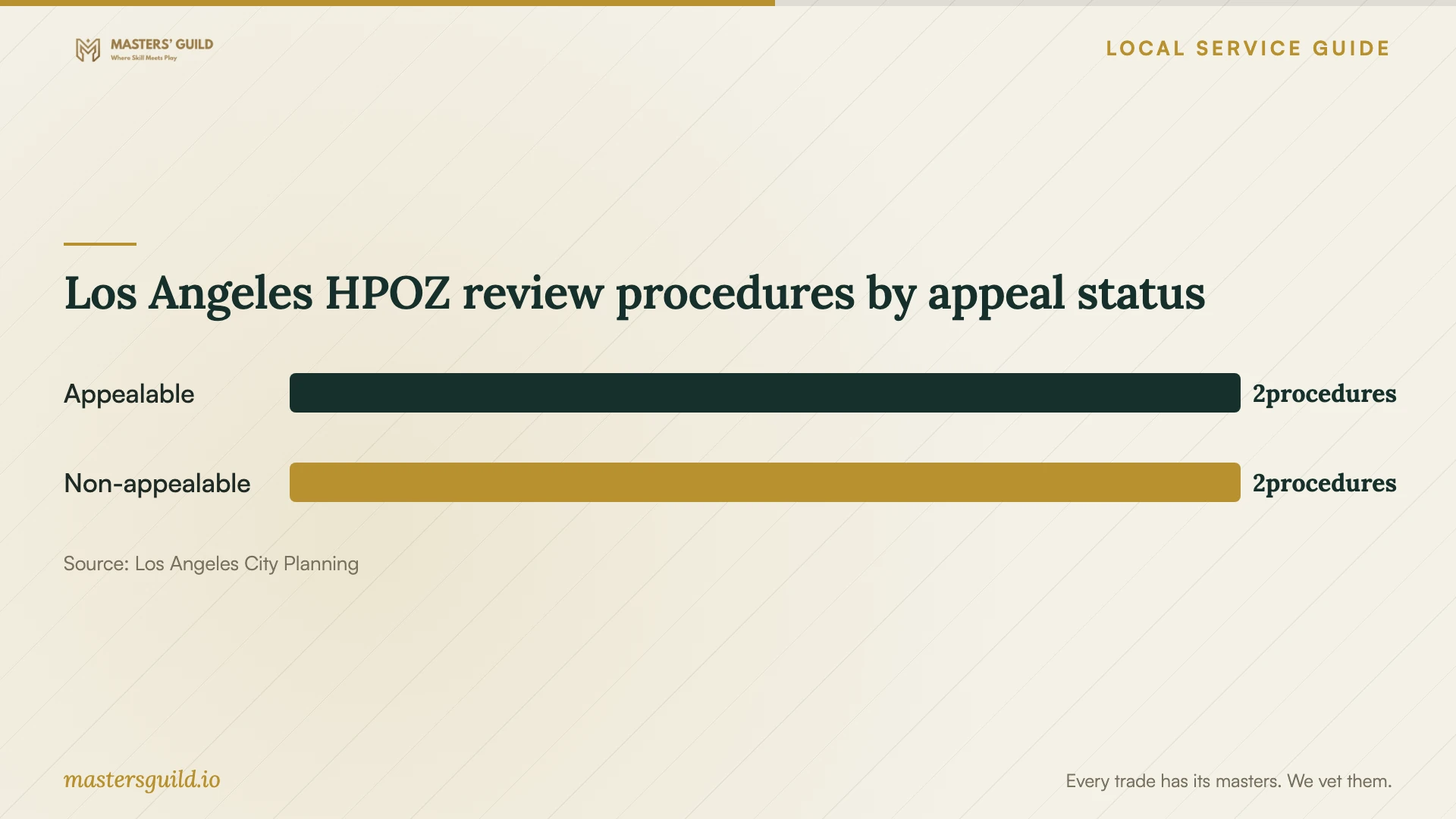
City Planning identifies four review procedures. Certificates of Appropriateness and Certificates of Compatibility have a 15 day appeal period; the two conforming-work procedures are not appealable. Ask the planner which procedure applies and when staff can clear associated permits. Include that answer when discussing the construction schedule. [1]
Make quotes comparable and agree on completion
Request separate descriptions for removal, replacement materials, joint work, access equipment, protection of adjoining surfaces and disposal. Ask whether the price includes a sample area for your approval. Have each bidder identify the same repair boundaries so you can compare what you would receive for the quoted amount.
Record exclusions and the procedure for authorizing extra work. Ask how the contractor will document damage discovered after removal and price the proposed response. For exposed work, request a weather-protection plan and instructions for caring for the selected materials. Agree on access hours, parking and cleanup.
Before work starts, agree on what you will inspect at completion: the approved repair boundaries, appearance against the accepted sample, adjoining surfaces and debris removal. Keep the scope, approved changes and completion photographs together. Ask the contractor to explain any remaining work before making your final acceptance decision.
Los Angeles HPOZ review procedures by appeal status
Local details that affect your job
Use LADBS preliminary plan check to resolve uncertainty
For a building repair within City of Los Angeles limits, prepare photographs and a written scope for a preliminary plan check meeting. LADBS offers consultation with an engineer before plan submission and electronic processing through ePlanLA. Ask which review route and departmental clearances apply, then assign the application tasks in your agreement. [2]
Allow for separate HPOZ approval and appeal timing
Check ZIMAS before approving exterior masonry changes in a historic district, even if you believe the work needs no building permit. City Planning determines the procedure from the scope and property designation. Certificate of Appropriateness and Certificate of Compatibility decisions have a 15 day appeal period. Ask the assigned planner when associated permits can receive clearance before committing to a start date. [1]
Choose the next step before accepting a quote
| Project situation | Next step | Question for the agreement |
|---|---|---|
| Brick, block, stone or paving work | Discuss classification coverage; CSLB includes these materials and applications within C-29. | Who will perform each part of the complete scope? |
| Building repair with unclear permit requirements | Ask LADBS about preliminary plan check with an engineer. | Who will prepare the scope and handle department questions? |
| Exterior work within an HPOZ | Check ZIMAS designation and contact the assigned district planner. | Which materials and appearance changes will you submit for review? |
| HPOZ certificate procedure | Discuss the 15 day appeal period with the planner before setting construction dates. | When can staff clear the associated permits? |
| Bidders describe different repair areas | Request revised quotes using the same marked photographs. | Which removal, replacement, access and cleanup tasks does each price include? |
Your hiring checklist
- Photograph the full work area and mark the proposed repair boundaries.
- Describe the materials and exterior appearance you want to retain.
- Request the contractor’s license number, classification and insurance documentation.
- Ask LADBS to confirm the approval route for the written scope.
- Check historic-district status and discuss exterior changes with the assigned planner.
- Compare removal, materials, access, protection and disposal on matching scopes.
- Assign application tasks and agree on sample approval and written change authorization.
- Set completion expectations and keep approved changes and photographs.
Frequently Asked Questions
Which classification covers bricklaying and masonry?
CSLB’s C-29 classification includes brick, block, stone, structural and nonstructural walls, veneer and paving. Ask the contractor to explain how their classification covers your complete project, including any proposed work beyond masonry. [3]
Does a small building repair need a permit discussion?
LADBS states that private-property construction, alteration and repair work on buildings within city limits requires a permit. Ask the department to identify the route for your specific scope, including whether it requires plan check. [2]
Can historic-district review affect my start date?
Yes. City Planning requires planning approvals and/or HPOZ board review before construction. Certificate of Appropriateness and Certificate of Compatibility decisions have a 15 day appeal period. Ask your district planner which procedure applies and when staff can clear associated permits. [1]
How should I compare masonry repair prices?
Ask bidders to price the same marked repair area and specify removal, materials, joint work, access equipment, surface protection and disposal. Request separate approval charges and exclusions. Agree on how you will authorize and pay for additional work.
Sources and scope
This guide combines the sources below with practical planning guidance. Figures apply to the stated geography and period; request a written quote for your property.