
Local service guide
Lighting Installation in Long Beach, CA
For Lighting Installation in Long Beach, choose a contractor who will assess the existing wiring, confirm the permit requirements for your scope, and coordinate any required inspections. The city’s electrical guidance requires permits before work and inspection approval before concealing or energizing permitted wiring. Before booking, agree on fixture locations, controls, wall repairs, and who handles the permit. [1]
Define the installation before asking for quotes
Give each contractor the same description: replace a fixture at its existing location, move a light, add recessed lights, or install a new outdoor fitting. Include photographs of the room and existing fixture, the ceiling height, and the model you want. Ask the contractor to inspect the mounting box and wiring before committing to reuse them.
Separate the electrical work from finish repairs. Ask who cuts openings, patches drywall, matches ceiling texture, paints, and removes the old fixture. For a pendant over a table or counter, agree on its position and hanging height before work starts. Request a written change price before approving work beyond the original scope.
Long Beach requires electrical equipment approved for its intended use and location by a recognized testing laboratory. Its guidance also requires weatherproof boxes and fittings in damp or wet locations. For a porch or exposed exterior wall, ask the installer to confirm the fixture’s location rating and the mounting components before you purchase it. [1]
Confirm permits and inspection timing
The city’s electrical guidance states that permits are required before starting work and does not identify a blanket exemption for replacing a ceiling light. Describe whether you will reuse the existing box, change wiring, add a switch, or relocate the fixture, and ask Building & Safety to confirm the permit path for that work. [1]
For wiring that requires a permit, the city requires inspection and approval before use or energizing. It also prohibits covering new wiring in a way that prevents inspection. Put inspection coordination into the contractor’s scope and ask who will arrange access, address corrections, and obtain the final approval. [1]
If your project involves opening a ceiling, agree on a pause before patching. Ask the installer to tell you when the work is ready for inspection and when you can schedule the finish trade. Keep the permit information and approval records with the invoice rather than relying on a verbal assurance that the job is complete.
Choose and check the contractor
California’s licensing rule applies when a project requires a building permit, uses employee labor or workers, or costs $1,000 or more for combined labor and materials. A quote below $1,000 does not remove the license requirement when another trigger applies. CSLB provides license verification and lists its consumer telephone number as 800-321-2752. [2]
For a lighting-only project, look for a contractor licensed for the electrical specialty and verify that the license matches the business quoting your work. CSLB advises choosing the relevant specialty contractor for a single trade. Its guidance also explains that a general building contractor taking specialty work must hold that specialty license or have a specialty contractor perform the work, subject to its broader-project exception. [2]
Ask who will attend the job and who will supervise any helpers. Request insurance information, a written scope, and a payment schedule. Compare how contractors handle inspection corrections and fixture problems. If you supply the light, ask whether the contractor will check its suitability before the appointment and how you will handle a damaged or incomplete package.
Choose brightness, color and controls
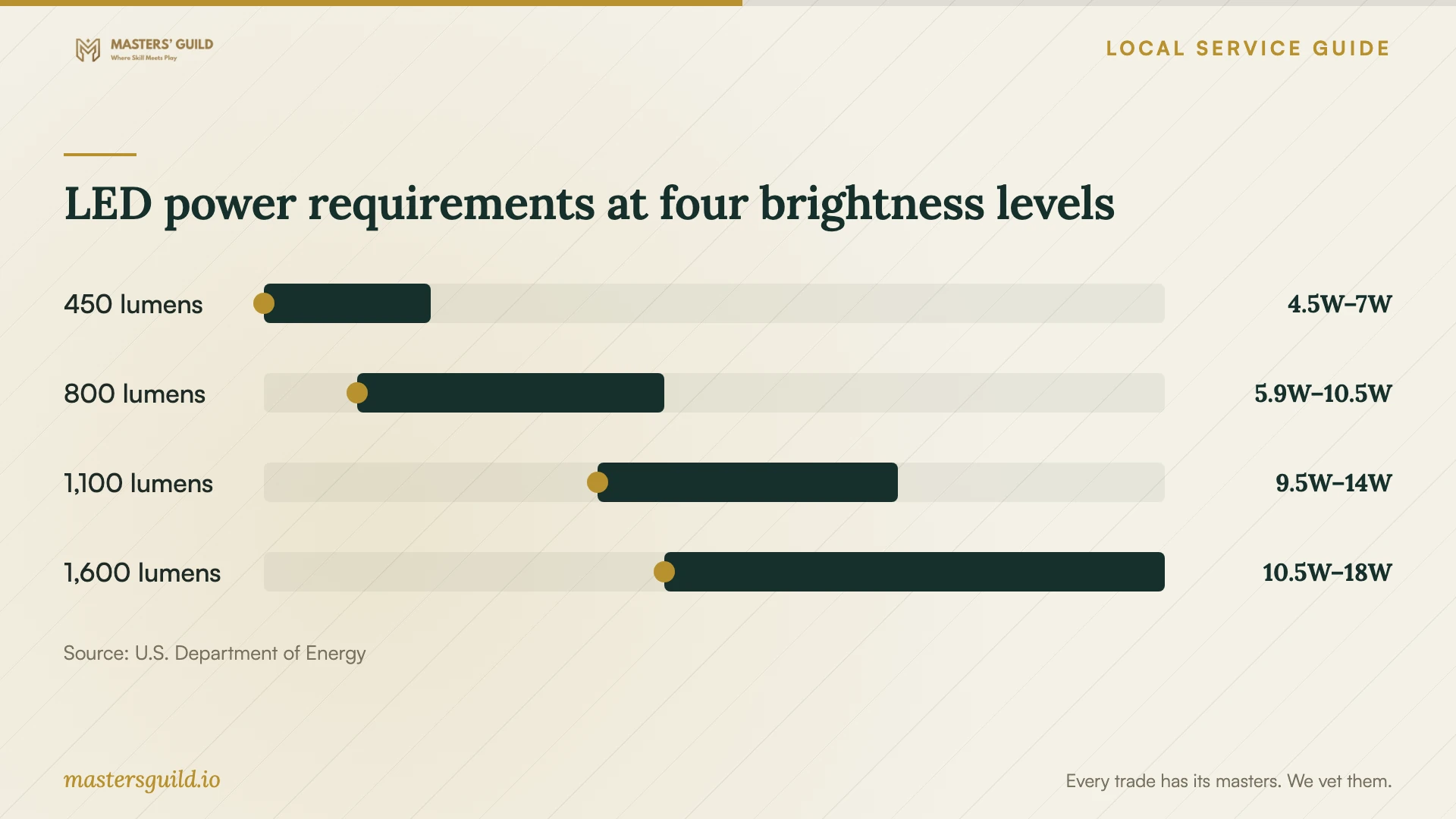
Compare lamps by lumens, the measure of visible light output, rather than using wattage as a brightness target. DOE’s national reference table pairs 800 lumens with a 60-watt incandescent lamp and LED lamps using 5.9 to 10.5 watts. Use that comparison to discuss the light output you want, while checking the specifications of the product you will install. [3]
Choose the light’s color appearance before ordering several matching fixtures. DOE describes 2,700 K as warm and 3,000 K as soft, and lists both for home applications. Ask to see a sample in the room if you are unsure. Keep a record of your chosen color temperature when buying replacements or adding lights later. [3]
DOE advises checking that LEDs support dimming and work with the dimming system. It also warns that heat buildup in enclosed fixtures can affect some LED products’ performance and life. Give the installer the lamp, fixture and dimmer model numbers, and ask them to confirm compatibility. For an enclosed globe, check the lamp’s packaging or technical specifications for that application. [3]
Compare the complete job price
Request separate amounts for installation labor, fixtures, controls, wiring changes, permit handling, and finish repairs. Ask whether the quote includes access equipment and disposal. Have the contractor identify what they need to inspect before fixing the price, and agree on how they will price any additional work.
Use the same fixture list and locations when comparing offers. Ask each contractor to state exclusions and describe the completed result. Before making the final payment under your agreement, walk through the installation together, test the agreed controls, review any outstanding corrections, and collect the documents you requested.
LED power requirements at four brightness levels
Local details that affect your job
Contact the city with the fixture and wiring scope
Long Beach lists Building & Safety’s Permit Center at 411 W. Ocean Blvd., second floor, and its permit telephone number as 562-570-7648. The city lists a daily noon-to-1 p.m. lunch closure. Before visiting, call with your address and explain whether you are replacing a fixture, moving it, or adding wiring so you can confirm the required permit and submission route. [1]
Keep new wiring accessible for city inspection
Long Beach prohibits concealing new electrical wiring in a way that prevents inspection and requires approval before energizing wiring subject to a permit. For recessed lights or relocated sconces, agree that the contractor will coordinate inspection before anyone patches the openings. Ask for confirmation of approval before scheduling those repairs. [1]
Match the scope to your next step
| Planned work | Decision before booking | Question for the contractor |
|---|---|---|
| Replace a fixture in place | Confirm the permit requirements for the exact scope. | Will you reuse the box and wiring, and what will you inspect first? |
| Move a light or add recessed lights | Arrange inspection before concealing new wiring. | Who schedules inspection and who patches the openings afterward? |
| Install an exterior light | Confirm equipment approval for the location and weatherproof boxes and fittings where needed. | Does this fixture and mounting system suit the exposure? |
| Add LED dimming | Check lamp and dimmer compatibility. | Which model combination will you install and test? |
| Use an enclosed fixture | Check that the lamp supports enclosed use. | Can you confirm the lamp’s enclosed-fixture specification before installation? |
Your hiring checklist
- Photograph the existing fixture and room without opening electrical equipment.
- List the fixture locations, ceiling heights and controls you want.
- Send the proposed fixture and lamp model numbers before the site visit.
- Ask the contractor to confirm the mounting box, wiring and support requirements.
- Agree who confirms permits and coordinates inspections.
- Compare written quotes with the same scope and finish repairs.
- Set a written approval process for additional work.
- Request a completion walkthrough and copies of the agreed job records.
Frequently Asked Questions
Does replacing a ceiling light require a permit?
The city’s electrical guidance states that permits are required before starting work and does not list a general fixture-replacement exemption. Describe your proposed work to Building & Safety and confirm the requirement before booking. [1]
Can I hire an unlicensed installer for a job under $1,000?
The price is only one licensing trigger. CSLB requires a current license when the project requires a building permit, uses workers, or totals $1,000 or more in labor and materials. Check the permit scope and who will perform the work. [2]
Can the contractor patch the ceiling before inspection?
Long Beach prohibits covering new wiring in a way that prevents inspection. Agree on inspection timing before scheduling ceiling or wall repairs, and ask the contractor to confirm approval before closing the openings. [1]
Should I keep my existing dimmer when switching to LEDs?
Ask the installer to check the model combination first. DOE advises confirming that the LED supports dimming and is compatible with the dimming system. Include any necessary dimmer replacement in the written quote. [3]
Sources and scope
This guide combines the sources below with practical planning guidance. Figures apply to the stated geography and period; request a written quote for your property.