
Local service guide
TV mounting in London, ON: Plan Your Installation
Arrange TV mounting in London, ON by sending the installer your TV model, bracket details and photos of the wall and nearby outlet. Request a written quote separating mounting, cable routing, wall repairs and electrical work. For a new or relocated outlet, check the electrical contractor’s ECRA/ESA licence number. ESA says businesses performing home electrical work must be Licensed Electrical Contractors, with certain exemptions. Electrical subcontractors hired through another trade must also be Licensed Electrical Contractors. [1]
Give the installer enough information to quote
Send the model number from the TV label, a photo of its rear mounting points and the bracket model if you own one. Include a wide photo of the room and a close photo of the proposed wall. Describe the wall material if you know it. Otherwise, ask the installer to inspect the construction and confirm the attachment method before committing to the installation.
Describe how you want to use the screen: stay in one position, tilt or move toward different seats. Mark its outline with removable tape and check the position from your usual seat. Include your soundbar, cabinet and connected equipment in the layout. Ask the installer to confirm bracket compatibility, access to connections and any lifting assistance they need.
Agree on the cable route and electrical scope
Have the installer describe the cable route in the quote. Specify whether you want a surface cover or concealed signal cables, and name who will patch and paint any openings. For concealed cables, ask which products and installation instructions the installer will follow. List adding or moving a power outlet as a separate electrical task, with the contractor responsible for it identified before booking.
ESA says Ontario Licensed Electrical Contractors carry liability insurance and WSIB coverage and must arrange an electrical notification. Ask for the contractor’s ECRA/ESA licence number and check its status through ESA. If your mounting installer subcontracts the electrical work, ESA requires that subcontractor to be a Licensed Electrical Contractor. Confirm who will arrange the notification and include that responsibility in the quote. [1]
Review fireplace placement before choosing a wall
Give the installer the fireplace and TV manuals before agreeing to mount above a fireplace. Ask them to check the manufacturers’ placement, heat and clearance instructions and explain where they intend to drill. Consider another wall if they cannot establish a suitable location and attachment method. Ask for the reasoning behind any proposed clearance rather than accepting a measurement without checking your equipment.
London lists interior alterations, wood-burning fireplaces and gas fireplaces used for heating among projects requiring a building permit. It lists decorative gas fireplaces among projects that do not require one. These categories concern the renovation scope; they do not establish a blanket permit rule for attaching a TV bracket. Ask the Building Division to assess any proposed fireplace changes or wall reconstruction before commissioning that work. [2]
Compare the total and plan the handover
Ask installers to quote the same scope, including the bracket, attachment hardware, cable work, electrical subcontracting, wall finishing and removal of an existing mount. Request a total showing taxes and any travel or parking charges. Agree on how the installer will seek your approval if they discover a different wall construction or need additional work. Avoid authorizing an unspecified extra charge at the appointment.
Before the installer leaves, review the screen position, movement and connection access together. Test the equipment you asked them to connect. Have them demonstrate the bracket’s locking or release mechanism using its instructions, and keep those instructions with your receipt. Record who will return for unfinished patching, painting or setup, along with the agreed completion date.
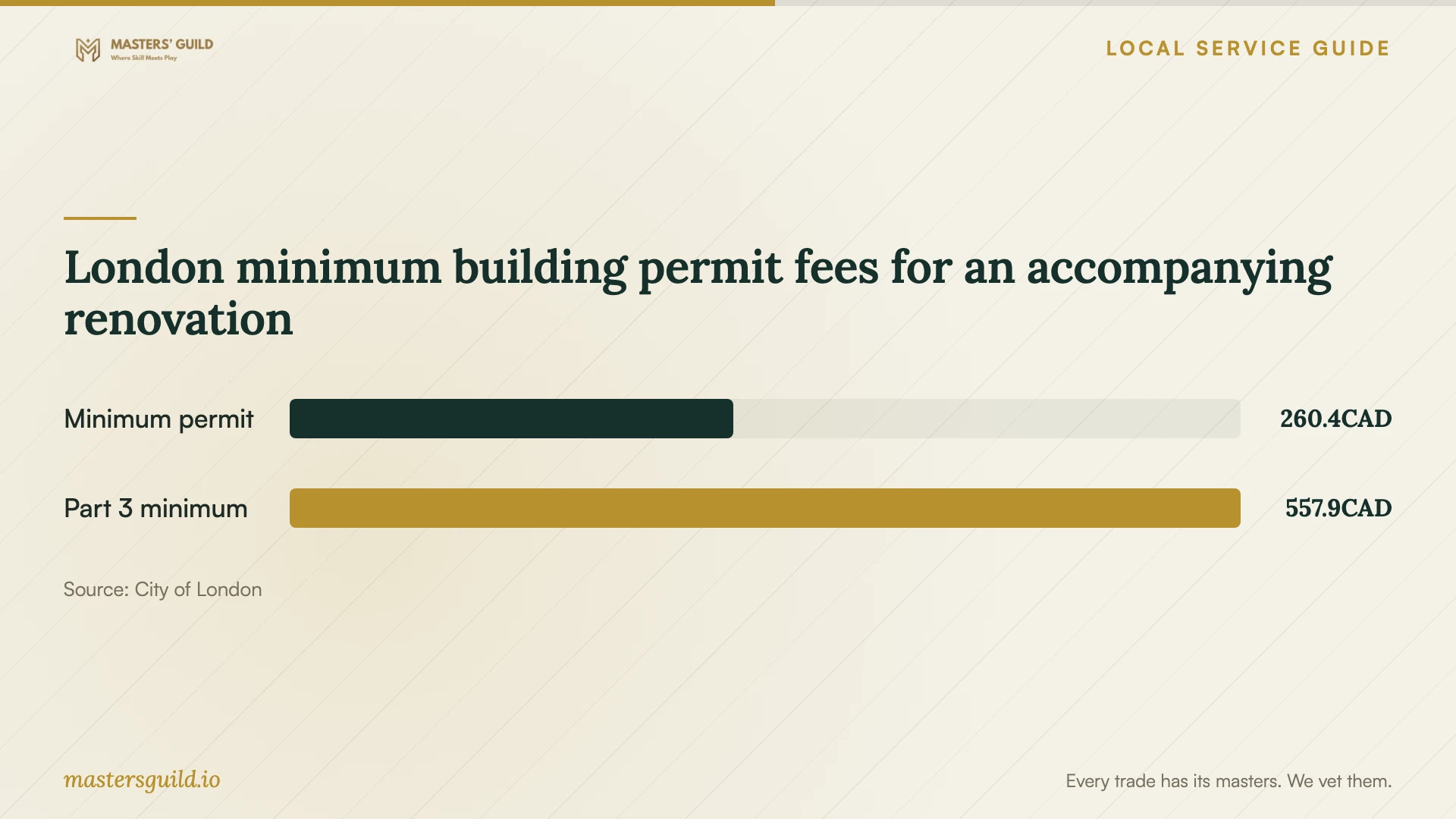
London minimum building permit fees for an accompanying renovation
Local details that affect your job
Ask London about the complete renovation
Send London’s Building Division a photo and description if your mounting plan includes wall reconstruction or fireplace changes. The City lists interior alterations among permit-required projects and tells applicants to check its project lists before applying. Ask whether your specific scope requires a permit and which documents you need. Do this before agreeing to a start date for the renovation. The City’s guidance does not give a specific ruling on ordinary TV bracket installation. [2]
Check heritage status and the feature you will alter
Use London’s heritage register through CityMap to check your property’s status. The City says alterations to listed, non-designated buildings do not require Heritage Alteration Permit approval. For individually designated properties, approval applies to alterations likely to affect heritage attributes identified in the designation by-law. For heritage conservation districts, the City directs owners to the classes of alteration in the applicable district plan. Ask a Heritage Planner about your proposed drilling or cable openings before altering a feature that may have protection; district status alone does not identify which interior features have protection. [3]
Choose the next step for your installation
| Your plan | Next step | What to confirm |
|---|---|---|
| Bracket installation using an existing outlet | Request a mounting quote | Wall attachment, bracket compatibility, screen position and cable route |
| New or relocated outlet | Arrange a Licensed Electrical Contractor | ECRA/ESA licence status and electrical notification arrangements |
| Wall reconstruction or fireplace changes | Ask London’s Building Division about the full scope | Permit requirements and application documents |
| Drilling into a potentially protected feature | Check the heritage register and contact a Heritage Planner | Individual designation, heritage attributes and applicable approval |
| Installation in a heritage conservation district | Check the district plan and any individual designation | Applicable classes of alteration and whether you will affect protected attributes |
Your hiring checklist
- Send the TV model, bracket model and wall photos with your quote request.
- Mark the screen outline and check the position from your usual seat.
- Ask the installer to confirm wall construction, bracket compatibility and attachment method.
- Agree on the cable route and who will patch and paint openings.
- For outlet work, check the electrical contractor’s ESA licence status and notification arrangements.
- Resolve fireplace renovation and heritage questions before drilling.
- Get an itemized total and a written process for approving extra work.
- Test connected equipment and review the bracket instructions at handover.
Frequently Asked Questions
How much should I budget for mounting?
Request a project-specific written quote. Give installers the same TV, bracket, wall and cable details. Compare totals that include hardware, finishing, electrical work and taxes, and ask which changes would require an additional charge.
Can the mounting installer add an outlet?
Ask which Licensed Electrical Contractor will perform the work and check its ECRA/ESA licence number. ESA says electrical work subcontracted through another trade must go to a Licensed Electrical Contractor. Confirm that contractor before agreeing to the electrical scope. [1]
Does an ordinary TV bracket need a London building permit?
The City’s permit guidance does not give a specific answer for an ordinary bracket installation. It lists interior alterations among permit-required projects. Ask the Building Division about your complete scope if you plan wall reconstruction or related fireplace changes. [2]
Can I mount a TV in a heritage home?
Check the property’s status and the feature you intend to alter. London requires approval for alterations likely to affect an individually designated property’s heritage attributes. Listed, non-designated buildings do not require Heritage Alteration Permit approval for alterations. For a district property, consult the district plan and ask a Heritage Planner about your proposed work. [3]
Sources and scope
This guide combines the sources below with practical planning guidance. Figures apply to the stated geography and period; request a written quote for your property.