
Local service guide
London, ON pest control: Hiring and Preparation
Arrange pest control in London, ON by requesting an inspection and a written quote covering treatment, follow-up visits, entry repairs and any furniture removal. Before booking pesticide work, check the business’s Ontario operator licence and ask who will apply the treatment or supervise the worker. Ontario provides exemptions and conditions for certain trained, supervised workers, so ask the company to explain the credentials that apply to your appointment. [3]
Describe the problem before committing to treatment
Send photographs, the locations where you noticed activity and the dates of sightings. Describe what you saw without guessing the species. Include previous treatments, products you used and whether the affected area involves a shared wall, basement, attic or exterior opening. Ask whether the provider needs an inspection before confirming treatment and price.
Tell the company about children, pets and access constraints. Request written preparation and return instructions before accepting an appointment. Ask whether you need to leave, how to protect food and belongings, and which rooms the worker needs to enter. Follow the instructions for the proposed treatment.
Check pesticide credentials and insurance
Ontario says that, unless exempt, businesses operating pesticide extermination services or employing commercial pesticide applicators need an operator licence. Operator-licence applicants must carry appropriate insurance for the pesticide business. Request licence details and insurance documentation, and compare the business name with the name on your quote. [3]
Ask for the responsible exterminator’s licence type and expiry date. Ontario distinguishes structural, land and water extermination licences and provides exemptions and conditions for certain trained, supervised workers. If the visiting worker uses a supervised arrangement, ask who supervises the work and how the company meets the applicable conditions. [3]
Ontario directs readers to Access Environment to search operator and vendor pesticide licences issued since September 2018. Ask the company to resolve any discrepancy in its licence details before you book. [3]
Set your budget from the complete written scope
Request written quotes for your property to set your budget. Ask for an itemized total covering inspection, treatment, materials, return visits and taxes. Have the provider price entry sealing, cleaning, disposal and building repairs as separate tasks so you can see which work it includes.
Have the inspector record the pest it identifies, the areas it proposes to treat and the treatment method. Request the follow-up schedule, monitoring instructions and conditions for another treatment. Read any guarantee for its duration, exclusions, preparation obligations and return charges. Ask what happens if you report further activity between scheduled visits.
London’s published property-standards consolidation describes pest-free buildings and extermination methods that comply with pesticide legislation. The City labels this online consolidation informational and unofficial and does not warrant its accuracy. For interpretation or a property-standards complaint, contact municipal enforcement at 519-661-4660. [1]
Assign entry repairs and waste-storage tasks
Walk through proposed repair locations with the inspector. Ask who will repair damaged screens, door gaps or other identified openings, which materials they propose and when repairs should occur relative to treatment. Record locations and responsibilities in the quote, including work you need to arrange with another contractor.
London’s published consolidation describes maintenance of doors, windows and screens, protection of certain ventilation openings against rodents or vermin, and insect screens for openable dwelling windows from May 1 through September 30. Ask the inspector to identify damaged or missing protection at your property. [1]
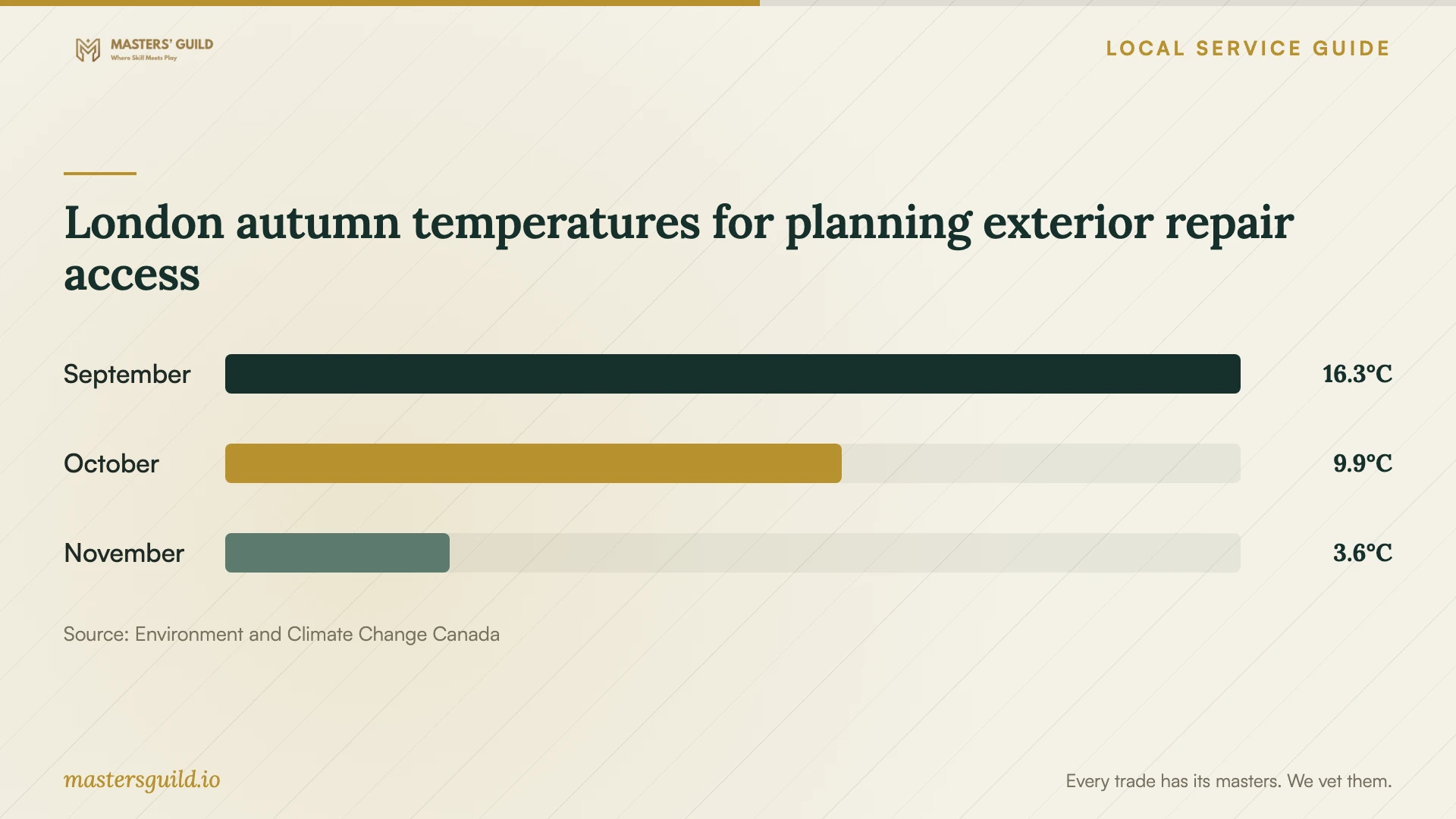
For an autumn appointment involving exterior repairs, discuss daylight access, ladder arrangements and weather restrictions with the contractor. ECCC’s historical monthly daily-average temperatures for London are 16.3°C in September, 9.9°C in October and 3.6°C in November. These averages provide seasonal scheduling context; they do not predict appointment weather or measure pest activity. [4]
Confirm furniture acceptance before arranging removal
Ask the provider whether you need to discard furniture before paying for removal. If you choose disposal, agree who will wrap the item, carry it out and arrange its destination. Coordinate those tasks with treatment preparation and include them in the written quote.
London’s collection page instructs residents to wrap and seal bedbug-contaminated items in plastic, but also lists infested furniture among reasons for noncollection. Ask Service London to confirm whether it will accept your item after wrapping and sealing. Obtain preparation, booking and set-out instructions for your address before moving it outside. [2]
The residential bulky-item booking service allows up to four items per household per request for each collection day, without a booking fee. The City publishes separate Core Area arrangements and excludes businesses from this booking service. Check which instructions apply to your address. [2]
London autumn temperatures for planning exterior repair access
Local details that affect your job
Dundas Place disposal requires a property-manager check
For bulky-item booking questions and acceptance of wrapped bedbug-contaminated furniture, contact Service London at 519-661-2489. Give your address, item details and proposed collection date. The City tells Dundas Place residents on Dundas Street between Wellington Street and Ridout Street to contact their landlord or property manager for disposal options and keep bulky waste off the curb. It publishes separate instructions for other Core Area addresses. Confirm the applicable route before paying a provider to move an item to the curb. [2]
Inspect refuse containers and capacity between collections
London’s informational property-standards consolidation describes durable, watertight, rodent-resistant refuse containers with tight-fitting lids kept closed except during loading, emptying or cleaning. It also describes containers maintained without holes or leaks, sufficient capacity between collections and prevention of overflow or waste storage outside receptacles. Ask the inspector to examine your storage area and identify container repairs, replacement or added capacity as separate prevention tasks. Contact municipal enforcement if you need a compliance determination. [1]
Match the quote to the work you need
| Your situation | Request in the quote | Next step |
|---|---|---|
| You cannot identify the pest | Inspection and written identification | Send photographs and ask what the inspection fee includes. |
| The company proposes pesticide treatment | Operator licence details, responsible exterminator credentials and insurance documentation | Ask it to explain any exemption or supervised-worker arrangement. |
| The inspector identifies openings or waste-storage problems | Separate repair and prevention tasks | Assign responsibility, materials and timing before accepting the quote. |
| You plan to discard bedbug-contaminated furniture | Wrapping, carrying and confirmed disposal arrangements | Ask Service London whether it will accept the item after wrapping and sealing. |
| You live on Dundas Place between Wellington and Ridout | Removal to a destination agreed with the property manager | Contact your landlord or property manager; the City directs residents to keep bulky waste off the curb. |
Your hiring checklist
- Photograph activity and record affected locations, dates and previous treatments.
- Request an inspection and written pest identification before committing to treatment.
- Request business licence details, responsible exterminator credentials and insurance documentation.
- Obtain written preparation, pet protection and return instructions.
- Compare itemized totals, including repairs, disposal, taxes and follow-up visits.
- Assign responsibility and timing for entry repairs and waste-storage improvements.
- Record monitoring instructions, return charges and guarantee exclusions.
- Confirm whether disposal is needed and obtain address-specific acceptance and preparation instructions before moving furniture.
Frequently Asked Questions
Does each visiting worker need an exterminator licence?
Ontario requires an exterminator licence for commercial pesticide application unless an exemption applies, and provides conditions for certain trained, supervised workers. Ask for the responsible exterminator’s licence details and an explanation of the visiting worker’s status and supervision. [3]
Can I put a bedbug-contaminated mattress at the curb?
Confirm acceptance with Service London first. Its collection page requires plastic wrapping and sealing but also lists infested furniture as a reason for noncollection. Ask whether it will accept your item after preparation and follow the instructions for your address. Dundas Place residents between Wellington and Ridout should consult their landlord or property manager and keep bulky waste off the curb. [2]
Does pest treatment include sealing entry points?
Ask the company to list sealing and repairs as specific tasks with locations and prices. Confirm who will perform them and whether you need another contractor. Agree on timing relative to treatment before work begins.
How should I compare a single visit with a follow-up plan?
Ask each provider to explain its proposed schedule for the identified pest and property. Compare included visits, monitoring instructions, retreatment conditions and total charges. Get a written explanation of what happens if you report further activity.
Sources and scope
This guide combines the sources below with practical planning guidance. Figures apply to the stated geography and period; request a written quote for your property.