
Local service guide
Planning yard cleanup in Lincoln, NE
Arrange yard cleanup in Lincoln by asking for a written scope that separates leaf and debris collection, garden-bed work, and hauling. Mark what the crew should leave, and compare quotes for the same tasks. If you add tree services or pesticide treatment, check the relevant credentials: Lancaster County Extension identifies Lincoln municipal arborist licensing and Nebraska pesticide-applicator licensing requirements. [3]
Define the cleanup before requesting a quote
Photograph the lawn, beds, fence lines, and debris piles. Describe the finish you want in each area: leaves collected from the lawn, loose litter removed, selected beds tidied, or existing piles hauled away. Identify plants and bed areas the crew should leave untouched. Ask the provider to confirm those boundaries before starting.
Separate collection from disposal. Ask whether the quote includes loading, transportation, disposal charges, and the final sweep of paths and driveways. If you want to keep leaves for compost, identify the destination on your property. Lancaster County Extension recommends using fall leaves to make compost for garden soil amendment, mulching, and fertilizing plants. [1]
List bulky branches, logs, soil, household rubbish, and other materials apart from leaves. Before booking, confirm which materials the provider accepts, the disposal destination, and any charges for each material. Ask the provider to include those details in the hauling quote.
Choose what to keep in garden beds
Walk the property with the crew and mark the plants, leaf piles, and compost material you intend to retain. Request separate prices for lawn leaf collection and garden-bed clearing so you can choose different treatments for each area. Describe the finish you want instead of asking the crew to remove all plant material.
For a fall visit, keep composting, planting, and pruning as separate decisions. Lancaster County Extension's fall guidance recommends composting leaves and waiting for dormancy before pruning most shade trees. Its guidance makes exceptions for flowering trees such as magnolia and Japanese lilac, which gardeners should prune after flowering to avoid removing flower buds. [1]
Ask the crew to explain any proposed cutting before you approve it. Photograph plants you cannot identify and seek guidance before authorizing their removal. Ask for a separate explanation and price for treatments or plant removal, and record any areas you want the crew to leave alone.
Plan the fall visit around your yard and the forecast
Choose between a single cleanup after your trees shed their leaves and an initial visit with a separately priced return. Base that choice on the leaves present, your desired finish, and your budget. Agree on what the provider will do if more leaves fall between the estimate and the appointment.
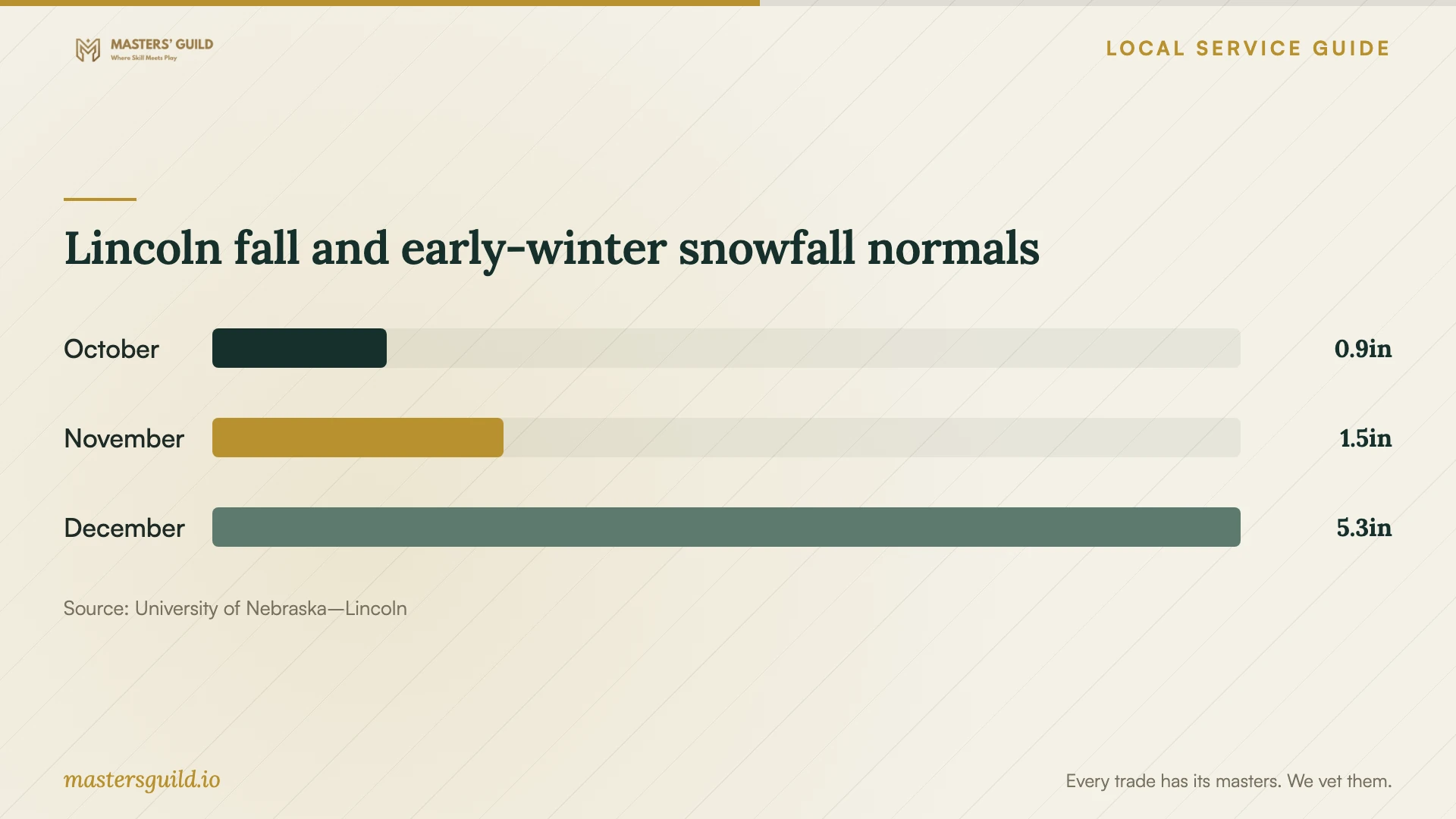
UNL's Lincoln climate table reports average monthly snowfall of 0.9 inches in October, 1.5 inches in November, and 5.3 inches in December for the 1991–2020 normal period. Use those historical values as context for discussing a fall appointment and weather rescheduling. They do not predict snow on your service date or establish a deadline for cleanup. [2]
Discuss timing before adding lawn seeding to a fall cleanup. Lancaster County Extension identifies August 15 through September 15 as the best seeding period for cool-season grasses and recommends seeding tall fescue no later than mid-September. Ask the provider for a separate lawn-repair plan if your appointment falls outside that window. [1]
Compare the written scope and approve changes
Request a property-specific total before booking. Give each provider the same photographs, work boundaries, retained-material instructions, and hauling request. Ask each to state the total price, disposal charges, and exclusions so you can compare offers for the same work.
For an hourly proposal, ask how many workers the rate covers and set a spending limit that requires your approval to exceed. For a fixed-price proposal, ask what changes would trigger an extra charge. Keep optional pruning, chemical treatment, and lawn repair on separate lines so you can approve each task.
Before the crew arrives, clear access and identify gates, irrigation equipment, and plants to protect. At completion, walk the agreed areas with the crew. Check the retained plants, debris destination, paths, and any unfinished work against the written scope before accepting the job.
Lincoln fall and early-winter snowfall normals
Local details that affect your job
Check Lincoln credentials before adding tree work
Lancaster County Extension states that Lincoln requires professionals providing tree services for hire to hold a city license. Applicants must pass a test administered by Lincoln Parks and Recreation or provide qualifying arborist-certification evidence, and they must meet city insurance requirements. If your cleanup includes tree work, ask for the municipal arborist license and proof of insurance before approving that part of the quote. [3]
Check Nebraska licensing for chemical add-ons
Lancaster County Extension says Nebraska requires lawn, tree, and landscape professionals applying pesticides for hire on another person's property to hold a pesticide-applicator license. This includes general-use products sold to homeowners. Fertilizer alone does not require that license under its guidance, but fertilizer mixed with a pesticide does. Ask what product the provider intends to apply and ask to see the applicator's license before approving weed treatment. [3]
Separate October cleanup from the usual seeding window
Lancaster County Extension's fall playbook recommends August 15 through September 15 for seeding cool-season grasses, including Kentucky bluegrass and tall fescue, with tall fescue no later than mid-September. For an October cleanup, ask for a separate assessment and timing plan before accepting a seeding add-on. [1]
Choose the scope that matches your yard
| Your situation | Request | Check before booking |
|---|---|---|
| Leaves and loose debris only | Collection from named areas, with a final path sweep | Agree whether the crew will retain or haul the material |
| You want leaves for compost | Move selected leaves to your designated compost area | Extension recommends fall leaves as compost material |
| The quote includes tree work | Describe pruning or other tree services separately | Ask for Lincoln municipal arborist credentials and insurance |
| The quote includes weed spray | Identify the product and treated areas | Ask to see the Nebraska pesticide-applicator license |
| You want shade-tree pruning during fall cleanup | Discuss a separate pruning appointment | Extension recommends dormancy for most shade trees, ideally late winter |
Your hiring checklist
- Send photographs and identify the areas included in the job.
- Mark plants, beds, and leaf material you want to retain.
- Choose on-site composting or hauling and confirm the destination.
- Confirm accepted materials, loading, disposal charges, and final path cleanup in writing.
- Keep tree work and chemical applications as separate approval items.
- Agree on a weather-rescheduling plan and any return visit.
- Confirm the property-specific total and an approval process for extra charges.
- Walk the property with the crew before accepting completion.
Frequently Asked Questions
Should hauling be included in my cleanup quote?
Ask for it explicitly. State which materials should leave the property and which should stay for compost. Request a total that identifies loading, transportation, disposal charges, and exclusions. Confirm the disposal destination and accepted materials before booking.
Can the cleanup crew spray weeds while they are here?
Approve chemical treatment as a separate task. Lancaster County Extension says Nebraska requires professionals applying pesticides for hire to hold an applicator license, including when they use products available to homeowners. Ask to see the license and identify the proposed product. [3]
Should I include tree pruning in a fall cleanup?
Discuss the tree species and timing before approving pruning. Lancaster County Extension recommends dormant-season pruning for most shade trees, ideally in late winter, with different timing for some flowering trees. Lincoln also requires municipal licensing for professionals providing tree services for hire. [1] [3]
Does the snowfall chart tell me when to book?
Use it as historical seasonal context. UNL reports Lincoln monthly climate normals for 1991–2020, rather than an appointment forecast. Choose your visit based on the condition of your yard, the current forecast, and an agreed rescheduling plan. [2]
Sources and scope
This guide combines the sources below with practical planning guidance. Figures apply to the stated geography and period; request a written quote for your property.