
Local service guide
TV Mounting in Lincoln, NE: Plan the Wall and Power
Arrange TV Mounting in Lincoln by agreeing on the wall attachment, screen position and power plan before accepting an installation quote. Ask the installer to separate mounting from any electrical work. For a new behind-screen outlet, arrange an electrical contractor or confirm your eligibility for Lincoln's homeowner electrical permit process. The city limits that homeowner option to specified work at a detached single-family home you own and occupy as your principal residence. [2]
Define the installation before comparing offers
Ask each installer to quote the same work: attach the bracket, hang the screen, connect your equipment and check the agreed viewing position. Specify who supplies the mount and hardware. Include any soundbar, cable cover, wall opening, patching or removal of an existing bracket as a separate item.
Send a photograph of the whole wall and a closer view of the proposed mounting area. Provide the TV's model number and the mount's instructions rather than screen size alone. Ask the installer to confirm compatibility and explain how they will verify the wall construction before drilling.
Choose the screen position from your usual seat. Mark a proposed outline on the wall and discuss how you want to access ports after installation. For a fireplace location, ask the installer to review the TV and fireplace manufacturers' placement instructions before you approve that position.
Agree on the outlet and cable route
Show the installer the existing outlet and describe the finish you want. Ask them to distinguish a surface cable cover, an opening for signal cables and a change to electrical wiring. Request a written description of the proposed power arrangement before approving concealed cables.
Lincoln's electrical code describes permit applications for installing, altering or adding to electrical equipment. Applicants must supply the information and any plans or specifications the department requires. If your project includes a new outlet or wiring alteration, confirm the permit scope with the city and identify who will apply and arrange inspections. [2]
For the homeowner electrical route, Lincoln requires you to demonstrate code knowledge, secure a permit, pay the applicable fees and call for inspections. The code also requires homeowners to perform that installation for themselves without compensation paid to or received from another person for the labor. Do not use your homeowner permit as a way to hire someone else to perform the electrical installation. [2]
Separate municipal fees from the installer quote
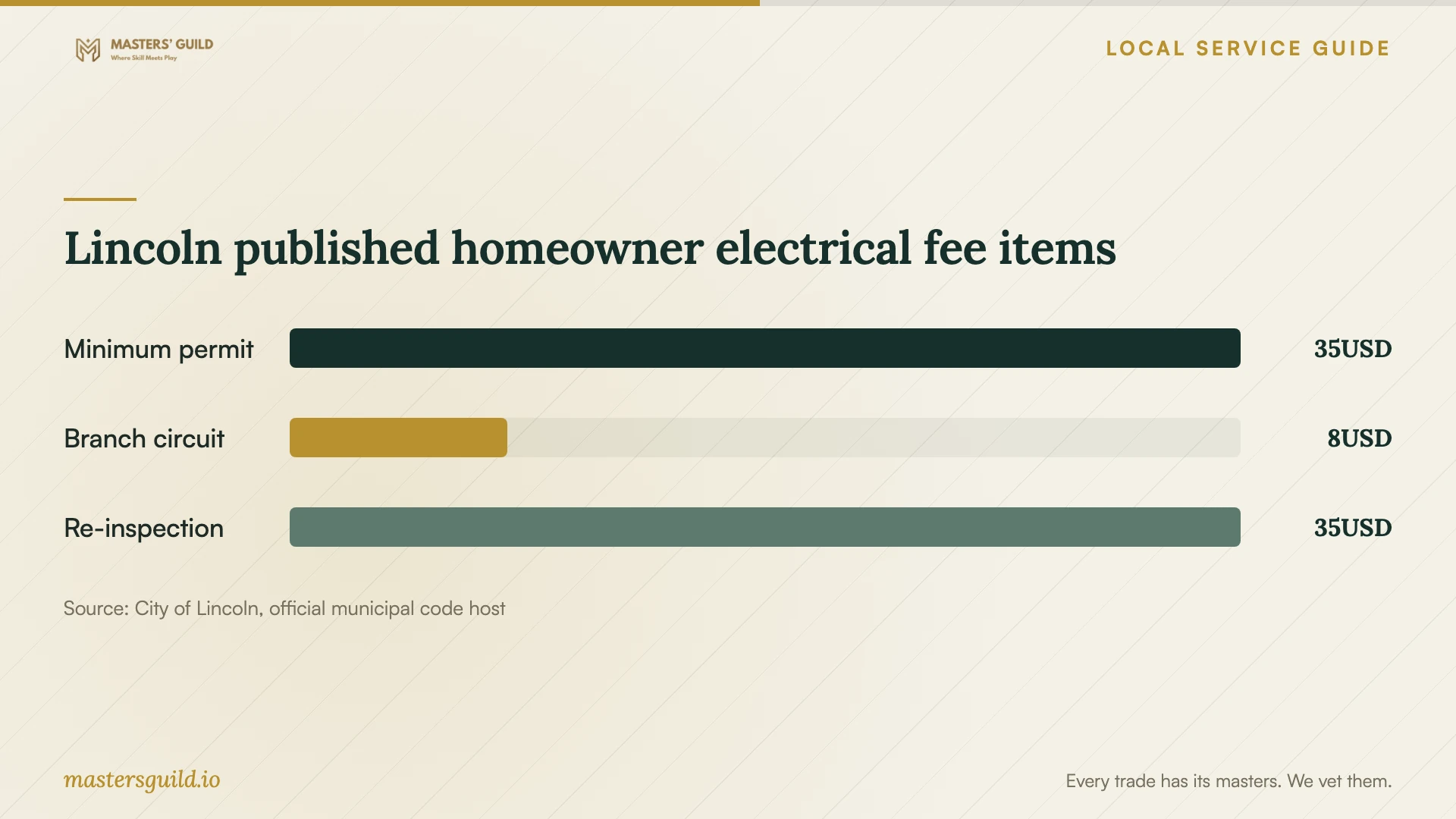
Lincoln's published homeowner electrical schedule lists a $35 minimum permit fee and an additional $8 for each new, extended or modified branch circuit. It lists a $35 homeowner re-inspection fee. Confirm the applicable charges before applying, because the cited fee schedule identifies its fee amendment as November 20, 2017. [3]
Use these figures to ask better questions about an electrical allowance. They are homeowner application fees, not contractor permit charges or mounting labor prices. Ask a hired electrical contractor to identify their own permit allowance in the quote. Ask the mounting installer to itemize the bracket, labor, cable treatment, wall repair and any return visit. [3]
Keep a written boundary between the two jobs. Identify whether the mounting appointment will wait for electrical work and inspection, who will coordinate access, and who will repair any openings. Obtain approval for added work before the installer cuts the wall.
Check paint disturbance in an older home
EPA's Renovation, Repair and Painting rule applies to covered work that disturbs painted surfaces in housing and child-occupied facilities built before 1978. It includes electrical work and carpentry. Ask the installer to describe the paint disturbance from bracket installation and cable openings, and whether the proposed work falls under the rule. [1]
EPA describes a minor repair and maintenance exception for work disturbing six square feet or less of paint per room indoors. It also states that demolition of painted surfaces and window replacement remain covered regardless of area. Avoid treating the size of a cable opening as the sole test for an exemption; ask the contractor to explain how the exception applies to the actual work. [1]
For covered paid work, EPA requires firm certification. Paint testing is optional under the rule, but EPA requires the appropriate qualified professional if you choose testing before renovation. Discuss certification, containment, cleanup and any existing lead-free documentation before scheduling work. [1]
Prepare the room and agree on completion checks
Clear the work area, move fragile items and have the TV, mount, remote and connected equipment available. Tell the installer about previous wall repairs or known wiring near the proposed position. If you rent, obtain the owner's approval for mounting holes and any electrical changes before booking.
Before the installer leaves, check the agreed screen height and alignment, test your inputs and sound, and ask for a demonstration of any moving bracket. Review cable access and the finish around openings. Keep the mount instructions, invoice and any electrical permit or inspection records with your home documents.
Lincoln published homeowner electrical fee items
Local details that affect your job
Lincoln limits homeowner electrical eligibility
Lincoln permits homeowner branch-circuit and feeder wiring only in a stand-alone detached single-family dwelling the applicant owns and occupies as a principal residence, including ancillary structures on that property. The permission excludes service equipment. If you own a condo, rent your home or own a rental property, do not assume this homeowner route applies; arrange an electrical contractor and confirm the permit requirements. [2]
A home business changes the electrical plan
Lincoln excludes electrical wiring and equipment for home-based businesses and occupations from the homeowner installation permission. If the proposed screen and outlet serve a home business, explain that use when discussing the project with the city and arrange an electrical contractor rather than relying on the homeowner option. [2]
Homeowner circuit fees supplement the minimum
The published city schedule adds branch-circuit and feeder charges to its $35 homeowner minimum permit fee. A listed $8 branch-circuit charge is therefore an additional fee, not the complete permit cost. Confirm the applicable schedule and project classification before setting your electrical budget. [3]
Choose the next step for your installation
| Your situation | Next step | Question to resolve |
|---|---|---|
| Mounting with an existing outlet | Request a mounting quote with a written cable plan. | Does the proposed scope include any electrical alteration? |
| New outlet in your detached principal residence | Arrange an electrical contractor or confirm homeowner eligibility and permit requirements. | Will you perform the eligible electrical work yourself and arrange inspections? |
| Condo, rental or home-business electrical work | Arrange an electrical contractor and confirm the permit scope. | Does the property or intended use fall outside Lincoln's homeowner permission? |
| Paint disturbance in a pre-1978 home | Ask the contractor to assess RRP coverage and applicable exceptions. | Does the method involve demolition of painted surfaces or other covered work? |
Your hiring checklist
- Provide the TV model, mount instructions and photos of the wall and existing outlet.
- Agree on screen position and ask the installer to verify the wall attachment plan.
- Request separate prices for mounting, cable treatment, electrical work and wall repair.
- Identify the electrical permit applicant and inspection responsibilities before wiring work.
- Tell the contractor whether the property is detached, owner-occupied or used for a home business.
- Discuss paint disturbance and lead-rule applicability before approving wall openings in an older home.
- Clear access and test the screen, connected equipment and bracket operation at completion.
Frequently Asked Questions
Does attaching the bracket require an electrical permit?
Lincoln’s cited electrical code provisions address installing, altering or adding to electrical equipment; they do not establish a permit requirement for bracket-only attachment. Describe the full scope to the city if it includes an outlet or wiring change. [2]
Can I install a behind-TV outlet myself?
Lincoln allows specified homeowner branch-circuit and feeder work in a detached single-family principal residence you own and occupy. You must demonstrate code knowledge, obtain the permit and arrange inspections. The code excludes service equipment and home-business electrical work, and prohibits paying another person to perform the homeowner installation. [2]
How much should I budget for mounting?
Request an itemized mounting quote for your TV, wall, bracket and cable plan. The chart covers published homeowner electrical fees only; ask an electrical contractor to quote their work and permit allowance. [3]
Does a small cable opening avoid lead-safe requirements?
Size alone does not settle the question. EPA describes a minor repair exception at six square feet or less of interior paint disturbance per room, but demolition of painted surfaces remains covered regardless of area. Ask the contractor to assess the method and scope before cutting. [1]
Sources and scope
This guide combines the sources below with practical planning guidance. Figures apply to the stated geography and period; request a written quote for your property.