
Local service guide
Mold Removal in Lincoln, NE: Hiring and Cleanup
Arrange Mold Removal in Lincoln, NE by choosing a contractor who will address the water problem, explain which materials need cleaning or removal, and define the repairs included in the quote. EPA says homeowners can handle many patches smaller than about 10 square feet, but sewage damage requires a professional with contaminated-water experience. For work involving demolition or reconstruction, check Nebraska contractor registration and ask about suspect building materials before anyone starts cutting. [1] [3] [4]
Choose the right cleanup approach
Estimate the visible affected area without opening walls or pulling up flooring. EPA says that, in most cases, homeowners can handle an area smaller than about 10 square feet. For hard surfaces, its guidance calls for detergent and water followed by complete drying. Moldy porous materials, including carpet and ceiling tiles, may need disposal because cleanup can prove difficult or impossible. [1]
Seek professional assessment for extensive water damage or growth beyond that small-area guidance. Tell the provider whether the water came from a plumbing leak, roof leak, or sewage backup. EPA directs homeowners with sewage or other contaminated-water damage to professionals who have experience cleaning and repairing those buildings. Consult a health professional before cleanup if you have health concerns. [1]
If you know or suspect that mold has contaminated the HVAC system, follow EPA’s advice to stop running it because it could spread mold through the building. Explain the suspected contamination when arranging the visit. Ask who will assess the system and how the contractor will coordinate any related work. [1]
Compare written scopes before comparing totals
Ask each provider to identify the rooms and materials covered by the quote. Request separate descriptions of cleaning, material removal, drying, moisture-source repair, and rebuilding. Ask what the contractor will do if opening a surface reveals more damage, and require your approval before extra work begins.
EPA recommends hiring a contractor with mold-cleanup experience, checking references, and asking the contractor to follow EPA, IICRC, or other professional or government guidance. Ask which guidance the team uses and how it applies to your project. A training claim should lead to a discussion of the proposed work and comparable projects. [1]
Request a written explanation of how workers will protect occupied rooms, move debris, and decide that drying and cleanup are complete. Ask whether the quoted amount includes replacing removed materials. Agree on access hours, room restrictions, payment stages, and the person who will answer questions during the job.
Plan demolition and repairs through Nebraska resources
For a project that includes repairs or reconstruction, check the business through the Nebraska Department of Labor’s contractor-registration resources. The department defines construction to include alterations, reconstruction, installations, and repairs to real property. It requires contractors and subcontractors doing business in Nebraska to register, while warning that registration does not protect against fraud or assure work quality. [3]
Keep material assessment separate from the decision to remove moldy finishes. Nebraska DHHS explains that manufacturers used asbestos in many building materials and provides resources for licensed inspectors and abatement firms. If the proposed work will disturb materials you suspect contain asbestos, ask a licensed inspector about assessment before approving demolition. The supplied state page does not establish an asbestos requirement for your particular home. [4]
Ask the remediator who will handle each repair and who will confirm any applicable permit requirements. Have the provider identify exclusions in writing so you can arrange a plumber, roofer, or rebuilding contractor if the remediation team does not include that work.
Connect the moisture investigation to your home
Use your observations to guide the visit: note whether dampness follows rain, appears beneath a fixture, or returns after showers. EPA advises fixing plumbing leaks and other water problems and drying items completely. For recurring bathroom mold, it recommends increased ventilation and more frequent cleaning. [1]
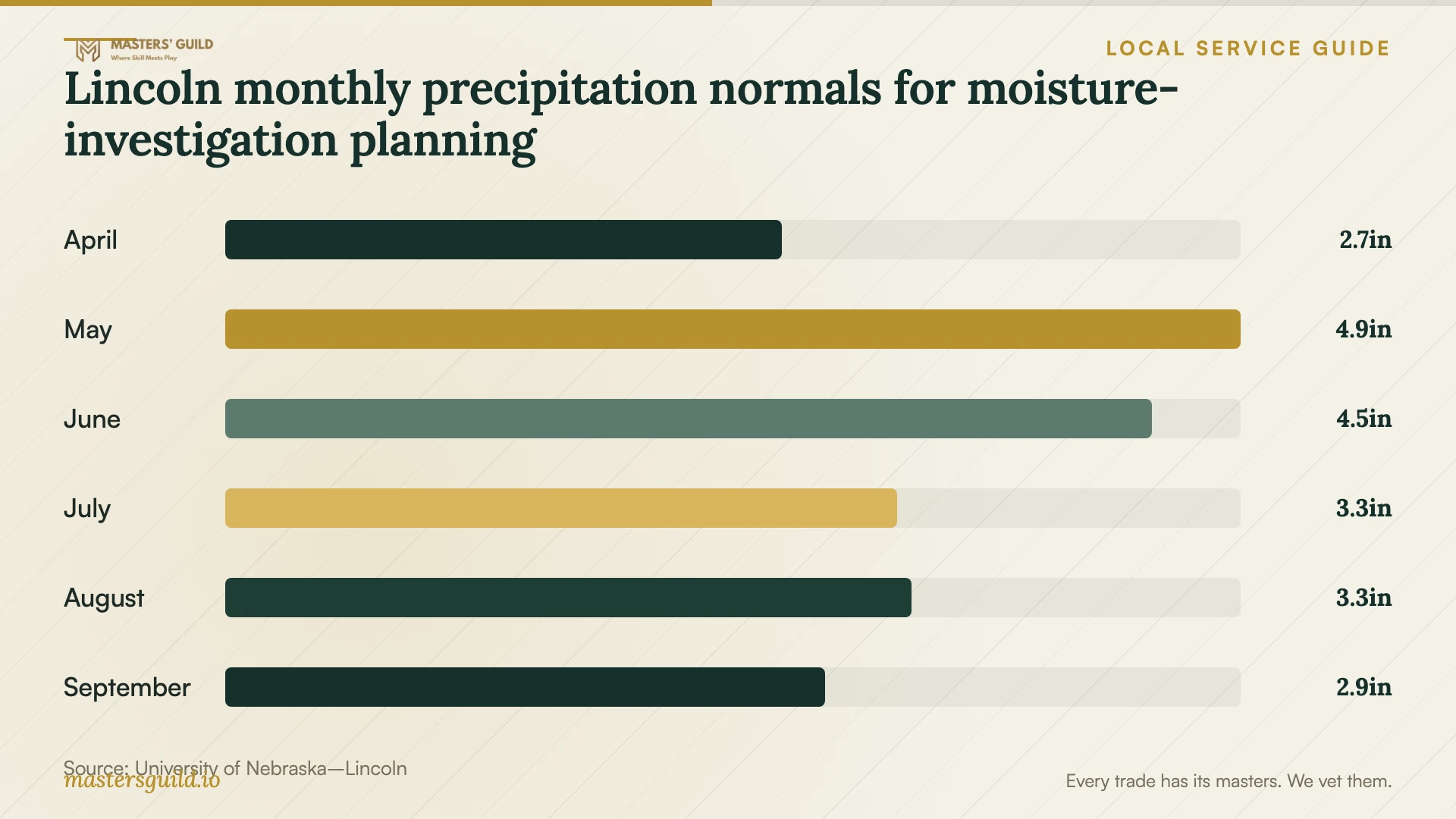
The University of Nebraska–Lincoln publishes Lincoln’s 1991–2020 climate normals. The chart compares monthly precipitation from April through September, including 4.91 inches in May and 4.48 inches in June. If you have observed water entry after rain, ask the contractor to investigate that pathway alongside cleanup. These historical outdoor averages do not diagnose a leak or measure indoor mold risk. [2]
Before closing the project, ask the contractor to show you the completed cleanup and explain the moisture repair. EPA advises cleaning and drying moldy surfaces before painting or caulking them. Keep the scope, photographs, repair records, and any agreed follow-up instructions together so you can compare conditions if dampness returns. [1]
Lincoln monthly precipitation normals for moisture-investigation planning
Local details that affect your job
Nebraska registration check for repair work
If your cleanup includes demolition and rebuilding, use the Nebraska Department of Labor’s Search Registered Contractors and Subcontractors resource from its registration page. Match the business name to the quote. Contractors operating under multiple names need a registration for each name. Contractors with employees must provide current workers’ compensation documentation to the department; ask the provider for insurance documentation as part of your hiring review. [3]
Nebraska asbestos contacts before disturbing materials
Nebraska DHHS lists resources for licensed asbestos inspectors and abatement firms and gives its asbestos program phone number as (402) 471-0549. If your proposed mold work involves suspect building materials, use those resources to arrange advice before removal. Ask the inspector what assessment your planned work needs; do not assume the mold contractor’s experience includes asbestos inspection or abatement. [4]
Choose your next step from the conditions you can identify
| Condition | Next step | Question or boundary |
|---|---|---|
| Small hard-surface patch under about 10 square feet | Consider EPA’s homeowner cleanup guidance | Can you address the water problem and dry the surface completely? |
| More than 10 square feet or extensive water damage | Consult EPA’s broader remediation guidance and arrange professional assessment | Which materials and rooms will the proposed scope cover? |
| Sewage or other contaminated-water damage | Hire a professional with contaminated-water experience | What comparable cleanup and repair projects has the team completed? |
| Known or suspected HVAC contamination | Do not run the system; consult EPA’s duct guidance before further action | Who will assess the system and coordinate the work? |
| Repairs or reconstruction in the scope | Check Nebraska contractor registration | Does the registration match the business name on the quote? |
| Suspect building materials in the demolition area | Use Nebraska DHHS inspector resources before approving removal | What assessment does the planned disturbance need? |
Your hiring checklist
- Photograph visible damage and note the rooms affected without disturbing materials.
- Record the water source you know about and when you first noticed dampness.
- Tell prospective providers about sewage, extensive water damage, or suspected HVAC contamination.
- Ask for comparable mold-cleanup references and the guidance the contractor follows.
- Check the quoted business name against Nebraska registration resources for repair or reconstruction work.
- Resolve questions about suspect building materials before approving demolition.
- Get written inclusions, exclusions, extra-work approval terms, and completion criteria.
Frequently Asked Questions
Can I clean a small patch myself?
EPA says homeowners can handle many areas smaller than about 10 square feet. Its hard-surface guidance uses detergent and water followed by complete drying. Consider the water source and extent of damage too. For health concerns, consult a health professional before cleanup. [1]
Does Nebraska contractor registration prove mold expertise?
No. Nebraska Department of Labor says registration does not assure work quality or protect against fraud. EPA recommends checking mold-cleanup experience and references. Use registration and project references as separate parts of your hiring review. [1] [3]
Can the contractor paint over the affected surface?
EPA advises against painting or caulking moldy surfaces. Clean up the mold and dry the surface first. Ask the contractor to explain the cleanup and drying work before you approve refinishing. [1]
What should I ask for in a price quote?
Request a scope that separates cleanup, material removal, drying, moisture repair, and rebuilding. Ask which tasks the total covers and how the contractor will price additional damage. Compare quotes for the same work rather than assuming a room description defines the full project.
Sources and scope
This guide combines the sources below with practical planning guidance. Figures apply to the stated geography and period; request a written quote for your property.