
Local service guide
Lawn mowing in Lincoln, NE: plan and hire
Arrange lawn mowing in Lincoln, NE by asking providers to quote your actual mowable area, agree on a cutting height for your grass, and explain how they change visits as growth slows. Nebraska Extension in Lancaster County recommends different heights for Kentucky bluegrass and tall fescue, plus limiting mowing on dormant bluegrass. Put trimming, clipping handling, access and skipped-visit charges in the written agreement before booking. [1]
Request a quote for the work you need
Send photos of the front, back and side lawn, along with the approximate area you want cut. Identify steep sections, narrow gates, steps, garden beds and any places the mower cannot reach. Ask the provider to inspect uncertain access before you accept a recurring plan.
Request a written scope that separates mowing, string trimming, edging and cleanup. State whether you want clippings left on the lawn or collected, and ask how the provider handles long grass on the first visit. Keep leaf cleanup, aeration and other work as separate quote items so you can compare mowing offers on the same basis.
Ask for the amount due per completed visit, any minimum charge, applicable taxes and the terms for cancellation. For a seasonal agreement, request the included work and the billing policy when the provider skips a cut. Use property-specific quotes to set your budget; the sources supporting this page do not establish local mowing prices.
Agree on cutting height before the first visit
Ask the provider to identify your grass before choosing a mower setting. Nebraska Extension in Lancaster County recommends mowing Kentucky bluegrass to 2.5 to 3 inches and tall fescue to about 3 to 4 inches as part of conserving lawn moisture. Its guidance also recommends leaving grass clippings on the lawn to help hold moisture in the soil. [1]
For shaded lawn areas, Lancaster County Extension recommends mowing at 3 to 3.5 inches throughout summer and removing no more than one-third of the leaf blade per cut. Show the provider your shaded patches and ask them to write down the intended height for those areas. [3]
If you do not know the grass species, send close-up photos and ask whether the provider can identify it during the site visit. Avoid choosing a low setting solely to stretch the time between appointments. Have the provider explain how they will handle an overgrown first cut without exceeding the Extension leaf-removal guidance. [3]
Choose visits around growth and turf condition
Ask for a schedule that the provider can adjust to meet the one-third leaf-removal guideline. A fixed weekly or biweekly appointment should include a process for changing the next visit when the grass grows faster or slower. Agree on who checks the lawn and who approves the change. [3]
During dry weather, distinguish dormant Kentucky bluegrass from a lawn that needs diagnosis. Lancaster County Extension advises limiting mowing and foot traffic on dormant bluegrass to protect grass crowns. The same guidance says tall fescue does not go dormant and that whole plants turning brown need attention, including consideration of drought or disease. [1]
Ask the provider to contact you before mowing a brown lawn. Agree on whether a skipped visit carries a charge and whether the next cut needs a separate approval. Do not authorize a low cleanup cut merely because the lawn has changed color.
Use seasonal information to review the plan
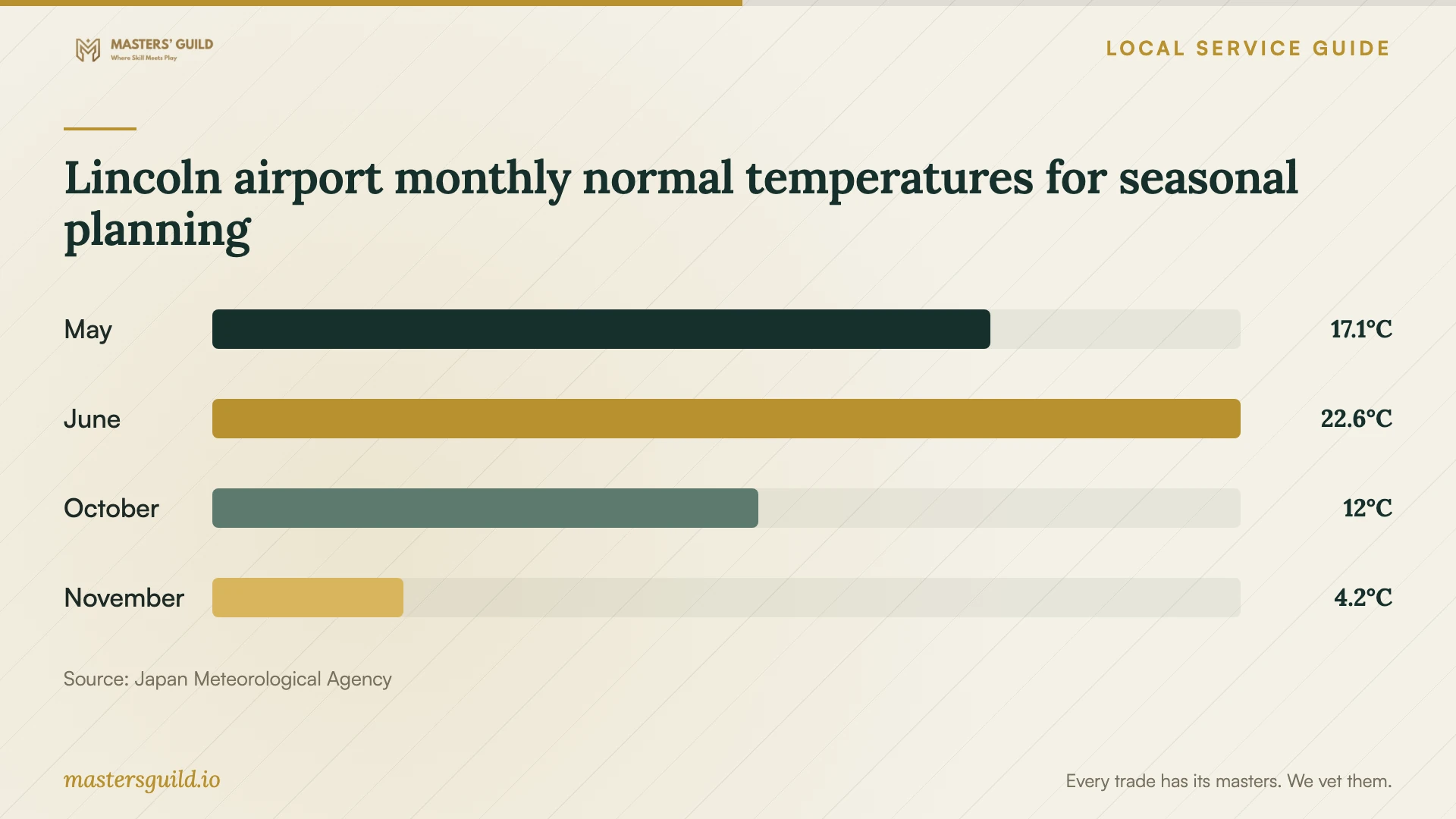
The Japan Meteorological Agency's Lincoln Municipal Airport table lists normal monthly mean temperatures of 17.1 degrees Celsius in May, 22.6 in June, 12.0 in October and 4.2 in November. These station values provide seasonal context for reviewing a recurring agreement; they do not determine the date of your first or final cut. [2]
For an autumn booking, ask the provider to assess current growth before promising a fixed number of remaining visits. Request separate prices for mowing and leaf work, and agree on how you will end the mowing schedule. Use the lawn's condition and the forecast when arranging each visit rather than treating a monthly normal as today's weather.
Prepare access and review the first cut
Before the crew arrives, remove toys, hoses and pet waste from the mowing area. Identify sprinkler heads, exposed roots and any loose edging. Explain where the crew may park, which gate to use and how you will secure pets while they work.
Ask who will perform the work and request current liability insurance information. Confirm whom to contact about damage or a missed appointment. Keep the agreed height, service boundaries and extras in a message that both you and the provider can refer to.
After the first visit, review the lawn with the provider or send photos of areas needing attention. Check the agreed height, trimming boundaries and cleanup. Resolve any scope changes before the next appointment, including collection of clippings or work beneath trees.
Lincoln airport monthly normal temperatures for seasonal planning
Local details that affect your job
Build a drought pause into bluegrass service
Nebraska Extension in Lancaster County, which serves the Lincoln area, advises limiting mowing and traffic on dormant Kentucky bluegrass to protect grass crowns. Ask for a pause-and-resume policy before signing a recurring agreement. Its tall fescue guidance differs: do not assume an entirely brown fescue plant has entered dormancy. Ask for assessment before authorizing another cut. [1]
Assess tree shade before paying for repeated lawn repairs
Lancaster County Extension says turfgrasses need at least six hours of full sun daily to thrive and advises considering shade-tolerant groundcover with mulch in densely shaded areas. Observe summer light beneath your trees before adding reseeding to a mowing contract. Ask the provider to price care for the existing lawn separately from any proposed conversion of a persistently shaded patch. [3]
Match the mowing agreement to your lawn
| Lawn situation | Guidance to consider | What to request |
|---|---|---|
| Kentucky bluegrass | Lancaster County Extension recommends 2.5 to 3 inches for moisture conservation. | Record the cutting height and clipping policy. |
| Tall fescue | Lancaster County Extension recommends about 3 to 4 inches for moisture conservation. | Confirm the species before selecting the mower setting. |
| Shaded lawn | Local shade guidance recommends 3 to 3.5 inches in summer. | Identify shaded areas during the site visit. |
| Fast-growing grass | Extension recommends removing no more than one-third of the leaf blade per mowing. | Allow schedule changes when growth requires another cut. |
| Dormant Kentucky bluegrass | Extension advises limiting mowing and traffic to protect crowns. | Agree on how to pause service and resume visits. |
Your hiring checklist
- Send lawn photos, approximate mowable area and gate-access details.
- Identify the grass species and agree on cutting heights for sunny and shaded areas.
- List mowing, trimming, edging and cleanup as distinct scope items.
- Choose whether to leave or collect clippings and confirm any added charge.
- Agree on notice and billing for skipped, postponed or extra visits.
- Ask for insurance information and a contact for damage or scheduling problems.
- Clear obstacles, identify sprinkler heads and arrange pet access before arrival.
Frequently Asked Questions
Should I choose weekly or biweekly mowing?
Choose a schedule that keeps each cut within Extension's recommendation to remove no more than one-third of the leaf blade. Ask the provider to adjust visits to actual growth and explain the billing terms for those changes. [3]
Should the provider bag grass clippings?
Lancaster County Extension recommends leaving clippings on the lawn to help retain moisture. If you want collection, specify it in the quote and ask how the provider will handle the clippings. [1]
Should a brown lawn still receive mowing?
Ask for assessment before the next cut. Extension advises limiting mowing on dormant Kentucky bluegrass, but says tall fescue does not go dormant. Confirm the grass species and discuss the cause of browning before resuming service. [1]
How can I compare mowing prices?
Give providers the same photos, area, access details and service list. Compare the total charge for a completed visit, including your requested extras, and ask how each agreement handles skipped cuts. Request a site visit if the provider cannot confirm the scope from your description.
Sources and scope
This guide combines the sources below with practical planning guidance. Figures apply to the stated geography and period; request a written quote for your property.