
Local service guide
Kitchen Remodeling in Lincoln, NE: Hiring and Planning
Arrange Kitchen Remodeling in Lincoln, NE by defining the layout and appliance changes before requesting written bids. Verify Nebraska contractor registration, ask who will handle trade permits and inspections, and review the range hood with a registered mechanical contractor before buying it. Lincoln has specific residential kitchen exhaust and makeup-air rules that deserve attention during design. [1] [2] [3]
Define the kitchen you want before collecting bids
Start with the problems you want to solve: insufficient storage, awkward prep space, worn finishes, or an appliance arrangement you dislike. Sketch the current layout and mark what you want to keep. Ask bidders to price a version that retains the sink and cooking locations alongside any proposed layout change.
List cabinet dimensions and finish, countertop material, flooring, backsplash, lighting, and appliance model numbers. Include the hood's rated airflow and your preference for an exterior exhaust route. Ask the contractor to explain how the design accommodates appliance doors, drawers, and the space you need to move through the kitchen.
For each quote, separate fixed selections from allowances. An allowance is an amount reserved in the quote for a selection you have not finalized. Ask how the contractor will calculate any difference after you choose the item, including installation and markup. Agree on a written approval process for changes before signing.
Check the remodeler and the mechanical subcontractor
Nebraska requires contractors and subcontractors doing business in the state to register with the Department of Labor. The department requires a separate registration number for each business name. Match the name on your estimate and contract to the registration you verify through the department's contractor-registration resources. [3]
State registration does not replace local licensing or building-permit requirements. For mechanical or fuel-gas work, ask for the responsible Lincoln registered master mechanical contractor's name and registration number. Lincoln restricts that work to registered practitioners, subject to the exceptions in its code. [1] [2]
Request proof of insurance, a detailed contract, a written warranty, and references before work begins. Nebraska's labor department recommends these checks and warns against demands for full or significant payment before starting. Ask past customers how the contractor handled changes, communication, and unfinished work. [1]
For contractors with employees, the state requires a current workers' compensation insurance certificate on file. Ask your remodeler for current coverage documentation and identify which subcontractors will enter your home. Keep those names with your contract rather than accepting an unnamed promise to supply qualified trades. [3]
Resolve hood airflow and makeup air during design
Lincoln's residential rule addresses kitchen exhaust above 400 cfm. It requires makeup air controlled by a motorized damper that opens through an electrical interlock with the kitchen exhaust fan. During winter heating, the makeup air must be conditioned to within 10 degrees Fahrenheit of the space's design temperature. [2]
The city provides an exception for homes with no open flues or use of interior combustion air. Ask the mechanical contractor to assess your home's equipment and explain whether the exception applies. Avoid deciding from the hood's specification sheet alone; give the contractor information about the furnace, water heater, and other combustion appliances. [2]
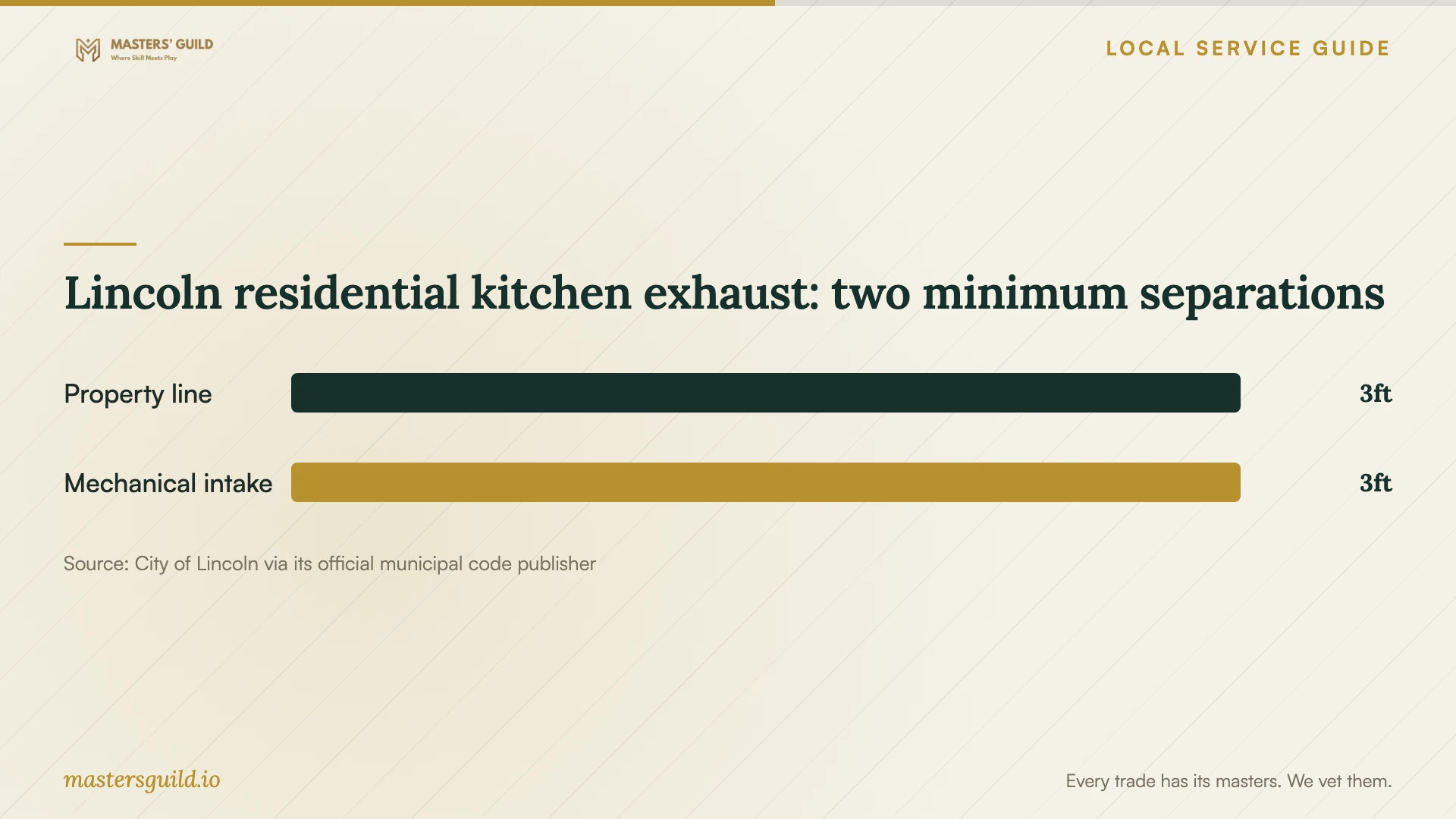
Ask for a drawing of the exhaust route, exterior outlet, and any makeup-air intake before approving cabinets or cutting an exterior opening. Lincoln specifies minimum separations for residential exhaust openings, including three feet from property lines and three feet between residential kitchen exhaust and mechanical air intakes. Have the contractor check the complete opening requirements for your proposed location. [2]
Assign permits, inspections, and kitchen downtime
Lincoln requires a permit before regulated mechanical-system installation, alteration, removal, conversion, or replacement, subject to its stated exceptions. Its minor-repair exception describes HVAC maintenance and component repairs. Ask the city to confirm the permit requirements for your complete kitchen scope, including any building, electrical, or plumbing work, before authorizing demolition. [2]
Write down who applies for each permit, pays its fee, requests inspections, and corrects rejected work. Lincoln requires inspection and approval before anyone conceals permitted mechanical equipment behind permanent portions of the building. It also requires a final inspection after installation. Ask the contractor to schedule cabinet and finish work around those inspection points. [2]
Agree on the expected period without a sink, cooking appliances, and normal refrigerator access. Set up a temporary food-preparation area and discuss dust barriers, daily cleanup, delivery access, and storage. Request an updated schedule when you approve a change, and review the remaining work together before the final payment milestone.
Lincoln residential kitchen exhaust: two minimum separations
Local details that affect your job
A high-airflow hood needs a home-specific review
Lincoln's residential kitchen exhaust rule uses a threshold above 400 cfm and includes an exception tied to open flues and interior combustion air. For projects requiring makeup air, the city specifies an interlocked motorized damper and winter temperature conditioning. Have the mechanical contractor resolve those requirements before you commit to the hood and surrounding cabinetry. [2]
Mechanical inspection affects when crews can close walls
Lincoln requires approval before crews conceal permitted mechanical equipment and requires a final inspection at completion. The registered contractor must call for the final inspection or provide requesting instructions if the owner will handle it. Name the responsible person in your contract and leave access available until the city approves the work. [2]
The homeowner mechanical-work exception has limits
Lincoln permits homeowners to install mechanical or fuel-gas equipment only in a single-family residence they occupy as their own home, without compensation paid to or received from another person for that installation labor. Owners must file plans, obtain a permit, pay fees, and request inspections. Discuss eligibility with the city before planning to use this exception. [2]
Choose the next step for your proposed scope
| Your plan | Next step | Ask the bidder to include |
|---|---|---|
| Retain the layout and replace finishes | Document the exact products and ask the city to confirm requirements for the full scope. | Removal, surface preparation, installation, cleanup, and exclusions. |
| Install a hood above 400 cfm | Have the mechanical contractor assess makeup air and the combustion-air exception. | Any required damper, electrical interlock, conditioning, and permit work. |
| Move the exhaust outlet | Check Lincoln's residential exhaust-opening clearances before choosing the route. | Outlet location, duct route, exterior repairs, and intake separations. |
| Conceal new mechanical equipment | Arrange inspection and approval before closing the affected area. | Inspection scheduling and access before cabinet or finish installation. |
| Perform mechanical installation yourself | Ask the city whether you meet its owner-occupant exception. | Plans, permits, fees, and inspections for the approved owner scope. |
Your hiring checklist
- Write a shared scope for bidders, including items you will retain and items you will replace.
- Provide appliance model numbers and hood airflow before approving the cabinet layout.
- Match the contractor's business name to its Nebraska registration and request insurance documentation.
- Identify the mechanical subcontractor and ask who will confirm all local trade requirements.
- Request an exhaust-route drawing and a written explanation of any makeup-air provision.
- Assign permit applications, inspection requests, and correction work in the contract.
- Agree on allowances, written change approvals, payment milestones, and temporary kitchen arrangements.
- Keep permit approvals, warranty documents, and the final list of unfinished items with your project records.
Frequently Asked Questions
Does Nebraska contractor registration prove a remodeler does good work?
No. The Department of Labor states that registration does not ensure workmanship or protect against fraud. Verify registration, then request references, a detailed written contract, proof of insurance, and a written warranty. [1] [3]
Will a range hood above 400 cfm require makeup air?
Lincoln requires makeup air for residential kitchen exhaust above 400 cfm, with an exception for homes with no open flues or use of interior combustion air. Ask a registered mechanical contractor to assess your home before purchasing the hood. [2]
Who should request the final mechanical inspection?
Lincoln requires the registered master mechanical contractor to call for inspection upon completion. If the contractor intends for you to request the final inspection, the contractor must provide instructions, and you must request it and provide access. Agree on that responsibility in writing. [2]
How should I compare kitchen remodeling prices?
Compare bids against the same layout, cabinet specification, appliance models, and finish selections. Request separate allowances and exclusions, and ask whether each quote includes ventilation provisions, permits, inspections, disposal, and repairs to disturbed surfaces. Obtain a site-specific quote before setting your construction budget.
Sources and scope
This guide combines the sources below with practical planning guidance. Figures apply to the stated geography and period; request a written quote for your property.