
Local service guide
Duct and Vent Cleaning in Lincoln, NE
Arrange Duct and Vent Cleaning in Lincoln, NE by having the cleaner show you the contamination, identify the components included, and provide a written total with sales tax. EPA recommends cleaning as needed for substantial contamination rather than on a routine schedule. Nebraska taxes ductwork cleaning, so compare the full invoice amount before choosing a provider. [1] [2]
Decide whether cleaning addresses your problem
Start with an inspection and have the provider show you the affected areas. EPA recommends considering cleaning when ducts contain substantial visible mold, vermin, or excessive dust and debris, including particles entering rooms through supply registers. A dusty return grille is normal; you can clean the grille without committing to whole-system service. [1]
Request evidence before accepting a mold diagnosis. EPA says appearance alone may not confirm mold; an expert may need laboratory analysis. Correct the moisture source before cleaning. Wet or moldy internal insulation needs replacement because cleaning cannot resolve that condition. [1]
Treat health and energy promises with caution. EPA says duct cleaning has not been shown to prevent health problems, and little evidence supports efficiency improvements from cleaning ducts alone. Discuss unexplained household symptoms with a doctor rather than relying on a cleaning sales pitch. [1]
Get a scope you can compare
Get written estimates from at least three providers. EPA advises agreeing on the total cost and scope before work starts. Have each bidder identify the supply and return ducts, registers, grilles, air handler, blower, coils, and drain pans included, along with exclusions. Establish who will handle components the cleaning crew cannot service. [1]
Have the crew explain how it will loosen debris, collect it, and protect your rooms. EPA recommends vacuum equipment that exhausts outdoors or HEPA equipment when exhausting indoors. The cleaner should match brushes to the duct material and seal and reinsulate access holes after use. Check references and experience with systems like yours. [1]
Request separate descriptions and prices for dryer exhaust cleaning, repairs, and chemical treatments. Before approving a biocide, review the product label and intended application. EPA cautions against approving chemical treatments without understanding their benefits and risks and says no biocides are registered for fiberglass duct board or fiberglass-lined ducts. [1]
Plan the visit and heating interruption
Tell the provider how many heating and cooling systems you have and where the equipment sits. Confirm the expected visit length, time without heating or cooling, equipment parking needs, and access route. Move stored items away from the air handler and registers, and agree on a place for pets during the work.
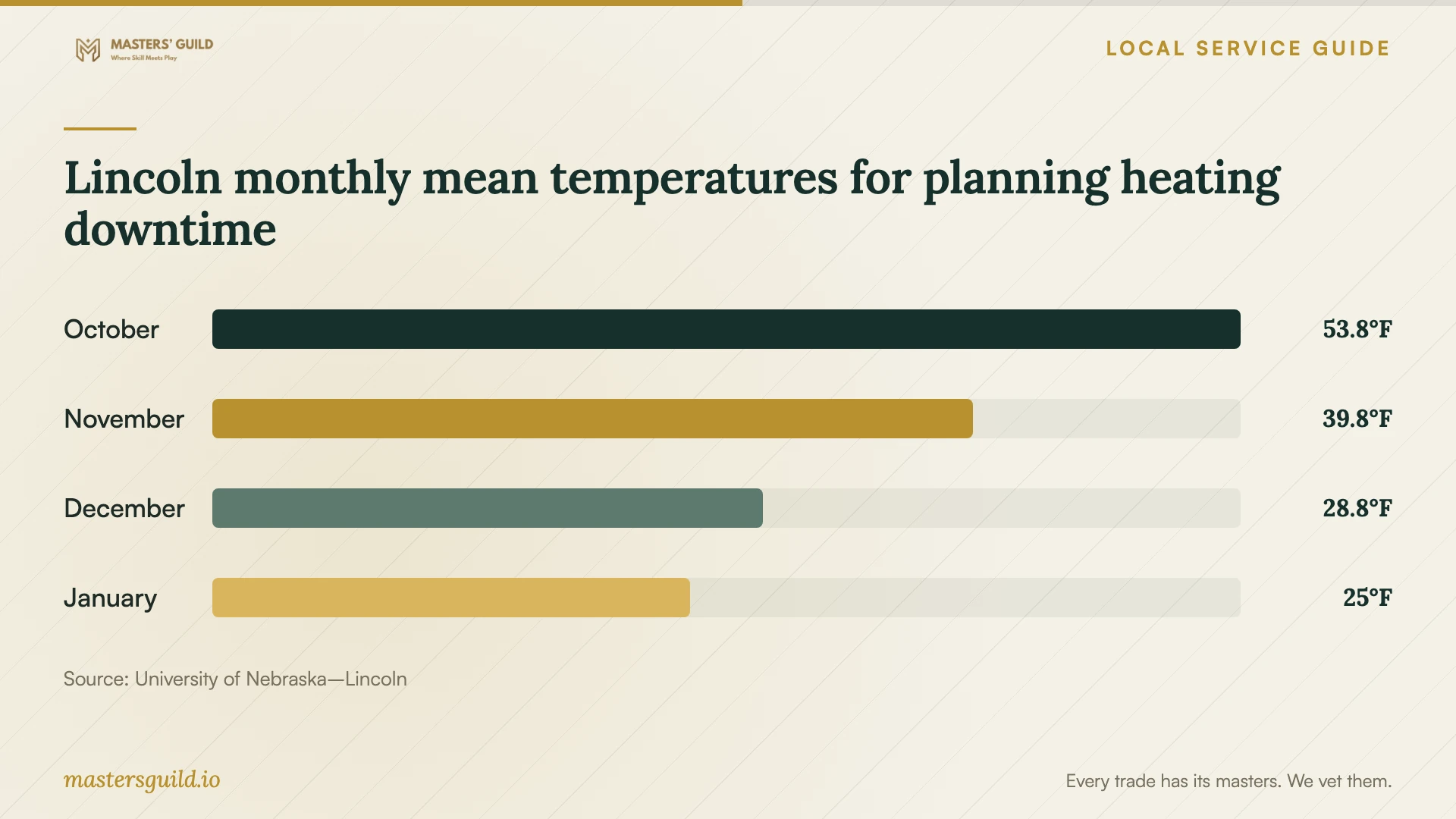
Plan cold-weather appointments around the expected heating interruption. UNL publishes a January mean temperature of 25.0°F for Lincoln for 1991–2020. Discuss how the crew will restore heat if it finds damaged ductwork. EPA also recommends inspection and service of fuel-burning heating equipment before each heating season; arrange that work alongside any justified duct cleaning. [4] [1]
Inspect the work before settling the bill
Agree on completion checks before the crew starts. EPA recommends a visual inspection of the system and notes that some providers use remote photographs. Have the cleaner show you cleaned supply and return areas and the other components in your agreement. Check that the crew has reattached registers and closed access openings, then have it demonstrate system operation. [1]
Review the invoice against the approved scope and have the provider explain additions before paying. Keep the inspection photos and descriptions of unresolved damage. For ongoing care, follow the equipment manufacturer's filter recommendation and address leaks or drain-pan problems that could let moisture enter the system. [1]
Lincoln monthly mean temperatures for planning heating downtime
Local details that affect your job
Include Nebraska sales tax in your comparison
The Nebraska Department of Revenue classifies cleaning furnaces, air conditioners, heat pumps, and ductwork as taxable building cleaning. Request a written total that includes applicable sales tax. Have the provider identify cleaning charges and proposed repairs in the estimate so you can compare the work you intend to authorize. [2]
Check Lincoln requirements before approving alterations
Lincoln Municipal Code section 25.06.050 requires permits for regulated mechanical installation, alteration, repair, removal, conversion, or replacement, with an exception for minor repair work defined as HVAC maintenance. The examples include coil cleaning and filter replacement, but do not name duct cleaning. If the provider proposes replacing or altering ducts, have the city's code official confirm the requirements and identify the registered master mechanical contractor responsible before authorizing the expanded work. [3]
Include the dryer outlet in the inspection
Lincoln's residential dryer exhaust rule requires termination outdoors with a backdraft damper. It prohibits termination screens and fasteners that obstruct exhaust flow. Request a photograph of the outlet and a separate description of any needed correction before approving the work. [3]
Choose the next step from the inspection findings
| Finding | Next step |
|---|---|
| Dust on the return grille alone | Clean the grille and inspect further before ordering whole-system cleaning. |
| Excessive duct debris or particles entering rooms | Request documented findings and a complete cleaning scope. |
| Suspected mold or wet internal insulation | Confirm the finding, correct moisture, and discuss replacement of wet or moldy insulation. |
| Proposed duct alteration or replacement | Confirm Lincoln permit and contractor requirements before expanding the job. |
| Screen at the dryer exhaust termination | Request a correction scope consistent with Lincoln's prohibition on termination screens. |
Your hiring checklist
- Describe the problem and request photos of the contamination before approving cleaning.
- Give bidders the system count, equipment locations, and known access restrictions.
- Get a written list of included components, exclusions, and the total including tax.
- Have the crew explain dust collection and protection of the duct material.
- List dryer exhaust work and any chemicals as separate approval items.
- Confirm city requirements before approving duct alterations or replacement.
- Agree on heating downtime and completion photos before booking.
- Review the cleaned areas, restored access openings, and system operation before paying.
Frequently Asked Questions
How much should I budget?
Get written estimates for your actual system. EPA's consumer guidance gives a broad national reference of $450 to $1,000 per heating and cooling system. The document originated in 1997, so this is not a verified 2026 Lincoln price. Compare scope, access charges, add-ons, and applicable Nebraska sales tax. [1] [2]
Should I schedule duct cleaning every year?
EPA recommends cleaning as needed rather than routinely. Use inspection findings to decide. Maintain filters and heating equipment according to the relevant equipment guidance instead of treating an annual duct-cleaning package as necessary. [1]
Does a cleaning quote include dryer vents?
Have the bidder state this in writing. Specify whether the price covers the dryer exhaust route and outdoor termination, and request a separate description of any repairs. Lincoln has specific dryer termination requirements, including a backdraft damper and no termination screen. [3]
Sources and scope
This guide combines the sources below with practical planning guidance. Figures apply to the stated geography and period; request a written quote for your property.