
Local service guide
Bathroom Remodeling in Lincoln, NE: Hiring Guide
For Bathroom Remodeling in Lincoln, NE, hire a contractor who provides a detailed written scope, identifies the trades doing the work, and assigns responsibility for permits and inspections before demolition. Check Nebraska contractor registration, references, insurance, and warranty terms. For ventilation changes, ask who holds the Lincoln mechanical registration and how the crew will arrange inspection before closing walls or ceilings. [2] [3]
Define the bathroom you want before requesting bids
Write down what you want to keep, replace, and move. Separate appearance changes, such as paint and hardware, from work on the shower, plumbing, wiring, ventilation, or walls. Give each bidder the same photographs, room measurements, and fixture preferences. Ask the contractor to visit before committing to a final scope.
For a shower replacement, request the proposed base, wall assembly, waterproofing system, drain connection, and door dimensions in writing. Ask who will inspect the exposed floor and framing after demolition. Require your approval of a written change order before the crew repairs damage outside the original agreement.
If this is your only bathroom, make continued toilet access and the shower outage part of the planning conversation. Ask for a sequence that identifies demolition, trade work, inspections, finish installation, and the date you can use the room. Request an explanation of how delayed materials or required corrections would affect that sequence.
Check the contractor and the people doing trade work
The Nebraska Department of Labor requires contractors to register before performing work in the state. Its remodeling guidance says registration does not guarantee quality and does not replace city or county licensing and permit requirements. Ask for the business name used for registration, then confirm that it matches the company named in your contract. [3]
Request references, proof of insurance, a detailed contract, and a written warranty before work begins. The Department of Labor recommends these checks and warns against demands for full or significant payment before the contractor starts. Discuss a payment schedule tied to defined work stages, with clear terms for materials you order. [3]
For regulated mechanical work, Lincoln requires local registration, subject to the code's exceptions. Ask the remodeler to name the mechanical contractor responsible for the bathroom ventilation work and provide that person's registration information. Ask who will supervise the installation and who will request inspections. [2]
Set permit responsibilities before demolition
Lincoln's mechanical code requires a permit before installing, altering, removing, or replacing a regulated mechanical system, with an exception for defined minor repairs. Have the contractor confirm how the city classifies your proposed fan and duct work. Put the permit applicant, fees, and inspection responsibilities in the agreement. [2]
The city's plumbing code index identifies separate provisions for permits, inspections, plumber registration, and insurance. Ask the city to confirm the requirements for your exact fixture and piping changes. Do not assume that retaining the current layout settles the permit question. [1]
For permitted mechanical equipment, the city requires inspection and approval before concealment and a final inspection after completion. Ask the contractor to identify the point when the crew must leave work exposed. Request permit information and final approval records as part of the handover. [2]
Include the exhaust route in the ventilation bid
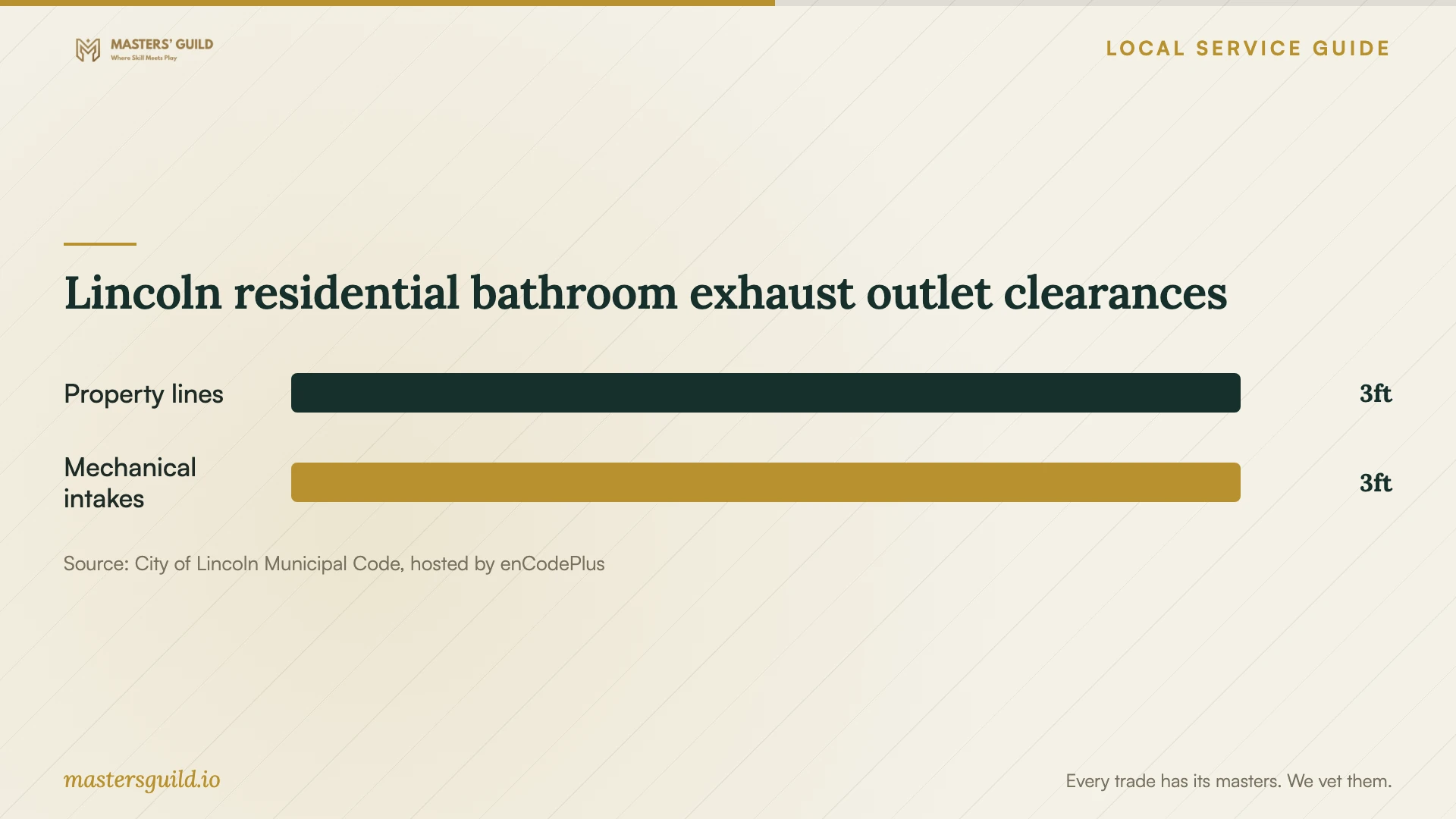
Ask the installer to show the proposed fan location, duct route, exterior termination, and nearby mechanical air intakes. Lincoln's residential exhaust-opening amendment requires at least three feet between residential bathroom exhaust and mechanical air intakes. It also specifies three feet from property lines. [2]
The same residential amendment addresses operable building openings and includes an exception for openings into the dwelling that produces the exhaust. Ask the installer to check the complete rule against your house before selecting an outlet. A photograph of an existing vent does not establish that the proposed installation complies. [2]
Request the fan model, sizing basis, controls, duct materials, and any insulation work in the quote. Ask the installer to confirm the applicable residential exhaust rate with the city. Keep the ventilation discussion tied to the proposed installation rather than choosing a fan from its advertised capacity alone.
Compare written scope before comparing totals
Ask each bidder to identify included materials, fixture allowances, demolition, disposal, trade work, permits, finish repairs, and cleanup. For items you supply, agree on who checks dimensions and compatibility, receives deliveries, and handles damaged or incorrect products. Mark exclusions beside the quoted total.
Request separate prices for optional layout changes and finish upgrades. Agree on how the contractor will document hidden damage, price repairs, and obtain your approval. Before signing, read the warranty for coverage, exclusions, and the person you should contact for a leak or installation defect.
Lincoln residential bathroom exhaust outlet clearances
Local details that affect your job
Leave permitted mechanical work accessible for inspection
Lincoln requires crews to obtain inspection approval before concealing permitted mechanical equipment behind permanent building finishes. Ask your remodeler to place this inspection hold in the work schedule before closing the affected wall or ceiling. [2]
Check exterior exhaust clearances before selecting the outlet
Lincoln's residential amendment specifies three feet from property lines and at least three feet between residential bathroom exhaust and mechanical air intakes. Have the installer measure the proposed outlet location and review the remaining opening-clearance provisions before you approve the route. [2]
Confirm eligibility before choosing homeowner mechanical work
Lincoln limits homeowner mechanical installation to a single-family residence the owner occupies as a home, without compensation paid to or received from another person for installation labor. The owner must file plans, secure a permit, pay fees, and request inspections. Confirm eligibility with the city before taking this route. [2]
Choose the next step for your proposed scope
| Proposed work | Before accepting a bid | Ask for in writing |
|---|---|---|
| Paint, hardware, and finishes | Define the surfaces and items to keep | Preparation, materials, protection, and cleanup |
| Shower or tub replacement | Review the installation assembly and ask the city about plumbing requirements | Waterproofing scope, drain work, and repair approval process |
| Fan or duct changes | Confirm mechanical permit requirements and exterior outlet clearances | Responsible registered contractor, route, and inspection stages |
| Owner-installed mechanical work | Confirm eligibility under Lincoln's owner-installation provision | Plans, permit responsibilities, fees, and inspection arrangements |
Your hiring checklist
- Prepare one scope and fixture list for all bidders.
- Check the contractor's Nebraska registration under the contract business name.
- Request references, current insurance documentation, and written warranty terms.
- Name the people responsible for plumbing, electrical, and ventilation work.
- Assign permit applications, fees, and inspection requests in the contract.
- Review the exhaust route and exterior outlet with the installer.
- Agree on bathroom access, outage dates, and written change-order approval.
- Request applicable final inspection records and product instructions at handover.
Frequently Asked Questions
Does Nebraska contractor registration prove the remodeler does good work?
No. The Nebraska Department of Labor says registration does not guarantee work quality. It recommends checking references and obtaining written estimates, a detailed contract, proof of insurance, and a written warranty. [3]
Can the crew close the ceiling before the mechanical inspection?
For equipment covered by a mechanical permit, Lincoln requires inspection and approval before concealment. Ask the contractor to schedule that inspection before installing the affected permanent finishes. [2]
Can I obtain a mechanical permit for work I do myself?
Lincoln allows qualifying owners to install mechanical equipment in their own occupied single-family homes, without compensation for installation labor. Owners must file plans, obtain a permit, pay fees, and request inspections. Confirm your proposed arrangement with the city. [2]
How should I compare bathroom remodeling prices?
Give bidders the same scope and compare their allowances, exclusions, trade responsibilities, and change-order terms. Ask each contractor to identify what you must purchase. Obtain site-specific written quotes before choosing a budget.
Sources and scope
This guide combines the sources below with practical planning guidance. Figures apply to the stated geography and period; request a written quote for your property.