
Local service guide
Pressure washing in Lexington, KY: Hiring Guide
Pressure washing in Lexington starts with a written plan for your surfaces, nearby drains and cleanup. Ask bidders to identify their cleaning method, document insurance and confirm their city occupational license. Lexington requires businesses operating in Fayette County to register, and its storm sewers carry runoff to creeks without treatment. Compare those details alongside the total price before choosing a date. [1] [2]
Define the work before comparing prices
Send each bidder the same photos and surface list. Separate the driveway, steps, patio, deck and exterior walls. Include close views of stains, loose coatings, cracked joints and previous repairs. Ask the contractor to inspect uncertain materials before committing to a cleaning method.
Request a written total with separate prices for optional work. Ask whether the quote includes stain treatment, moving furniture, protecting adjacent surfaces, wash-water collection and final cleanup. Have the bidder state whether they need your water supply and what access they need through gates or around parked vehicles.
Agree on the expected result before work begins. Point out the marks you want addressed and ask which ones the contractor expects to remain. For a stained patio, request a description of the proposed treatment and any follow-up visit. Compare the promised work rather than assuming that identical service names mean identical scopes.
Choose a method for each surface
Ask the bidder to explain how they will clean each material, including the products, pressure control and protection around openings. If someone proposes a soft wash, ask them to describe the actual process. Request the applicable surface manufacturer’s cleaning instructions where available, then ask the contractor how their proposal follows them.
Treat historic masonry as a specialist decision. GSA’s historic-masonry guidance calls for material assessment, discreet test patches and the gentlest effective method. It warns that commercial pressure-washing equipment can operate above its recommended pressures. The agency presents this as technical guidance requiring project-specific professional judgment, rather than a universal cleaning recipe. [3]
For older brick or stone, ask who will assess the masonry and approve the test area. Review the test result before authorizing the remaining work. GSA’s procedure also includes protection of adjacent materials and vegetation, plus evaluation of cleaning-effluent collection. Use those subjects to question a preservation specialist about your property. [3]
Check the business and its runoff plan
Lexington states that all businesses operating in Lexington-Fayette County need a business permit, also called an occupational license. Ask for that registration under the name on your quote. Treat it as a business-registration check and assess cleaning competence through the proposed method, relevant work examples and answers about your surfaces. [2]
Request current insurance documentation and ask who will perform the work. Agree on who handles damage concerns, added work and the final walkthrough. Keep the accepted scope and any changes in writing.
Lexington explains that storm sewers discharge runoff into creeks and streams without sending it through a treatment plant. Before accepting a driveway or patio quote, identify nearby curb inlets and ask the bidder to describe containment, collection and disposal. The city’s stormwater page explains the drainage risk; it does not specify a pressure-washing disposal procedure. [1]
Arrange access and a weather backup
Agree on a weather cancellation policy, a backup date and who will contact you. Ask the contractor to explain any temperature or rain restrictions for the chosen products and surfaces. Confirm when you can walk on the cleaned area, replace furniture and park again.
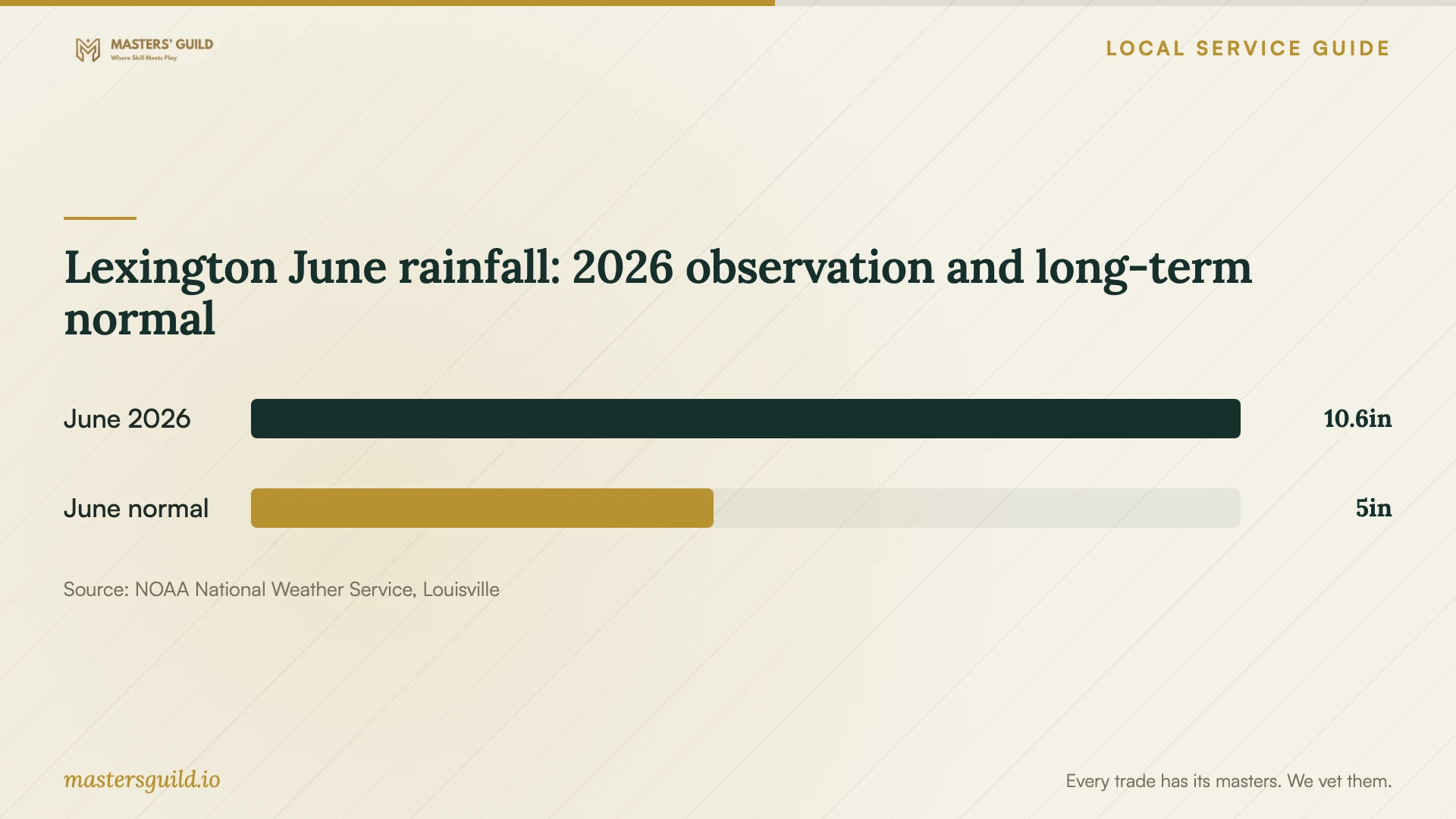
The National Weather Service recorded 10.61 inches of precipitation in Lexington during June 2026, compared with a June normal of 4.96 inches for 1991–2020. That month provides a concrete reason to discuss weather flexibility, but it cannot predict conditions on your appointment date. [4]
Before arrival, move vehicles and portable belongings from the agreed work area. Point out leaks, loose fittings and areas you want excluded. Confirm how the crew will maintain household access, then arrange to review the work together before closing out the job.
Lexington June rainfall: 2026 observation and long-term normal
Local details that affect your job
Verify the city occupational license
Lexington requires businesses operating in Fayette County to register for an occupational license. Request the provider’s registration under its quoted business name. For questions about that requirement, the city lists its Division of Revenue at 859-280-8300. Use that office to clarify registration questions before accepting an unexplained licensing claim. [2]
Resolve drainage questions before accepting the quote
Lexington’s storm drains carry runoff to waterways without treatment. Ask the contractor to identify where wash water would travel from your driveway or patio and include its proposed handling in the scope. If disposal remains unclear, the city lists Water Quality at 859-425-2400; ask about the proposed approach before work starts. [1]
Questions to resolve before booking
| Your situation | Ask for | Booking decision |
|---|---|---|
| Driveway or patio near a storm inlet | A written wash-water containment and disposal plan | Resolve runoff handling before accepting the scope; city storm sewers discharge without treatment. |
| Historic brick or stone | A preservation-informed assessment and test patch | Review the gentlest successful method before approving full cleaning, consistent with GSA guidance. |
| Unclear business credentials | The occupational license under the quoted business name | Clarify registration before booking; Lexington requires it for businesses operating in the county. |
| Different prices for similar service names | Matching surface lists, treatments, exclusions and cleanup | Compare the written work and final totals before choosing. |
Your hiring checklist
- Send the same surface list and photos to each bidder.
- Request city business registration and current insurance documentation.
- Agree on cleaning methods and any test area before full cleaning.
- Include wash-water handling and cleanup in the written scope.
- Confirm water access, parking and household access arrangements.
- Record the total price, exclusions and approval process for additions.
- Set a weather backup date and arrange a final walkthrough.
Frequently Asked Questions
How should I compare pressure-washing quotes?
Give bidders the same photos and surface list. Request a total that identifies preparation, cleaning, stain treatment, runoff handling and cleanup. Ask them to name exclusions and explain how they will obtain approval for added work.
What local license should I ask about?
Ask for the Lexington-Fayette occupational license under the provider’s business name. The city requires businesses operating in the county to register. Assess the proposed cleaning method and relevant experience alongside that registration. [2]
Should I approve pressure washing on historic brick?
Seek a preservation-informed assessment before approving a method. GSA’s historic-masonry guidance calls for test patches and the gentlest successful cleaning process under qualified professional guidance. Ask to review the test result before the contractor cleans the remaining area. [3]
What should I ask about water running toward the street?
Ask where the water will go and how the contractor will contain, collect and dispose of it. Lexington explains that storm sewers discharge into waterways without treatment. Clarify the proposed disposal approach with Water Quality if the bidder cannot explain it. [1]
Sources and scope
This guide combines the sources below with practical planning guidance. Figures apply to the stated geography and period; request a written quote for your property.