
Local service guide
Lighting installation in Lexington, KY
Lighting installation in Lexington should start with an installer who includes permits and inspection in the written scope. Fayette County requires an electrical permit for all electrical work and inspection of that work; the city lists a $10 permit fee. Before accepting a quote, identify which fixtures will use existing locations, which need new wiring, and who will arrange the inspection. [1]
Define the work before requesting quotes
Give each installer the same room-by-room fixture list. Mark each item as a replacement in its present location, a relocation or a new light. Include fixture model numbers, ceiling heights, photographs and your preferred switch locations. Ask the installer to inspect the existing boxes and wiring before committing to a fixed scope.
For pendants and chandeliers, provide the manufacturer’s weight and mounting instructions. Ask whether the quote includes support work, assembly and access equipment. For recessed lights, ask the installer to explain the proposed layout and access route before cutting openings. Agree on who handles ceiling repairs and paint.
Describe what you want to illuminate: a worktop, dining table, hallway or entry. Request separate switching where you want independent control. Settle fixture positions and controls before ordering, and ask for written approval of any substitutions.
Assign permits and inspection before work starts
Lexington states that electrical permits cover all electrical work in Fayette County and that all electrical work requires inspection. Its published guidance does not list a routine fixture-swap exemption. Ask Building Inspection to resolve any proposed exception before work begins. [1]
The city directs applicants to its permits page for applications and lists the electrical permit fee as $10 each. It directs inspection scheduling and fee questions to the Commonwealth Inspection Bureau at (859) 263-7800. Ask the installer to identify permit charges and inspection charges separately in the quote. [1]
Use Kentucky’s Department of Housing, Buildings and Construction license-verification page to check electrical credentials. Ask the contractor to provide the license details you should search, plus evidence of its LFUCG business license. State electrical licensing and the local business-license requirement are separate checks. [1] [3]
Choose lamps and controls together
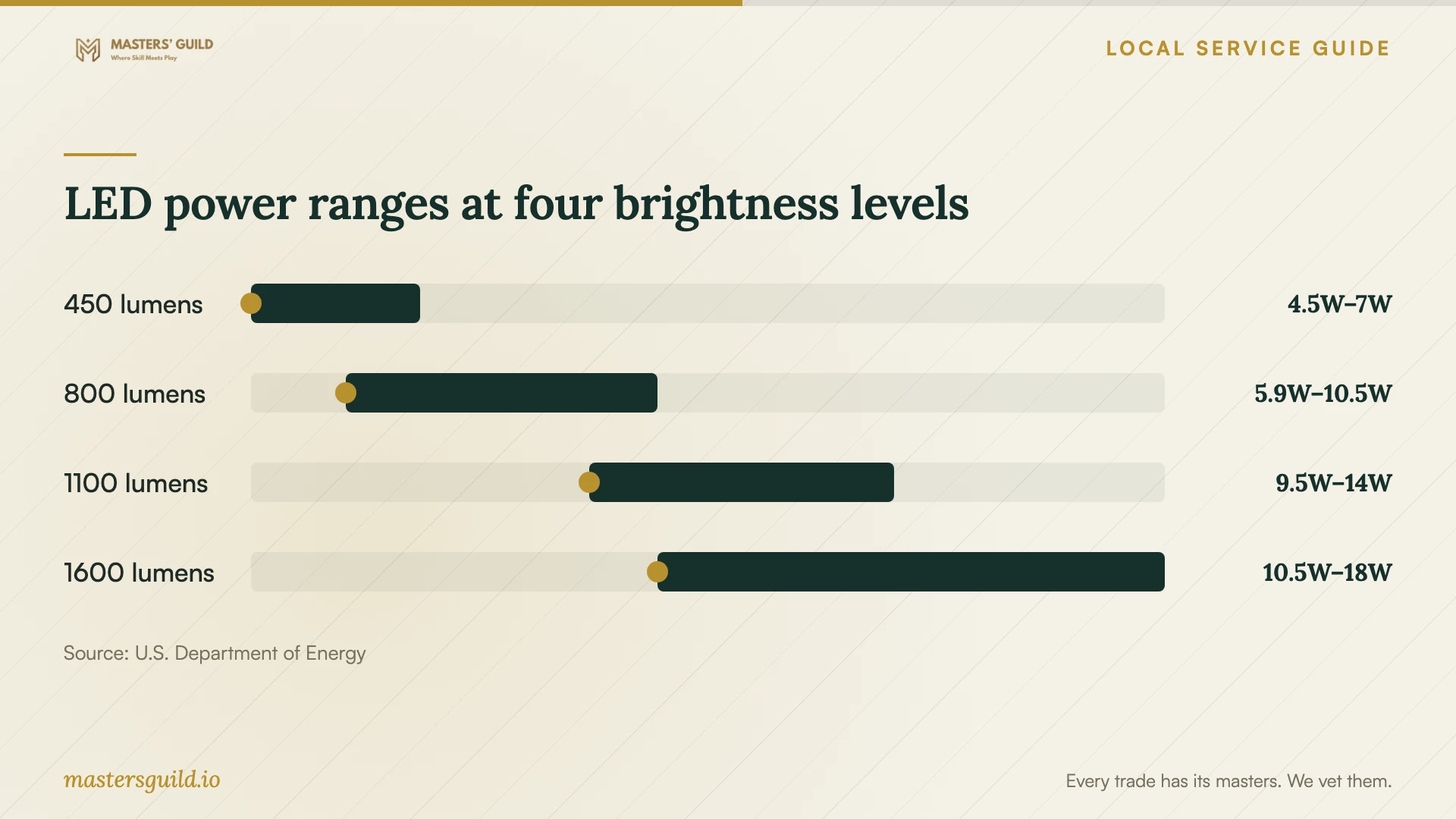
Compare lumens for brightness and watts for power input. The Department of Energy’s reference table lists LED wattage ranges at equivalent light outputs. Use those figures to compare lamp specifications; they do not establish the brightness your room needs or predict your electricity bill. [4]
Check the lamp packaging or technical specifications for enclosed-fixture use. DOE explains that heat buildup in enclosed fixtures can affect LED performance and life. For dimming, confirm both that the lamp supports dimming and that it works with the selected dimmer. [4]
Agree on the light’s color appearance before buying a full set. DOE describes 2700 K as warm and 3000 K as soft, and warns that a large color-temperature change can disappoint occupants. For outdoor fixtures, check the local rules before choosing a cooler lamp. [2] [4]
Compare complete quotes and agree on handover
Request separate entries for fixtures, installation labor, wiring, controls, support work, access equipment, permits, inspection and surface repairs. Ask whether you or the installer supplies lamps. Require written approval before the installer performs work beyond the agreed scope.
Ask for a schedule that identifies installation, inspection arrangements and any return visit. Agree on how you will review fixture placement, switching and dimming. Keep model numbers, instructions, warranty information and the inspection record with the job paperwork.
For exterior work, ask the installer to explain aiming and shielding at the property boundary. Lexington’s outdoor-lighting summary addresses glare and light trespass as well as fixture specifications. Have the installer confirm applicable requirements and exemptions before you approve the purchase. [2]
LED power ranges at four brightness levels
Local details that affect your job
Owner occupancy changes the permit route
Lexington allows homeowners to obtain electrical permits for property they own and currently occupy. It excludes vacant property, rental property, duplexes and mobile homes from homeowner electrical permits. If your property falls into an excluded category, arrange the permit route with a qualified electrical contractor rather than planning around a homeowner permit. [1]
Inspection needs its own scheduling and fee check
The $10 electrical permit is only the published permit charge. Lexington directs homeowners and contractors to the Commonwealth Inspection Bureau for inspection scheduling and fee information. Confirm who will make that call and include the inspection arrangements in the scope before choosing an installation date. [1]
Outdoor selection requires a local compliance check
Lexington’s summary of outdoor regulations adopted July 9, 2024 specifies fully shielded downward lighting, a color temperature of 3000 K or below and a maximum fixture height of 25 feet. It also addresses lumen output and light trespass. Treat these as purchase-screening questions and confirm the requirements and exemptions for your property before ordering. [2]
Questions to settle for your installation
| Project | Before accepting the quote | Before buying |
|---|---|---|
| Existing fixture replacement | Identify who handles the required permit and inspection. | Confirm mounting instructions, dimensions and lamp fit. |
| New light or relocated fixture | Ask for a wiring route, switch plan and surface-repair scope. | Approve placement and fixture specifications. |
| Dimmable lighting | Name the proposed dimmer and lamp combination. | Confirm dimming capability and compatibility. |
| Exterior lighting | Confirm applicable shielding, color-temperature and light-trespass requirements. | Have the installer approve the fixture and mounting location. |
| Rental or vacant property | Arrange the contractor permit route; homeowner permits exclude these properties. | Confirm the scope before ordering fixtures. |
Your hiring checklist
- List fixture locations and mark replacements, relocations and new installations.
- Send model numbers, fixture weights, ceiling heights and photographs.
- Ask the installer to assess wiring, boxes and mounting support.
- Record the proposed lamps, brightness, color temperature and controls.
- Request state license details and evidence of the local business license.
- Assign permit applications, inspection scheduling and related charges.
- Define ceiling repairs, cleanup and approval of extra work.
- Agree on the final walkthrough and paperwork handover.
Frequently Asked Questions
Does replacing a light fixture require a permit?
Lexington’s published guidance requires electrical permits for all electrical work in Fayette County and inspection of that work. It does not state a fixture-replacement exemption. Confirm the scope with Building Inspection before proceeding. [1]
Does the $10 permit cover the entire installation?
The city lists $10 as the electrical permit fee. It directs readers to the Commonwealth Inspection Bureau for inspection fees. Ask your installer to quote labor, materials, permit and inspection charges separately. [1]
Can I use my existing dimmer with new LEDs?
Check the proposed combination before buying. DOE advises buyers to choose lamps that support dimming and confirm compatibility with the dimming system. Ask the installer to name the compatible lamp and dimmer models in the quote. [4]
How do I check an installer’s license?
Use Kentucky’s Department of Housing, Buildings and Construction license-verification page, which provides access to electrical license searches. Also request evidence of the LFUCG business license required for contractors obtaining local electrical permits. [1] [3]
Sources and scope
This guide combines the sources below with practical planning guidance. Figures apply to the stated geography and period; request a written quote for your property.