
Local service guide
Lexington, KY lawn mowing: Plan Your Service
For lawn mowing in Lexington, KY, ask providers to quote the same mowing area, cutting height, trimming work and clipping disposal method, then compare the total charge including tax. Choose visit frequency around grass growth: University of Kentucky guidance recommends removing no more than one-third of the leaf in one mowing. Before booking, agree on access, weather delays and any separate charge for the first cut. [2] [3]
Get a quote for the work you need
Send each provider the same photos and description: front and back mowing areas, gates, steps, slopes, trees, beds and any areas you want left untouched. Give the narrowest gate opening and explain where the crew can park. Ask the provider to inspect any access issue before you accept a recurring agreement.
Request separate answers for mowing, trimming around obstacles, edging and clearing clippings from paths and the driveway. Specify whether the crew should mulch clippings, collect them for your cart or take them away. Ask whether the quote covers the first visit at the lawn's present height and whether later visits use a different price.
Request property-specific quotes for the same scope of work. Compare the total for matching mowing areas, trimming and disposal, and ask how the provider charges for skipped visits, extra cleanup and cancellation. Keep those terms with the quote so you can check the invoice against the work you accepted.
Agree on cutting height and visit frequency
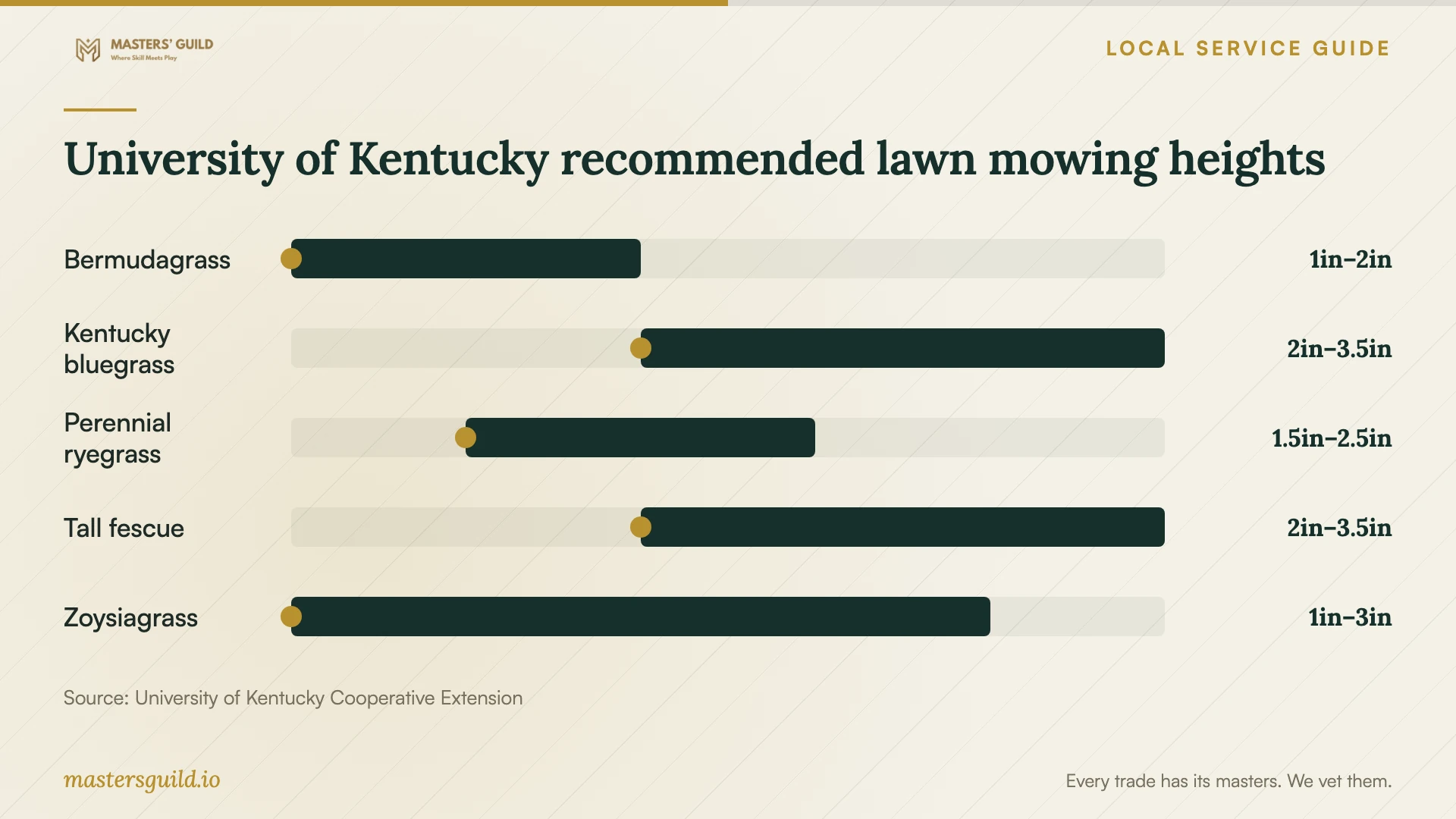
University of Kentucky's 2019 mowing guidance recommends heights of 2 to 3.5 inches for tall fescue and Kentucky bluegrass. It gives other ranges for bermudagrass, perennial ryegrass and zoysiagrass. Ask the provider to identify your grass before choosing a mower setting, especially if you do not know what grows in the yard. [2]
The university recommends removing no more than one-third of the leaf at a time and explains that grass type and cutting height affect mowing frequency. Use that rule to discuss weekly or less frequent visits. Agree on who checks growth and contacts whom when the lawn needs a change in schedule. [2]
For an overgrown lawn, ask the provider how they will reach the agreed height while respecting the removal limit. University guidance also emphasizes sharp blades and identifies brown leaf tips after mowing as a sign of dull blades. Ask about blade maintenance if you see torn grass after a visit. [2]
Choose mulching, collection or hauling
University of Kentucky guidance says most lawns do not need clipping removal when mowing height and frequency suit the grass. It recommends considering removal when excess clippings form clumps or disease is present. Ask the crew to check for clumping before leaving, and agree on what they should do if mulching does not produce an acceptable finish. [2]
Lexington provides weekly yard waste pickup for customers with city waste collection, on the same day as their blue and green carts. The city accepts grass clippings in the gray cart, loose rather than bagged, and accepts overflow in paper yard waste bags beside the cart. Confirm your collection service before asking a crew to leave collected clippings at the curb. [1]
If you choose hauling, ask where the provider will take the clippings and include that work in the written quote. Confirm whether a contractor's load qualifies for any resident disposal allowance before relying on it. If you plan to handle disposal yourself, confirm the facility's requirements before loading your vehicle.
Set visit terms before the first cut
Agree on a visit window and a contact method for weather delays. Ask whether the crew will notify you before arrival, how it handles a locked gate and whether it charges for a visit it cannot complete. Write down how you can pause or end recurring service and whether the provider requires notice.
Before arrival, move toys, hoses and portable furniture; pick up pet waste; and mark sprinkler heads or other obstacles you want the crew to avoid. Show the crew the boundaries of beds and planted areas. Ask for evidence of liability insurance and the procedure for reporting damage.
After the first visit, check the agreed areas with the provider. Discuss missed strips, clumps, trimming and cleanup before confirming ongoing service. Keep the written scope and invoice so you can compare later visits with what you accepted.
University of Kentucky recommended lawn mowing heights
Local details that affect your job
Match clipping disposal to your collection service
City waste collection customers can use a gray cart for loose grass clippings and paper yard waste bags for overflow. Lexington collects yard waste throughout the year, subject to weather and holiday exceptions. For Fayette County residents without city collection, the city lists alternatives including leaving clippings on the lawn, composting and dropping off two pickup-truck loads of brush or yard waste per month free at Haley Pike Waste Management Facility, 4216 Hedger Lane. Decide who handles disposal before comparing bagging and hauling quotes; confirm eligibility if a contractor will make the trip. [1]
Ask for the Kentucky tax-inclusive total
Kentucky Department of Revenue guidance includes mowing, trimming and weed eating among taxable lawn care services. The state rate is 6%, with no local sales and use taxes. Ask each provider whether its displayed price includes tax and request an itemized total. If you add landscaping construction, ask the provider to separate the work because the department describes different treatment for some fixture-installation labor. [3] [4]
Choose the mowing arrangement for your yard
| Your situation | Arrangement to discuss | Detail to settle |
|---|---|---|
| Grass grows between visits | Adjust the visit interval around growth | Follow University of Kentucky's one-third removal guidance |
| Clippings stay scattered without clumps | Leave or mulch clippings | University guidance says most lawns do not need clipping removal |
| You want collected clippings and have city waste service | Use the gray cart or paper overflow bags | Put clippings loose in the cart and agree who sets out the material |
| You want the crew to remove clippings | Request a separate hauling scope | Name the disposal destination and include the charge |
| Quotes show different totals | Compare matching work with tax included | Kentucky's mowing-service sales tax rate is 6% |
Your hiring checklist
- Send matching photos and a description of the mowing area to each provider.
- Identify the grass and agree on a cutting height.
- Specify trimming, edging and cleanup in the written scope.
- Choose mulching, cart disposal or hauling and name who handles it.
- Request the first-visit price and recurring tax-inclusive total.
- Agree on weather delays, skipped visits and cancellation terms.
- Confirm gate access, mark obstacles and request evidence of insurance.
- Review the first visit before confirming recurring service.
Frequently Asked Questions
Should I book weekly or biweekly mowing?
Choose the interval around growth and the agreed cutting height. University of Kentucky guidance recommends removing no more than one-third of the leaf in one mowing. Ask the provider how it will adjust visits when the lawn grows enough to exceed that limit. [2]
Does the crew need to bag my clippings?
University of Kentucky guidance says most lawns do not need clipping removal, though clumping or lawn disease can justify it. If you request collection, agree whether the crew will use your city gray cart, leave paper yard waste bags or haul the material away. [1] [2]
Is sales tax part of a mowing quote?
Kentucky Department of Revenue says providers must charge sales tax on mowing and other listed lawn care services. The rate is 6%. Ask whether the quoted amount includes tax so you can compare the amount you will pay. [3]
What should I ask about the first visit?
Ask the provider to confirm the price for the lawn's current condition, the planned cutting height, trimming and cleanup. Agree on access and clipping disposal. Review the completed work together before accepting a recurring schedule.
Sources and scope
This guide combines the sources below with practical planning guidance. Figures apply to the stated geography and period; request a written quote for your property.