
Local service guide
Lexington gardening: Hiring and Planning
Hire a gardener for Lexington gardening by requesting a written scope for cleanup, planting, ongoing care, materials, and debris removal. Agree on which plants stay, who waters between visits, and whether the gardener prepares waste for collection or hauls it away. For chemical treatments, check the proposed worker through Kentucky’s licensed pesticide-applicator search. [3]
Define the work before comparing quotes
Walk through the garden with the person quoting. Photograph the starting condition and mark plants you want to retain. List hand weeding, edging, planting, mulching, hedge work, and cleanup as separate tasks. Ask the gardener to seek your approval before removing an unidentified plant.
Request a total for the agreed work or an hourly rate with a spending limit. Confirm whether an hourly rate covers one worker or the whole crew. Ask for separate material, delivery, and disposal charges so you can compare the same scope across offers.
For recurring care, agree on the tasks for each visit and how you will approve extras. Request proof of liability insurance and examples of comparable garden work. Include a completion walkthrough so you can check retained plants, cleared beds, and debris handling before the crew leaves.
Choose the disposal plan before cleanup
Lexington provides weekly, year-round yard-waste collection for homes with city waste service, with weather and holiday exceptions. Crews collect yard waste on the same day as the blue and green carts. Decide whether your gardener will prepare material for that collection or remove it from the property. [1]
The city requires loose material inside the gray cart. Branches inside it must measure less than 4 feet long and 6 inches in diameter. Branches beside the cart must form twine-tied bundles less than 4 feet long and under 50 pounds. Put overflow plant material in paper yard-waste bags. [1]
Keep plastic bags, plant pots, and excess soil out of the gray cart. Lexington permits a little soil attached to roots and directs residents to return excess soil to the yard. For bed excavation or container removal, ask the gardener to explain how they will handle those materials. [1]
Agree on planting and follow-up care
Approve a planting list before the gardener buys plants. Discuss sunlight, mature size, access to water, and the care you want to undertake. Ask the gardener to confirm substitutions with you and identify who pays for delivery, replacement plants, and follow-up visits.
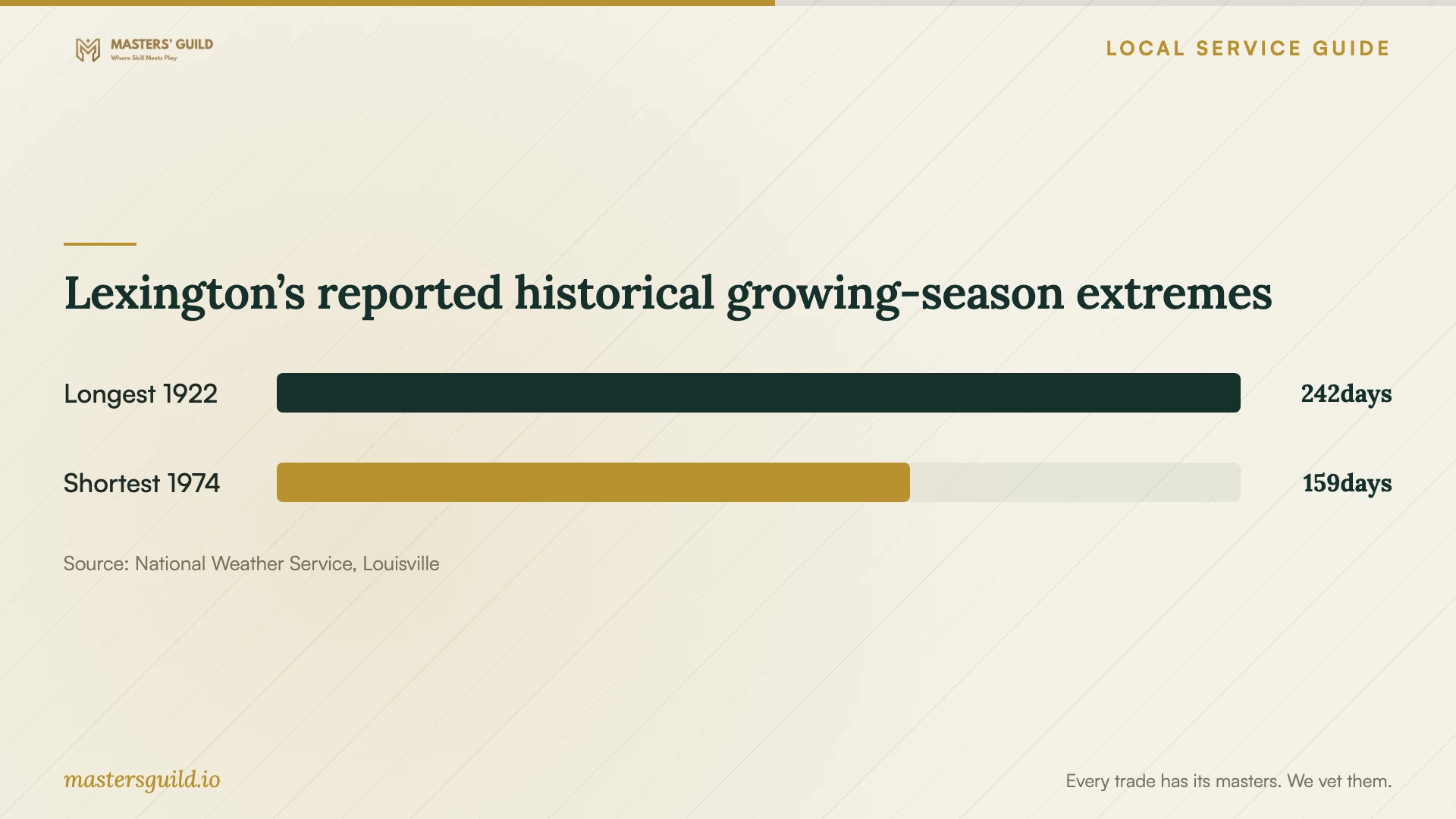
Use the forecast when arranging tender planting or autumn protection. The National Weather Service lists Lexington’s latest recorded spring freeze at 32°F as May 20, 1894, and its earliest recorded fall freeze as September 30, 1899. Treat these as historical extremes rather than planting deadlines or predictions. [4]
Name the person responsible for watering between visits. Ask the gardener to leave instructions for the particular plants and beds, including how to check whether watering is needed. Agree on how you will handle weather delays and who will contact you before changing the work date.
Resolve plant problems before approving treatment
Ask the gardener to identify the weed, pest, or plant problem before proposing treatment. Request the product name, intended application area, and aftercare instructions. Put a preference for hand weeding in the scope if you want the gardener to seek permission before using chemicals.
The Kentucky Department of Agriculture provides a licensed pesticide-applicator search with a Fayette county option. Ask who will perform the application and check that person’s record. Resolve any mismatch between the proposed worker and the record before approving treatment. [3]
Fayette County Extension lists local horticulture staff. Ask the office about available services, fees, and timing, and what photographs or samples staff need. Use that conversation to decide what information you want before authorizing treatment, soil amendments, or plant replacement. [2]
Lexington’s reported historical growing-season extremes
Local details that affect your job
Include curbside preparation in the quote
For homes with city collection, specify loose gray-cart contents, paper overflow bags, and qualifying branch bundles tied with twine. Agree who supplies bags and twine and who moves debris to the collection point. Lexington excludes pots, plastic bags, and excess soil from the gray cart. [1]
Check Haley Pike arrangements before removing hauling
Fayette County residents can drop off two pickup-truck loads of brush or yard waste each month without charge at Haley Pike Waste Management Facility, 4216 Hedger Lane. The city lists hours of 8 a.m. to 5 p.m. on Monday, Tuesday, Thursday, and Friday, with Wednesday closure except holiday makeup days. Confirm whether your proposed delivery qualifies before asking a gardener to omit hauling charges. [1]
Contact local horticulture staff before committing to replacement
Fayette County Extension lists horticulture staff at 1140 Harry Sykes Way and provides the phone number (859) 257-5582. Ask about help with an unresolved plant problem and confirm services, fees, and timing before arranging a visit or bringing samples. [2]
Choose the scope for your garden
| Your situation | Scope to request | Point to settle |
|---|---|---|
| Overgrown beds with plants to retain | Cleanup with marked keep-and-remove areas | Require approval before removing unidentified plants. |
| Beds needing ongoing attention | Recurring weeding, edging, and agreed plant care | Separate the cleanup price from later visits. |
| Home with city waste collection | Cleanup plus cart, bag, and bundle preparation | Follow Lexington’s material and branch-size rules. |
| You intend to transport debris | Cleanup with material prepared for loading | Confirm resident eligibility and Haley Pike delivery arrangements. |
| Chemical treatment proposed | Treatment priced and described separately | Check the named worker in Kentucky’s applicator search. |
Your hiring checklist
- Photograph the beds and mark plants to retain.
- Separate initial cleanup from recurring maintenance.
- Confirm the labor basis, spending limit, and approval process for extras.
- Approve plants, substitutions, mulch, and delivery arrangements.
- Choose curbside preparation or hauling and assign responsibility.
- Agree who waters between visits and handles weather rescheduling.
- Request insurance documentation and identify any proposed pesticide applicator.
- Arrange a completion walkthrough before the crew leaves.
Frequently Asked Questions
How should I compare gardening quotes?
Give each gardener the same photographs and task list. Request labor, materials, delivery, and disposal as separate items. For hourly work, confirm whether the rate covers one worker or a crew and set a spending limit.
Can the gardener leave debris for city pickup?
For a home with Lexington city waste collection, arrange for qualifying material in the gray cart, paper yard-waste bags, or twine-tied branch bundles. Include preparation in the quote and check the city’s size limits before agreeing to leave branches beside the cart. [1]
Where can I check a pesticide applicator?
Use the Kentucky Department of Agriculture’s licensed-applicator search, which includes Fayette in its county selector. Ask for the actual applicator’s name and resolve any uncertainty about the record before approving treatment. [3]
Can I use a fixed date for tender planting?
Agree on a forecast check before planting. The National Weather Service’s Lexington records include a spring freeze on May 20, 1894. That historical extreme does not predict this year’s weather or establish a safe planting date. [4]
Sources and scope
This guide combines the sources below with practical planning guidance. Figures apply to the stated geography and period; request a written quote for your property.