
Local service guide
Duct cleaning in Lexington, KY: Scope and Hiring
Arrange duct cleaning in Lexington after an inspection identifies substantial contamination, then compare written estimates covering the same system components. EPA recommends cleaning as needed. Ask bidders to show the contamination, explain debris collection, and include Kentucky sales tax in the total. Identify who will cut and close any access openings before authorizing work. [1] [3]
Decide whether cleaning addresses your concern
Ask the inspector to show you deposits inside the system before you approve cleaning. EPA explains that return registers collect dust during normal operation and that homeowners can vacuum or remove and clean them. Consider whole-system cleaning when ducts contain excessive debris, vermin, or substantial visible mold on hard surfaces or other HVAC components. [3]
For suspected mold, request photographs and an explanation of the moisture source. EPA says an expert must identify mold and may need laboratory analysis. Correct the underlying moisture or pest problem before cleaning to prevent recurrence. EPA recommends replacing wet or moldy duct insulation. [3]
Describe your concern when requesting estimates: debris leaving a register, suspected pest entry, or material found during an inspection. Ask the provider to connect the proposed work to that observation. For unexplained symptoms you suspect relate to your home environment, EPA advises discussing the situation with your doctor. [3]
Compare the work behind each estimate
Request written estimates from at least three providers, as EPA recommends. Give each the same description of your system and ask them to identify the supply ducts, returns, registers, air handler, blower, coils, and drain pans they propose to clean. Have them list exclusions and any separate HVAC work before you compare totals. [3]
Ask how the crew will dislodge debris and collect it without spreading dust through your home. EPA recommends equipment that exhausts outdoors or HEPA vacuum equipment when exhaust stays indoors. Ask how workers will protect furnishings and select tools for your duct material. EPA specifies soft-bristled brushes for fiberglass duct board and fiberglass-lined metal ducts. [3]
Have the bidder explain access requirements, who will create openings, and how they will seal and reinsulate them. Require your approval before extra work or chemical treatments. EPA advises homeowners to understand the benefits and risks of biocides and sealants before authorizing their use. [3]
Build a budget from a defined scope
Request a written total after the provider reviews the system. Ask whether the estimate covers each system in the house, access work, disposal, and sales tax. Kentucky classifies duct-work cleaning as taxable janitorial service, including work by specialist cleaning businesses. [1] [3]
Have bidders separate the agreed cleaning scope from optional treatments and repair proposals. If a provider charges by the hour, EPA recommends requesting an estimate of the hours or days required and asking about interruptions. Agree on when the provider must seek your approval before exceeding the budget. [3]
Ask bidders to record the equipment and areas they inspected when preparing the estimate. If someone quotes a price before inspecting, ask what assumptions they used and what findings could change the total. Keep the written scope available during the final review.
Prepare the house and review the finished work
Before the appointment, clear a route to equipment and registers, arrange access to relevant rooms, and discuss where pets will stay. Ask the crew to identify anything you should move. Arrange to attend the initial inspection and final review, or agree on how the provider will document both.
At completion, ask the technician to show cleaned components and photographs of areas you cannot inspect. EPA recommends a visual inspection to verify cleanliness. Review the attachment of registers, the closure of access openings, and system operation before accepting the job. [3]
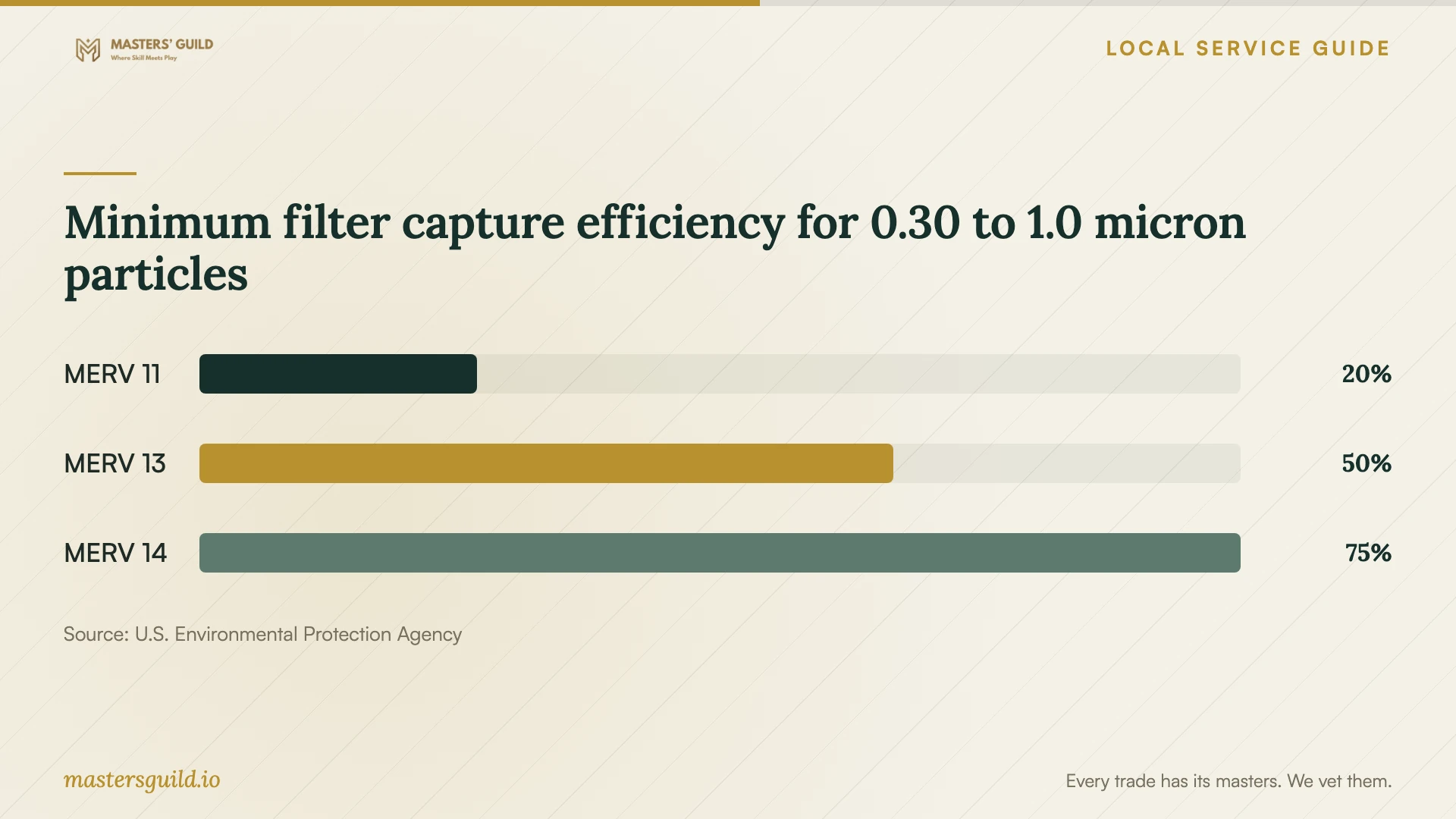
Discuss filtration if dust remains your main concern. EPA recommends MERV 13 when upgrading, or the highest rating your system fan and filter slot can accommodate. Ask an HVAC technician about compatibility and follow the manufacturer's replacement schedule. Use the filter chart to compare capture performance, rather than to predict results from duct cleaning. [4]
Minimum filter capture efficiency for 0.30 to 1.0 micron particles
Local details that affect your job
Include Kentucky sales tax in the cleaning estimate
The Kentucky Department of Revenue classifies duct-work cleaning as taxable janitorial service, whether a general cleaner or a duct-cleaning specialist performs it. For your Lexington job, ask bidders to show the cleaning charge, sales tax, and final total. Compare those totals across estimates and ask bidders to separate cleaning from proposed replacement work. [1]
Confirm who handles duct access and repairs
Kentucky's official HB 249 history records a signed measure addressing a cleaning-only HVAC licensing exemption. Its committee-substitute summary specifies a licensed and insured contractor for cutting, repairing, or restoring ductwork related to cleaning. This legislative history does not establish the current statutory wording. If your estimate includes new openings or repairs, ask the bidder to confirm applicable requirements and identify the responsible contractor before you authorize that work. [2]
Choose the next step from the inspection findings
| Finding | Next step | Question before approval |
|---|---|---|
| Dust on a return grille | Clean the grille and review filter maintenance. | Did the inspection find substantial deposits inside the system? |
| Excessive debris inside ducts | Consider cleaning with a defined system scope. | Can you show the deposits and explain what you will clean? |
| Suspected mold or wet insulation | Investigate moisture and identify affected materials. | Does insulation need replacement, and who will correct the moisture source? |
| Vermin in ducts | Address the underlying infestation before cleaning. | How will you correct the source of contamination? |
| Proposed chemical treatment | Review the need, product label, and duct material. | Does the approved use cover this surface and application? |
Your hiring checklist
- Write down the problem you want the provider to investigate.
- Request photographs or a visual explanation of the contamination.
- Give bidders the same component list and request written exclusions.
- Ask for the final total with sales tax and separate optional charges.
- Identify who will cut and close any access openings.
- Discuss dust collection, furniture protection, and pet arrangements.
- Arrange a final visual review and an explanation of unresolved defects.
Frequently Asked Questions
How often should I book duct cleaning?
EPA recommends cleaning as needed rather than at a fixed interval. Ask for evidence of substantial contamination before accepting a recurring cleaning plan. Keep up with filter changes and HVAC maintenance between inspections. [3]
Will cleaning reduce allergies or energy bills?
EPA says duct cleaning has not been shown to prevent health problems, and little evidence supports efficiency gains from cleaning ducts alone. Cleaning dirty coils, fans, or heat exchangers may improve system efficiency. Ask which components the provider proposes to clean and why. [3]
Does EPA certify duct cleaners?
EPA does not certify, endorse, or approve duct-cleaning companies. Ask about experience with your duct materials, references, relevant qualifications, and the procedures the crew will follow. [3]
Should I approve a sanitizer during the visit?
Ask for evidence supporting its use, the product label, and confirmation of your duct material before deciding. EPA's guidance says no biocides are registered for fiberglass duct board or fiberglass-lined ducts. Have the provider explain how they will correct moisture and remove contamination before considering chemical treatment. [3]
Sources and scope
This guide combines the sources below with practical planning guidance. Figures apply to the stated geography and period; request a written quote for your property.