
Local service guide
Carpet cleaning in Lexington, KY: Hiring Guide
Carpet cleaning in Lexington, KY starts with a written scope covering rooms, stairs, stains, furniture handling, and drying arrangements. Compare totals that include applicable tax, and confirm how the cleaner will dispose of wastewater under city rules. For recent leaks, wet padding, or musty odors, arrange a moisture assessment before routine cleaning. [1] [2] [3] [4]
Get a quote you can compare
Send each bidder the same room list and photographs. Describe stairs, closets, large furniture, visible spots, pet accidents, and previous attempts to treat them. Ask whether the cleaner charges by area, room, or job, and request written room-size limits and any minimum visit charge.
Request a treatment proposal for stains and odors. Discuss the improvement the cleaner expects and any uncertainty before approving the work. Share the carpet label or care instructions if you have them. Ask the cleaner to explain the proposed method and any inspection needed to confirm the price.
Build your budget from written quotes for your property. Include stairs, furniture handling, access charges, optional products, and applicable tax in the comparison. Establish how the cleaner will obtain your approval for price changes before starting additional work.
Resolve wastewater disposal and access
Lexington instructs users to filter solids, fiber, and hair from carpet-cleaning wastewater, then discharge the liquid into the sanitary sewer system. The city prohibits discharge to streets, sidewalks, storm drains, and storm sewers. Confirm where the cleaner will dispose of recovered water and whether they need an appropriate drain at your home. [1]
Tell the cleaner if your home uses a septic system and resolve disposal arrangements before work begins. For local disposal questions, Lexington directs residents to LexCall at 311 or (859) 425-2255. Ask that office to clarify your options if you lack sanitary-sewer access. [1]
Agree on parking, equipment placement, and the hose route. Discuss corner protection and how you will enter or leave while the crew works. Include shared hallways, gates, and parking restrictions in the booking notes, and confirm who will arrange access.
Check moisture problems before routine cleaning
Disclose recent leaks, damp basement areas, and musty odors when requesting an estimate. EPA advises checking carpets and other materials after leaks and investigating damp or musty areas. Choose someone with experience identifying water and mold problems when arranging this assessment. [4]
EPA says that, in most cases, items dried within 24 to 48 hours will not become moldy. That guidance concerns moisture exposure and mold prevention. EPA also warns that carpet backing or padding must dry along with the carpet. Have the assessor explain how they will check beneath the surface. [4]
For routine cleaning, request a drying estimate for your home and written instructions for airflow, foot traffic, and furniture placement. Explain when you need the rooms again. Agree on whom to contact and what follow-up to expect if the carpet remains damp beyond the cleaner's stated window.
Check tax and approve the final scope
Kentucky Department of Revenue treats residential and commercial restoration cleaning as taxable, including water extraction, wall-to-wall carpet restoration, protectant, and deodorizer. Kentucky's sales and use tax rate is 6%, and the state has no local sales and use taxes. Request an itemized total showing taxable charges and tax. [2] [3]
If the work includes removing and replacing carpet or drywall, request separate line items. Kentucky distinguishes that real-property contractor service from taxable cleaning services. Have the contractor explain the tax treatment of each part before you approve a combined cleaning and replacement estimate. [2]
Walk through the rooms with the crew before work starts. Confirm the agreed tasks, point out existing damage, and discuss unresolved stains. At completion, compare the invoice with your approved scope, keep the care instructions, and record any agreed follow-up for remaining spots or odors.
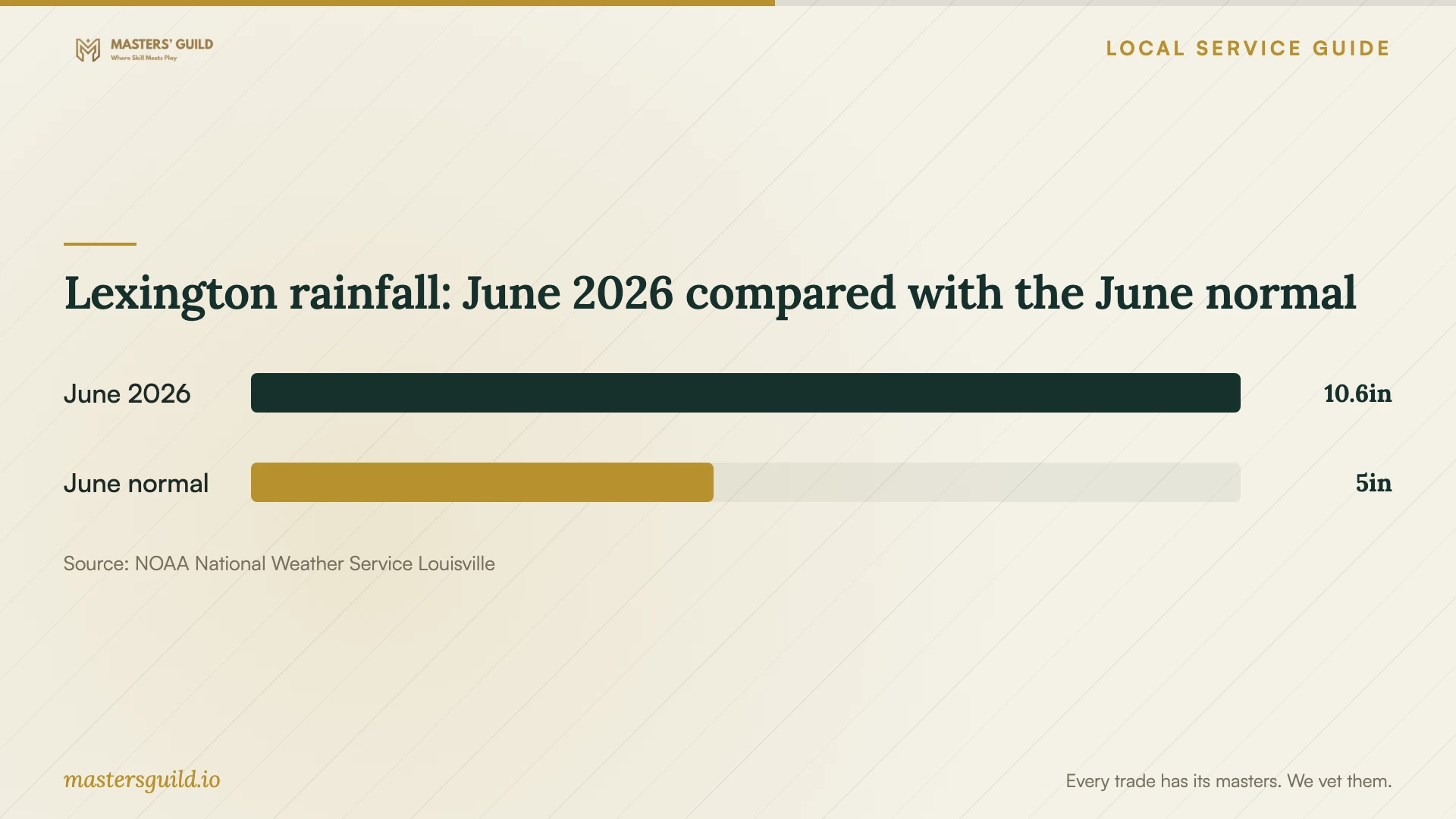
Lexington rainfall: June 2026 compared with the June normal
Local details that affect your job
City wastewater rules change access planning
Confirm whether the cleaner will transport recovered water away or needs sanitary-sewer access at your home. Lexington requires filtering solids before sanitary-sewer discharge and prohibits dumping carpet-cleaning wastewater onto streets, sidewalks, or into storm drainage. Resolve the disposal route before the appointment. [1]
Kentucky tax rules change quote comparison
Compare tax-inclusive totals for your job. Kentucky charges 6% with no local sales tax, and its FAQ identifies restoration cleaning and listed treatments as taxable. Request separate pricing for carpet removal and replacement because the state classifies that work as real-property contractor service that is not subject to sales tax. [2] [3]
Match the booking to the carpet's condition
| Your situation | What to arrange | Question to ask |
|---|---|---|
| Routine soil without a known moisture problem | A written cleaning scope | Which rooms, stairs, and treatments does the total include? |
| Visible stains or pet accidents | Inspection and a treatment proposal | What improvement do you expect, and what remains uncertain? |
| Recent leak, damp padding, or musty odor | A moisture assessment covering backing and padding | How will you inspect beneath the carpet and check drying? |
| Cleaning plus carpet replacement | Separate cleaning and replacement line items | How have you applied Kentucky tax to each part? |
| Unresolved wastewater disposal | An agreed disposal route before cleaning | Where will you discharge recovered water under city rules? |
Your hiring checklist
- Send the same room list, photographs, and stain descriptions to each bidder.
- Share carpet care instructions and disclose previous spot treatments.
- Confirm stairs, closets, furniture moving, and optional treatments in writing.
- Agree on parking, hose routing, and wastewater disposal access.
- Disclose leaks, musty odors, and known wet padding before booking.
- Request drying instructions that account for when you need the rooms.
- Approve the scope, applicable tax, and final total before work starts.
Frequently Asked Questions
How much should I budget for carpet cleaning?
Request written quotes for the same rooms, stairs, stains, and furniture arrangements. Have each cleaner show required work, optional treatments, access charges, and applicable tax. Use the total for your property to set your budget, and agree on approval for any changes.
Can the cleaner empty dirty water into a street drain?
Lexington prohibits carpet-cleaning wastewater discharge into storm drains and storm sewers, as well as onto streets and sidewalks. The city instructs users to filter solids and discharge the liquid into the sanitary sewer system. Confirm disposal arrangements before the visit. [1]
How long will my carpet take to dry?
Request an estimate based on your carpet, cleaning method, and indoor conditions. After a leak, have an assessor check backing and padding too. EPA's guidance about drying moisture-exposed items within 24 to 48 hours concerns mold prevention. Ask your cleaner for instructions specific to routine cleaning at your home. [4]
Does Kentucky tax restoration cleaning?
Yes. Kentucky's FAQ includes water extraction, wall-to-wall carpet restoration, protectant, and deodorizer as taxable cleaning services. The state rate is 6%, with no local sales tax. Kentucky distinguishes carpet removal and replacement as real-property contractor service that is not subject to sales tax. [2] [3]
Sources and scope
This guide combines the sources below with practical planning guidance. Figures apply to the stated geography and period; request a written quote for your property.