
Local service guide
Bricklaying and Masonry in Lexington, KY: Hiring Guide
Arrange Bricklaying and Masonry in Lexington, KY by having a contractor inspect the damage, identify the repair area and explain the proposed materials before you accept a quote. Confirm Lexington contractor registration and ask Building Inspection whether your project needs a permit. For exterior changes on an H-1 historic-district property, obtain Certificate of Appropriateness approval before work begins. [1] [2]
Define the repair before requesting a final price
Send contractors photographs of the whole wall and close views of damaged joints, cracked units and staining. Describe the height, access route and any previous repairs or leaks. Arrange a site visit before accepting a final scope, especially for chimneys, upper walls or masonry around doors and windows.
Have the bidder distinguish between renewing mortar joints, replacing individual bricks or stones, rebuilding a section and investigating movement. Ask them to explain bulging or loose material before proposing a surface repair. Keep people away from loose overhead masonry and seek an assessment before using the affected area.
Include moisture in the inspection. The National Park Service describes damage from water freezing inside masonry and from moisture trapped behind impervious coatings. Have the contractor examine the source of wetting and explain whether the scope includes correcting it. Photograph white deposits and damp areas before anyone cleans or coats the surface. [3]
Choose mortar and replacement materials together
For historic brick or stone, request the proposed mortar specification and an explanation of its compatibility with the existing wall. National Park Service guidance recommends matching the old mortar in strength, composition, color and texture. Its Iowa case example describes deterioration where hard, high-portland-cement repairs met softer sandstone; it is preservation guidance, not a Lexington damage survey. [3]
Discuss a sample repair area before approving work across a larger surface. Agree on the joint profile, replacement brick or stone and the appearance you expect. Have the contractor explain how they will remove deteriorated mortar and protect surrounding units. Record the accepted sample and material description in the agreement.
If a bidder proposes an impervious coating or cement parging on historic masonry, seek preservation advice before accepting it. The National Park Service warns that such treatments can trap moisture and accelerate deterioration. Ask the bidder to address the source of dampness and explain how the proposed treatment suits the existing material. [3]
Compare the scope, exclusions and payment terms
Give each bidder the same marked repair area. Request dimensions or quantities, mortar and replacement-material descriptions, access arrangements, protection of nearby surfaces and debris removal. For new brick or stone construction, describe the intended dimensions and use, then assign responsibility for resolving design and permit questions.
Request proof of insurance and examples of comparable work. For historic repairs, ask the contractor to explain the material choices in those examples. Confirm who will supervise your job and whom you should contact if the crew discovers damage beyond the agreed area.
Obtain site-specific prices with labor, materials, access equipment and approval-related costs identified. Have each contractor list exclusions and explain how they will price additional work. Agree on payment stages, written authorization for changes, cleanup, completion photographs and any warranty before signing.
Set weather protection and postponement terms
Have the contractor specify the conditions required for placing and curing the selected mortar. Include rain protection, overnight cold protection and the circumstances that will postpone work. Assign someone to check the forecast and tell you about schedule changes before the crew arrives.
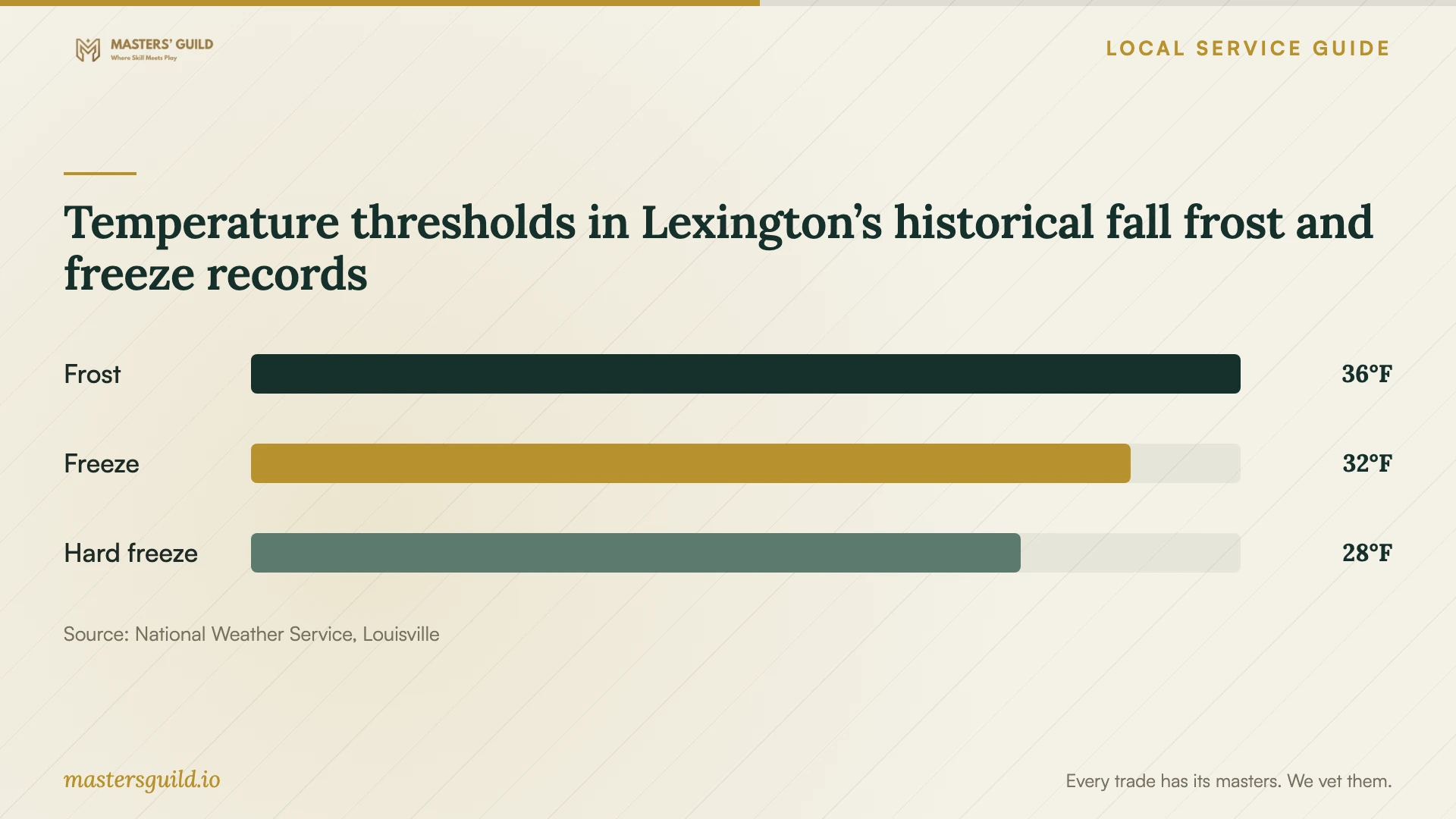
The National Weather Service lists Lexington’s earliest recorded fall freeze at 32 degrees Fahrenheit on September 30, 1899, and earliest fall hard freeze at 28 degrees on October 3, 1974. These historical events give a reason to discuss cold protection for autumn work. They do not forecast your installation dates or establish safe mortar curing temperatures. [4]
Before accepting an autumn start date, ask the contractor how long they intend to maintain protection and which material instructions they will follow. Agree on who will secure coverings, check the work after adverse weather and decide when to resume. Keep those responsibilities in the written scope.
Temperature thresholds in Lexington’s historical fall frost and freeze records
Local details that affect your job
Confirm registration and permit scope with Building Inspection
Lexington requires contractors to register with Building Inspection and states that unregistered contractors cannot obtain building permits. Contact the office at 859-258-3770 or 101 E. Vine St. to confirm registration and describe your proposed work. Bring photographs and a written scope when seeking a permit determination. Before signing, identify who will submit any required application and arrange inspections. [1]
Resolve H-1 review before selecting exterior materials
Owners in Lexington’s H-1 historic districts must obtain approval for exterior building and site changes through the Certificate of Appropriateness process. Staff can approve minor changes; substantial changes require Board of Architectural Review approval. Contact Historic Preservation at 859-258-3265 to check your address and discuss the proposed masonry work. Ask which repair details or samples to submit, and settle the review route before ordering materials or promising the contractor a start date. [2]
Choose the next step for your masonry project
| Project or concern | Next step | Question for the contractor or city |
|---|---|---|
| Deteriorated mortar joints | Arrange an inspection and mark the proposed repair area. | Which joints will you renew, and what material will you use? |
| Historic brick or stone | Seek a material-compatibility assessment. | How will you match mortar strength, composition, color and texture? |
| Exterior changes in an H-1 district | Obtain Certificate of Appropriateness approval. | Can staff approve this work, or must the board review it? |
| New construction or uncertain permit scope | Contact Building Inspection and confirm contractor registration. | Who will obtain any required permit and arrange inspections? |
| Autumn installation | Agree on weather protection and postponement criteria. | Which material requirements will you follow during placement and curing? |
Your hiring checklist
- Photograph the full wall, damaged joints, loose units and moisture staining.
- Describe the repair area, height, access constraints and previous work.
- Contact Building Inspection to confirm contractor registration and permit scope.
- Check whether your address and exterior work require H-1 historic approval.
- Obtain the mortar specification and agree on replacement materials and a sample area.
- Compare written quotes covering the same repair area and listing exclusions.
- Agree on weather protection, payment stages and written approval of additional work.
- Review the completed scope with the contractor and retain photographs and receipts.
Frequently Asked Questions
Does my masonry contractor need Lexington registration?
Yes. Lexington requires contractors to register with Building Inspection. Unregistered contractors cannot obtain building permits. Contact the department to confirm registration before hiring. [1]
Does my masonry repair need a permit?
Describe the repair to Building Inspection and request a permit determination before work begins. Include photographs and the proposed scope. If your property is in an H-1 historic district, exterior changes also require approval through the Certificate of Appropriateness process. [1] [2]
How should I choose mortar for historic brick?
Seek an assessment of the existing brick and mortar before choosing a mix. National Park Service guidance recommends matching the old mortar’s strength, composition, color and texture. It warns that incompatible hard mortar can damage softer historic masonry. [3]
Can I schedule masonry work in the fall?
Have the contractor assess the forecast and specify protection for the selected mortar. Lexington’s historical freeze records do not determine conditions for your job. Agree on material requirements, protection responsibilities and postponement criteria before accepting a start date. [4]
Sources and scope
This guide combines the sources below with practical planning guidance. Figures apply to the stated geography and period; request a written quote for your property.