
Local service guide
Appliance installation in Lexington, KY
Appliance installation in Lexington starts with checking who will handle the connections before you book delivery. Send the installer your model number and photos of the existing hookups, then ask for a written scope covering connections, materials, testing and removal. Kentucky requires licensed plumbers for plumbing work, with a homeowner-permit exception; Fayette County requires permits and inspections for electrical work. Columbia Gas of Kentucky directs homeowners to qualified professionals for gas appliances. [1] [4] [5]
Define the work before comparing offers
Describe the appliance and the connections as separate parts of the job. Include the exact model, whether you are replacing an appliance in the same position, and any planned changes to the water supply, drain, outlet or gas line. Ask the installer to identify work outside their scope before you accept the offer.
For plumbing, Kentucky requires a construction permit before constructing, installing or altering plumbing. The state allows licensed master plumbers or eligible homeowners to obtain permits. Except for homeowners working under their own permits, a licensed journeyman plumber must perform the plumbing under a licensed master plumber’s supervision. Do not assume that a delivery crew’s installation package covers these responsibilities. [4]
Ask each bidder to separate appliance placement, trade work, connection materials, testing, permits, inspections and removal. Also ask who pays for a return visit if the crew finds an unsuitable connection or the appliance does not fit. Compare offers against the same written scope rather than the installation label alone.
Resolve electrical and plumbing work before delivery
For electrical work in Fayette County, Lexington requires a permit and inspection. Electrical contractors obtaining permits must hold a Master Electrician license or employ a Master Electrician, and they must have an LFUCG business license. Ask your contractor who will obtain the permit and arrange the inspection before scheduling work on a circuit or outlet. [1]
A homeowner electrical permit has limits: you must own and currently reside in the property. Lexington excludes vacant property, rental property, duplexes and mobile homes from this permit route. If your installation is part of preparing a rental or vacant home, arrange the contractor’s permit rather than planning around a homeowner permit. [1]
Kentucky’s plumbing FAQ identifies new plumbing installations and relocation of fixtures or waste openings among the work requiring permits. It also states that maintenance workers cannot replace or install dishwashers or disposals. Ask the plumber to confirm the permit scope for your particular replacement instead of treating an existing hookup as proof that no permit is needed. [3]
Prepare for a gas range or dryer
Use a qualified professional for a gas appliance connection. Columbia Gas of Kentucky says a qualified professional should determine proper venting, adjustment and fresh-air supply, and that flexible appliance connectors should be replaced with the appliance. Ask the installer to include the connector and required checks in the written scope. [5]
If you receive Columbia Gas service and plan to add gas equipment, the utility asks you to call 800-806-2692 to check whether your service has enough gas pressure. Prepare a list of your current equipment and the appliance you want to add. Make this call before committing to an installation date. [5]
Coordinate access, completion and removal
Before delivery, compare the appliance’s installation instructions with your opening and access route. Share measurements and photos of doorways, stairs, cabinets, shutoffs and connections. Ask who will disconnect the old appliance, move it out of the room and protect floors. Agree on any cabinet changes before the crew arrives.
At completion, ask the installer to demonstrate operation using the manufacturer’s instructions and review the connections with you. Request the invoice, any permit information, inspection arrangements and instructions for reporting a problem. Keep these with the appliance’s model and serial number.
For disposal, Lexington offers free bulky-item pickup to households receiving city waste collection, but appliances require a special request. The city lists washers, dryers, stoves, refrigerators and freezers among accepted appliances and says pickup normally occurs within five business days of the request. It requires refrigerator and freezer doors to be removed. Microwaves belong in the city’s electronics recycling route rather than curbside appliance collection. [2]
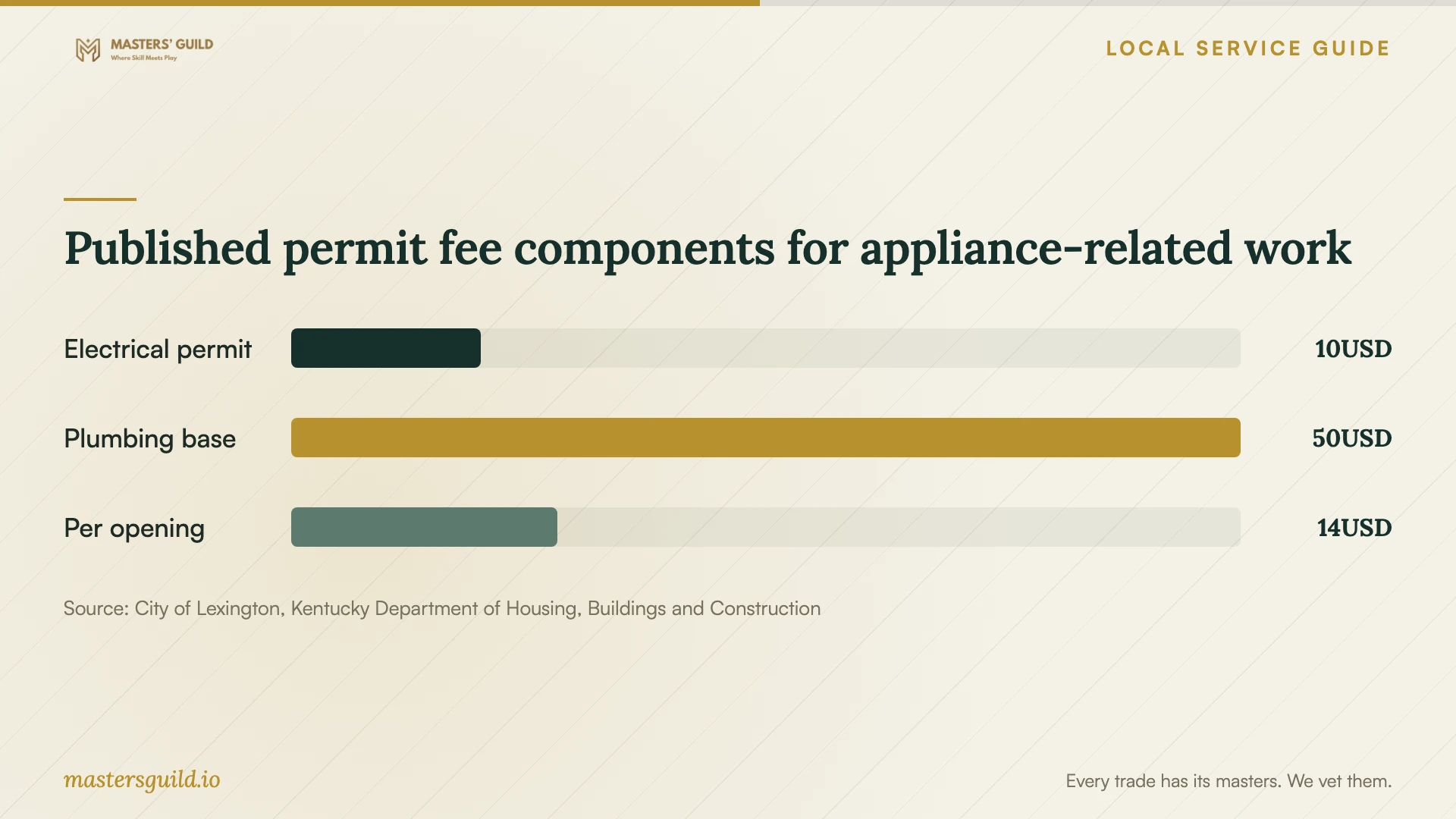
Published permit fee components for appliance-related work
Local details that affect your job
Arrange the electrical inspection separately
Lexington lists electrical permits at $10 each and directs applicants to its permits application page. The city directs electrical inspection scheduling and fee questions to the Commonwealth Inspection Bureau at 859-263-7800. Ask whether your contractor’s quote includes both charges and who will schedule the inspection. [1]
Choose haul-away around city pickup eligibility
If you receive city waste collection, request appliance pickup through LexCall at 311 or 859-425-2255. Before declining installer haul-away, decide who will disconnect the appliance, remove refrigerator or freezer doors, and move it to the curb. Confirm acceptance with LexCall for an item outside the city’s published list. [2]
Match the installation to the next step
| Your situation | Next step | Confirm before booking |
|---|---|---|
| Dishwasher replacement | Arrange a licensed plumber for plumbing work. | Ask about the permit scope; Kentucky excludes dishwasher installation from maintenance-worker work. |
| New circuit or altered wiring | Arrange an electrical contractor and Fayette County permit. | Identify who schedules the required inspection and pays its fee. |
| Gas range or dryer | Use a qualified gas-appliance professional. | Include a replacement flexible connector and checks for venting and adjustment. |
| Old appliance removal | Check eligibility for free city pickup before buying haul-away. | Appliances need a special request; assign curb placement and refrigerator or freezer door removal. |
Your hiring checklist
- Send the exact appliance model and installation instructions before accepting an offer.
- Photograph the existing connections, shutoffs, outlet and appliance opening.
- Measure the opening and delivery route, including stairs and tight turns.
- Ask who performs each connection and who handles permit and inspection arrangements.
- Request separate prices for materials, trade work, removal and any return visit.
- Agree on an operation demonstration and the documents you will receive.
- Choose a disposal plan and assign responsibility for moving the old appliance.
Frequently Asked Questions
How much should I budget for installation?
Request an itemized quote for your model, existing connections and access conditions. The official fees below cover permit components, not a complete installation. Ask for labor, materials, inspection charges and removal as separate entries so you can compare the same work. [1] [4]
Can I do the plumbing myself?
Kentucky allows eligible homeowners to obtain plumbing permits for their own residences. Its FAQ requires an application before work begins, an affidavit, code compliance and personal performance of the work. Confirm eligibility and the permit scope before starting. [3] [4]
Does a $10 electrical permit include inspection?
Lexington lists a $10 electrical permit charge and separately directs inspection scheduling and fee questions to the Commonwealth Inspection Bureau. Ask your contractor to identify both charges in the quote. [1]
Will the city collect my old microwave?
Lexington does not offer curbside microwave collection. Its bulky-items guidance directs microwaves and other listed electronics to the Electronic Recycling Center. Use a separate disposal plan rather than leaving a microwave with a stove or refrigerator pickup. [2]
Sources and scope
This guide combines the sources below with practical planning guidance. Figures apply to the stated geography and period; request a written quote for your property.