
Local service guide
Mold removal in Laval, QC: Hiring and Planning
Mold removal in Laval calls for a specialist when affected surfaces exceed 1 m², involve several areas, resist cleaning or return after cleanup, according to Québec guidance. Choose a company that investigates the moisture source and defines removal, cleaning and completion checks in writing. Arrange the water-entry repair alongside remediation. [3] [4]
Decide whether you need cleaning or investigation
For a small patch on a cleanable surface, such as a window ledge, Québec recommends an all-purpose cleaner and thorough drying. It advises gloves, eye protection and a dust mask during cleaning, with other occupants outside the room. People with asthma or allergies and children warrant particular care. [3]
Ask for an investigation when you smell mustiness, see water rings or notice peeling and warped finishes. Québec identifies these as possible signs of moisture or a concealed problem. Tell the assessor where you noticed the signs and whether they followed rain, a plumbing leak or an earlier cleanup. [3]
Before paying for air or surface sampling, ask what decision the result would change. Québec says testing is usually unnecessary when mould or signs of its presence already justify a careful inspection to find and correct the cause. [3]
Ask each company to price the same work
Request a written description of the affected rooms and materials, the proposed investigation and any limits on access. Ask who will perform the work and what training they have. Québec's technical guidance describes trained investigators and remediation workers, with specialist involvement for extensive contamination. [4]
Ask the contractor to explain how workers will protect adjoining rooms, remove damaged materials, transport waste and perform final cleaning. Request a completion check and a record of the moisture-source correction. These questions follow the investigation, decontamination and quality-control stages in Québec's technical guidance. [4]
Separate the proposal into investigation, remediation, moisture repairs and rebuilding. Ask for the price of each part, applicable taxes, exclusions and the approval process for concealed damage. Compare proposals only after you understand which contractor will handle each task. The supplied official guidance does not establish a Laval market price for this work.
Arrange moisture repairs before closing walls
For basement water entry, ask the assessor to distinguish foundation or opening leaks from drainage problems and sewer backup. Laval identifies foundation, window and garage-door waterproofing, poor drainage around the house and groundwater near the surface as possible infiltration causes. A cleanup proposal should explain who will investigate the relevant cause. [1]
For recurring condensation, review ventilation and indoor humidity with the contractor. Québec recommends using bathroom and cooking fans, checking the dryer's exterior connection and keeping humidity low enough to avoid condensation, usually between 30% and 55%. Ask for advice suited to the room and season. [3]
Before approving replacement finishes, ask the contractor to document the cleanup, drying and corrective work. Agree on who will check the area afterward and what you should do if odours or staining return. Québec's technical guidance includes verification that the problem has been resolved and follow-up prevention. [4]
Prepare for work after a flood
Address safety before arranging remediation access. Laval directs residents to call 911 if floodwater reaches electrical installations. After flooding, the City advises having a master electrician inspect electrical installations and heating equipment before reconnecting them. [2]
Contact your insurer, photograph the damage and record the height the water reached. Laval advises keeping records and receipts for cleaning and repairs. Share the water-entry date and photographs with the assessor, and ask how workers will coordinate access, material removal and rebuilding. [2]
Ask whether you can use nearby rooms during the work and what arrangements vulnerable occupants need. Québec advises keeping other people out of a room during mould cleaning and identifies several groups, including young children and people with respiratory illness, as more sensitive to exposure. For health concerns following a flood, Laval points residents to the CISSS de Laval or 811. [2] [3] [4]
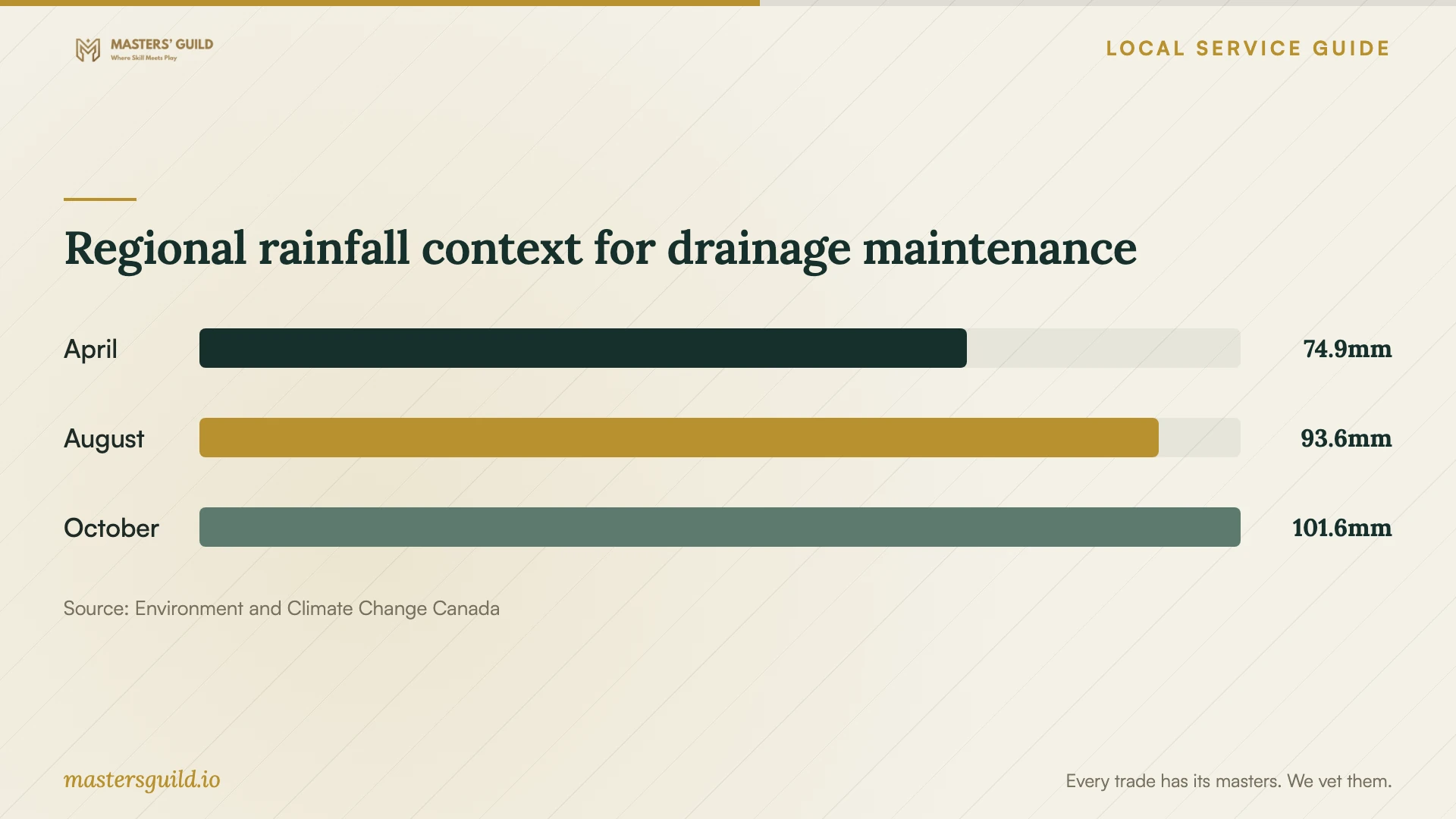
Regional rainfall context for drainage maintenance
Local details that affect your job
Sewer backup: plumber first, then municipal escalation
Laval tells homeowners with a sewer backup to call an RBQ-licensed plumber who belongs to the CMMTQ. The plumber must investigate the source, check basement plumbing equipment and provide a detailed invoice. If the plumber confirms that the City must intervene, call 311 and explain that the request follows a plumber's assessment. Keep a photograph or scanned copy of the invoice to show the municipal representative. Arrange this investigation alongside the contamination cleanup. [1]
Flood restoration: check whether rebuilding affects structure
Laval says homeowners do not need a construction permit to remove flood-damaged finishing materials such as floating floors, wall coverings or door frames. The City also identifies painting and replacement of interior gypsum as work that may qualify as maintenance without a permit. For substantial work affecting the home's structure, contact the Service de l'urbanisme to request a renovation permit. Have the contractor distinguish these tasks in the proposal. [2]
Include drainage prevention in the repair discussion
Laval instructs owners to discharge gutter water at least 1 metre from the building. The City recommends backwater-valve maintenance at least once or twice a year, in spring and autumn, and after heavy rain or a suspected backup. Ask the repair contractor to review the relevant drainage equipment and give you a maintenance plan. [1]
Choose your next step
| Situation | Next step | Point to confirm |
|---|---|---|
| Small, isolated patch on a cleanable surface | Follow Québec's small-surface cleaning precautions | Identify and correct the moisture cause |
| More than 1 m², several areas or recurring growth | Hire a specialist | Include investigation of cause and extent |
| Water returning through basement plumbing | Call an RBQ-licensed, CMMTQ-member plumber | Keep the invoice; call 311 if municipal intervention is needed |
| Flood restoration affecting the structure | Contact Laval's Service de l'urbanisme | Arrange the renovation permit before structural restoration |
Your hiring checklist
- Photograph affected rooms and note when you first saw moisture, staining or mould.
- Tell the assessor about previous leaks, backups, repairs and recurring odours.
- Ask for the cause, location and extent of contamination in the written assessment.
- Request separate prices for remediation, moisture repairs and rebuilding.
- Confirm worker training, protection of adjoining rooms and waste handling.
- Agree on access arrangements and any restrictions on using nearby rooms.
- Define completion checks, documentation and follow-up before work starts.
Frequently Asked Questions
Do I need a mould test before hiring?
Usually no. Québec says visible mould or signs of its presence call for a careful inspection to find the cause. Ask anyone proposing sampling to explain its purpose and how the result would affect the work. [3]
Can I clean the area with bleach?
Québec says bleach is unnecessary for ordinary small-surface mould cleaning. It recommends an all-purpose cleaner and drying the surface. Hire a specialist for extensive, numerous, hard-to-clean or recurring areas. [3]
How long will remediation take?
Request a schedule after assessment. Ask the contractor to distinguish investigation, removal and cleaning, drying, moisture repairs and rebuilding. Have them explain which findings could change the completion date.
Can I wait until spring to deal with it?
Québec advises correcting a known moisture source and decontaminating without delay, whether or not occupants have symptoms. For fresh water damage, its household guidance recommends cleaning and drying within 24 to 48 hours. [3] [4]
Sources and scope
This guide combines the sources below with practical planning guidance. Figures apply to the stated geography and period; request a written quote for your property.