
Local service guide
Tree Care in Las Vegas: Cutting and Arborist Services
Arrange Tree Care in Las Vegas by asking for a tree-by-tree assessment and a written scope before approving pruning or removal. Identify whether you need clearance, a health assessment, palm maintenance, or protection during turf removal. Ask the arborist to explain what they would retain, what they would cut, and why. For planned pruning, Southern Nevada Water Authority recommends late winter; its landscape-conversion guidance also calls for protecting major roots and maintaining water beneath the canopy. [1]
Choose an assessment, pruning, or removal
Describe the problem before requesting a cutting price. Tell the arborist whether branches touch the roof, a tree has changed appearance, or you want to keep shade while changing the landscape. Ask for an assessment before approving removal when you do not know the cause of a problem.
For a pruning quote, ask the arborist to identify the branches or canopy areas they propose to cut and the purpose of each cut. For removal, request separate descriptions of taking down the tree, hauling debris, grinding the stump, and restoring the work area. Specify whether you want wood or chips left behind.
Ask who will assess the tree and who will supervise the crew. Request evidence of insurance and verify any claimed arborist certification with its issuer. Have the provider explain its access plan, equipment placement, and protection for nearby structures before you accept the scope.
Set a pruning plan for shade trees and palms
SNWA identifies late winter, when plants are mostly dormant, as the ideal pruning period for trees and shrubs. It advises finishing heavy pruning by mid-February before buds swell and removing no more than one-quarter of living tissue during the year. Ask how the proposed work accounts for earlier pruning. [1]
Treat that regional guidance as a starting point for a discussion about your tree. Ask the arborist to explain species-specific timing and distinguish planned shaping from work on damaged branches. If you see a hanging limb or a fresh split, keep people away and request an assessment before deciding to wait for a seasonal appointment.
For palms, ask the provider to describe the finished canopy before work begins. University of Nevada, Reno Extension warns that excessive removal of green fronds compromises food production, health, and growth. Its guidance describes a correctly pruned palm as having an oval or circular silhouette. Ask for an explanation if a proposed trim would remove much of that green canopy. [2]
Protect retained trees during turf removal
Arrange an arborist review before a landscape crew removes grass around a tree you intend to keep. SNWA explains that landscape conversion can disturb roots and remove the temperature buffer and water source that lawn and sprinkler irrigation provided. Its protection measures include a barrier around the tree, protection for major roots, and avoiding trenching beneath the canopy. [1]
Ask the arborist and landscaper to agree on the protected area, equipment routes, and irrigation changes in the same written plan. SNWA recommends conversion during the cool season where possible and drip irrigation beneath the canopy and out to the drip line. Include responsibility for inspecting that irrigation after the work. [1]
Do not use rainfall as your watering plan. National Weather Service climate normals report 4.18 inches of annual precipitation for Las Vegas over 1991–2020. Ask for a watering plan that accounts for the retained tree and the changed landscape; SNWA bases drip run times on emitter flow, soil, and weather. [1] [3]
Compare quotes and prepare the property
Give each bidder the same photographs and list of trees. Include a whole-tree view, the trunk base, the concern you want assessed, and the access route. Point out gates, walls, pools, irrigation lines you know about, and overhead wires. Request an on-site review before accepting a scope that depends on those conditions.
Ask for a total written price with equipment, hauling, stump work, and cleanup identified. Request a description of any additional work that would require your approval. Compare the proposed outcome as well as the price, including what the crew will leave and who will repair any agreed disturbance to the landscape.
Before the appointment, agree on parking and access, move portable belongings, and arrange to keep children and pets outside the work area. Photograph the surrounding landscape. At completion, walk through the scope with the supervisor and check the agreed cleanup and irrigation protection.
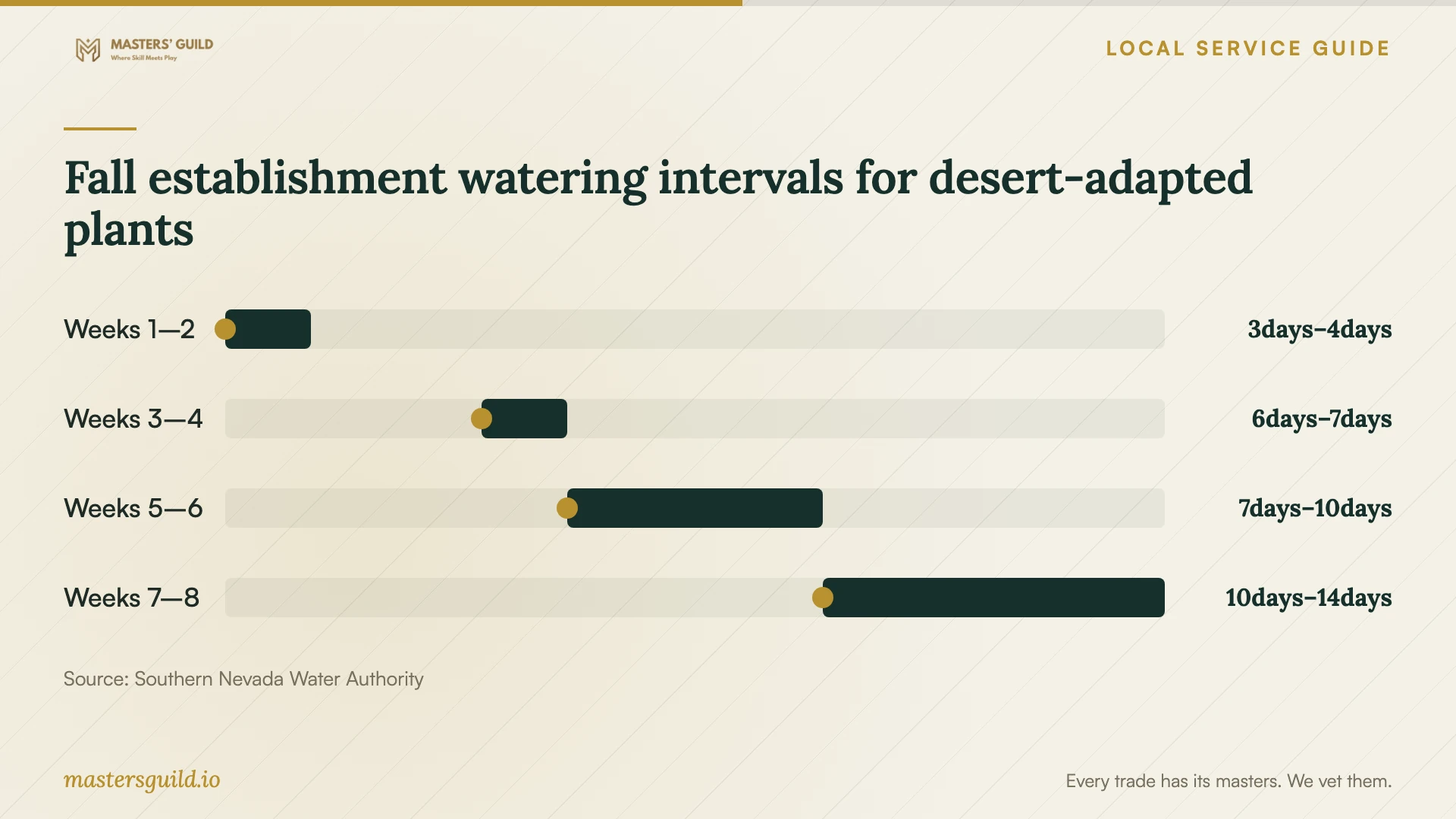
Fall establishment watering intervals for desert-adapted plants
Local details that affect your job
Schedule heavy pruning before spring growth
For Southern Nevada landscapes, SNWA advises completing heavy pruning by mid-February before buds swell. If you are arranging routine work in autumn, ask whether the arborist recommends assessment now and pruning in late winter. Request a reason for any different schedule. [1]
Include tree protection in a lawn-conversion contract
SNWA’s local conversion guidance calls for protecting major roots, avoiding trenching beneath the canopy, and providing drip irrigation beneath the canopy and out to the drip line. Before approving turf removal, ask both contractors to identify who will establish the barrier and maintain the tree’s water supply. [1]
Match the work to your concern
| Your concern | Request | Clarify before approval |
|---|---|---|
| Routine shade-tree pruning | A pruning assessment and seasonal plan | How the plan follows SNWA’s late-winter timing and annual living-tissue limit |
| Palm maintenance | A description of the finished canopy | Why the provider proposes removing any green fronds, given Extension’s warning about over-pruning |
| Turf removal around a retained tree | A coordinated tree-protection and irrigation plan | Root protection, the canopy area without trenching, and drip placement |
| Uncertainty about keeping a tree | An assessment before authorizing removal | The reasons for the recommendation and the alternatives the arborist considered |
Your hiring checklist
- Identify each tree and the problem you want assessed.
- Photograph the canopy, trunk base, access route, and nearby structures.
- Request evidence of insurance and verify claimed certifications.
- Agree on pruning objectives and the intended finished canopy.
- Separate removal, stump grinding, hauling, and restoration in the quote.
- Assign responsibility for root protection and irrigation during landscape work.
- Confirm access, work-area boundaries, cleanup, and approval of extra work.
Frequently Asked Questions
How much should I budget?
Request written quotes based on an assessment of your trees and access. The supplied local guidance does not establish service prices. Ask bidders to identify equipment, debris hauling, stump work, and cleanup so you can compare the same scope.
Should I increase watering when leaves look scorched?
Ask for an irrigation and tree-health assessment before changing the schedule. SNWA explains that both overwatering and underwatering can damage leaves, and improper fertilization can also cause stress. Share emitter locations and current settings with the assessor. [1]
Does removing more palm fronds make a palm grow faster?
No. University of Nevada, Reno Extension rejects that belief and explains that green fronds produce food for the palm. Ask the provider to justify the proposed cuts and describe the canopy it intends to retain. [2]
Sources and scope
This guide combines the sources below with practical planning guidance. Figures apply to the stated geography and period; request a written quote for your property.