
Local service guide
Roof Cleaning and Repair in Las Vegas, NV
Arrange Roof Cleaning and repair by separating the cleaning scope from any roofing work, asking each bidder for a wash-water containment plan, and checking the roofing contractor’s license classification and monetary limit before signing. Within the Las Vegas Valley Water District’s service area, building washing requires on-site containment or discharge to the sanitary sewer through approved methods. For repairs, the Nevada State Contractors Board advises hiring a contractor licensed for roofing work. [2] [3]
Choose the first visit around the problem
Describe what you want addressed: visible dirt, loose debris, a damaged roof covering, or water entering the house. Send photographs taken from a safe location and identify any interior staining. If you have a leak or visible damage, arrange a roofing assessment before approving a whole-roof wash.
Ask the assessor to photograph the affected areas and explain the proposed work. Request separate prices for cleaning and repairs, with the location and extent of each repair. If the contractor proposes opening the roof, agree on how they will document concealed damage and obtain your approval for extra work.
Before approving a cleaning method, ask the provider to identify your roof material and explain the proposed equipment, pressure, treatment, and access route. Request the roof manufacturer’s maintenance instructions if available. Keep the agreed method in the written scope so the crew knows what you approved.
Resolve wash-water handling before booking
Within LVVWD’s service area, the utility prohibits surface, equipment, and building washing unless the operator contains water on site or discharges it to the sanitary sewer through approved methods. Ask the cleaner to explain how their roof-washing setup will meet that requirement before accepting the quote. [2]
Have the bidder trace the proposed water route from the roof to the collection or disposal point. Ask how they will handle downspouts, roof edges, paved areas, and shared boundaries. Request a description of collection equipment and disposal arrangements rather than accepting a general promise to control runoff.
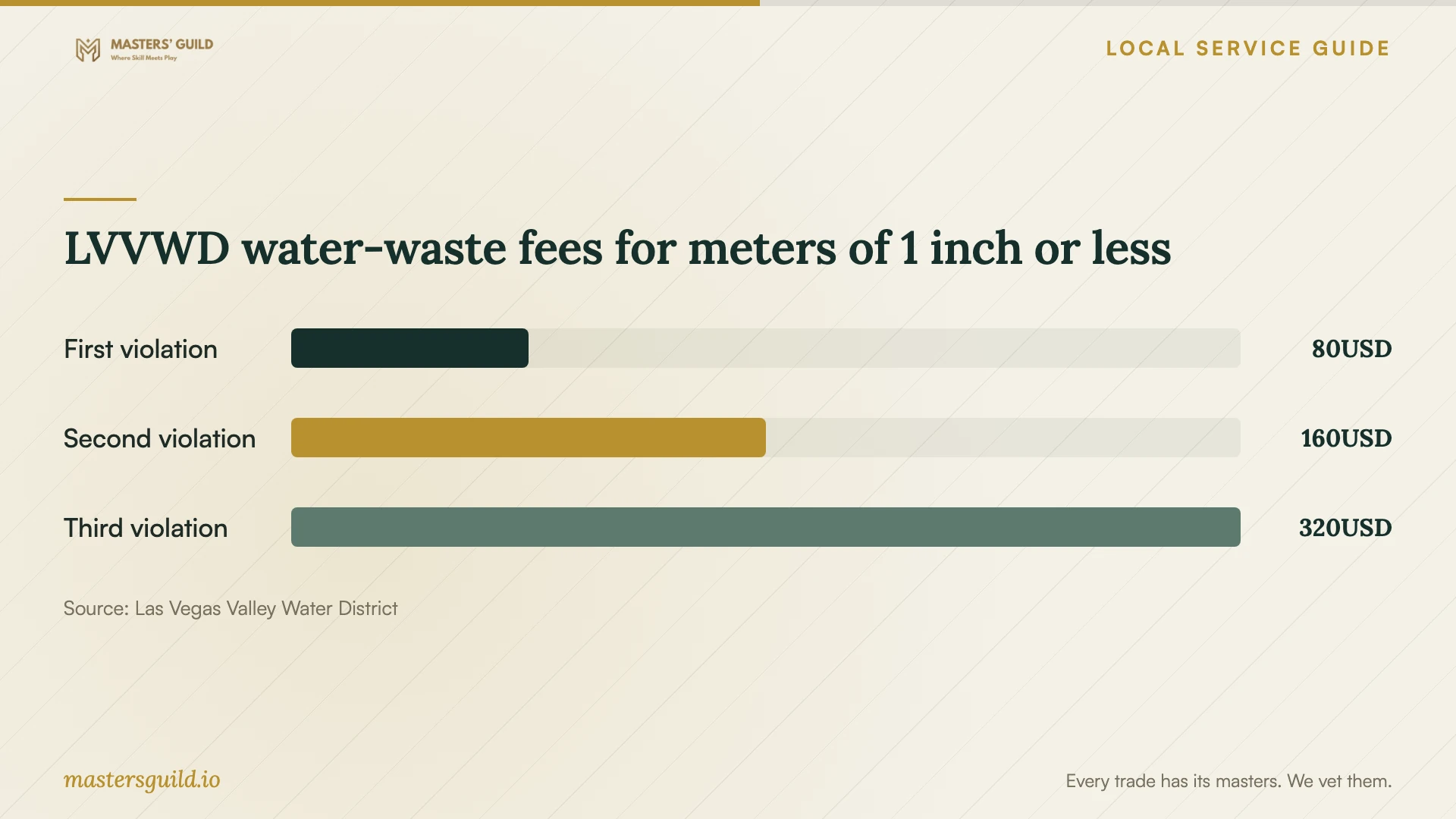
LVVWD assesses water-waste fees according to meter size, violation history, and drought stage. It bases consecutive assessments on the account’s previous 18-month history. Treat the published fees as a reason to settle water handling before work starts; they do not establish what your cleaning job should cost. [4]
Check the repair contractor and permit scope
The Nevada State Contractors Board advises homeowners seeking roofing work to hire a licensed roofing contractor. Before signing, check that the business name matches the license, the license remains in good standing, and its classification and monetary limit cover the proposed contract. The Board’s Southern Nevada licensing and customer-service number is 702-486-1100. [3]
For a property under City of Las Vegas jurisdiction, discuss permits if the proposal includes reroofing or structural sheathing work. The city lists residential reroofing involving tile-to-tile work or more than 64 square feet of structural sheathing as eligible for online issuance without plans. Confirm how the city classifies your exact scope before work begins. [1]
The Board advises having the contractor obtain a required building permit before starting work and post it at the job site. Ask the contractor to include responsibility for permits and inspections in the agreement. [3]
Compare complete quotes and agree on completion
For repair work, the Board recommends obtaining at least three written bids. It warns that a substantially lower bid may reflect an error or omitted work. Give each bidder the same description and ask them to identify exclusions so you can compare the proposed work alongside the price. [3]
Request a breakdown covering inspection, cleaning, repairs, materials, water collection, disposal, and any permit charges. Ask whether the provider charges for the assessment and whether that charge counts toward later work. Set an approval amount for additional work and require written agreement before the crew exceeds it.
The Board recommends a signed written contract specifying the price, work, materials, start date, completion period, and contractor credentials. It also recommends written, signed change orders. Include payment stages and warranty terms, and keep copies of permits, inspection records, photographs, and correspondence. [3]
Before the crew arrives, agree on access, parking, pets, outdoor belongings, and protection around the work area. At completion, review photographs and any unfinished items with the contractor. For repairs, ask them to explain what they corrected and the next step if the original symptom returns.
LVVWD water-waste fees for meters of 1 inch or less
Local details that affect your job
Containment belongs in the cleaning quote
LVVWD’s building-washing restriction makes water handling a booking question. Within its service area, ask the bidder to specify on-site containment or an approved sanitary-sewer discharge method. If they cannot explain the arrangement, resolve that gap before scheduling. [2]
Online permit eligibility does not mean permit-free
The City of Las Vegas includes residential tile-to-tile reroofing and reroofing involving more than 64 square feet of structural sheathing in its online permit list. The city says those listed permits need no plans and issue at the end of online submission. For work under city jurisdiction, ask the contractor to confirm the applicable permit route rather than treating online eligibility as an exemption. [1]
Match the proposal to your next step
| Situation | Next step | Ask the bidder |
|---|---|---|
| Dirt or debris without a known repair need | Request a cleaning assessment and written method. | Which areas will you clean, and how will you access them? |
| Leak or visible roof damage | Arrange a roofing assessment before approving washing. | Can you document the repair scope and price it apart from cleaning? |
| Building washing within LVVWD’s service area | Confirm on-site containment or approved sanitary-sewer discharge. | How will you collect the water and complete disposal? |
| Roof repair contract | Verify roofing classification, license status, and monetary limit. | Does your license cover this work and contract amount? |
| City-jurisdiction residential reroofing | Confirm the permit route for the exact scope. | Does this involve tile-to-tile work or more than 64 square feet of structural sheathing? |
Your hiring checklist
- Describe the cleaning goal and any leak or damage symptoms; attach photographs from a safe location.
- Request separate cleaning and repair scopes with exclusions.
- Ask for the cleaning method and its suitability for your roof material.
- Get the water collection and disposal arrangements in writing.
- Check repair contractor credentials against the proposed contract.
- Agree who will confirm permits and arrange inspections.
- Record payment stages, change approval, warranty terms, and completion photographs.
Frequently Asked Questions
How much should I budget?
Build your budget from written quotes for the inspected scope. Ask bidders to separate cleaning, repair labor, materials, access, water handling, and permit charges. For repair work, the Nevada State Contractors Board recommends at least three written bids. Compare what each includes before choosing a total. [3]
Does a small repair require a city permit?
Confirm the exact scope with the city before approving work. The City of Las Vegas lists residential reroofing involving tile-to-tile work or more than 64 square feet of structural sheathing among its online permits. That entry does not establish the permit status of every smaller repair. [1]
What if the cleaner offers to make repairs?
Ask for a separate repair description and price. For roofing work, follow the Board’s advice to verify the contractor’s roofing classification, license status, and monetary limit before signing. Have both parties sign any change to the agreed work. [3]
Can the crew let wash water run off the property?
Within LVVWD’s service area, building washing requires on-site containment or sanitary-sewer discharge through approved methods. Ask the provider to document its collection and disposal plan before work begins. [2]
Sources and scope
This guide combines the sources below with practical planning guidance. Figures apply to the stated geography and period; request a written quote for your property.