
Local service guide
Pet Sitting and Walking in Las Vegas, NV
For Pet Sitting and Walking in Las Vegas, choose a sitter who can follow your pet’s feeding, medication and exercise routine, explain their backup coverage, and agree to a written heat plan. For hot-weather walks, the city recommends early morning or after sunset. Ask how the sitter will replace outdoor exercise with indoor care when conditions make a walk unsuitable, then confirm visit times, access arrangements and the full price before booking. [1]
Choose the care your pet needs
Start with the tasks you need someone to complete. For a drop-in visit, specify feeding, fresh water, litter or yard cleanup, medication and companionship. For a walk, describe your dog’s pace, handling cues and triggers. For overnight care, ask for arrival and departure times and the periods when the sitter expects to leave the home.
Arrange a meeting with the person who will handle your pet. Show them the harness, doors and gates, and ask them to demonstrate the routine. Discuss pulling, escape attempts, food guarding and reactions to other animals. For medication, provide your veterinarian’s written instructions and ask the sitter to explain how they will record each dose.
Put heat decisions in writing
The City of Las Vegas advises walking pets early in the morning or after sunset and checking pavement before walks because hot surfaces can burn paws. Its guidance identifies senior pets, overweight animals and pets with breathing issues among those especially vulnerable to overheating. Use that advice to discuss timing and your pet’s needs with the sitter. [1]
Agree on a substitute visit that still covers essential care: a brief toilet break if conditions permit, fresh water, feeding and indoor activity. State who can shorten or cancel outdoor exercise and how the sitter will notify you. Ask them to report any cooling-system problem at home and identify a backup person who can respond if you cannot.
The city lists excessive panting or drooling, weakness, vomiting or diarrhea, collapse, and red or pale gums as signs of heatstroke. It advises moving an overheating pet to a cool or shaded area, offering small amounts of water, applying cool water to the paws, belly and armpits, and seeking veterinary care immediately. Give the sitter veterinary contacts and treatment authorization before departure. [1]
Screen the provider for your address
Ask which jurisdiction covers your home and, if you choose boarding, the boarding address. Clark County states that its animal-handler course applies to pet-service businesses operating within unincorporated Clark County, including professional pet sitting. A provider working across jurisdictions must also comply with the business requirements of those other jurisdictions. [2]
For county-area service, ask the owner about training completion and the assigned employee’s applicable deadline. The county requires owners to complete training before obtaining or renewing a business license. Existing owners must complete it before renewal or by February 4, 2027, whichever comes first; existing employees have until February 4, 2027. New employees have six months from employment, and participants must renew the course every two years. [2]
Request proof of insurance that covers the work you are arranging, and ask about coverage for pet injury, property damage and lost keys. Identify the backup caregiver and require notice before anyone substitutes. If the provider offers boarding, ask to see where your pet will sleep and how they will separate animals during meals or unattended periods.
Compare quotes and prepare the handoff
Send each candidate the same care brief so you can compare the total for your dates. Include the number of pets, visit schedule, medication tasks, access instructions and any transport. Ask whether the quoted duration means time with your pet or includes travel, and clarify whether overnight service includes daytime visits.
Before handing over access, test the entry method with the sitter and explain alarms, gate latches and rooms your pet must avoid. Leave labeled supplies, a current pet photo, emergency contacts and written permission limits for veterinary spending. Agree on a visit report covering arrival, food, medication, toilet breaks and any concern that needs your response.
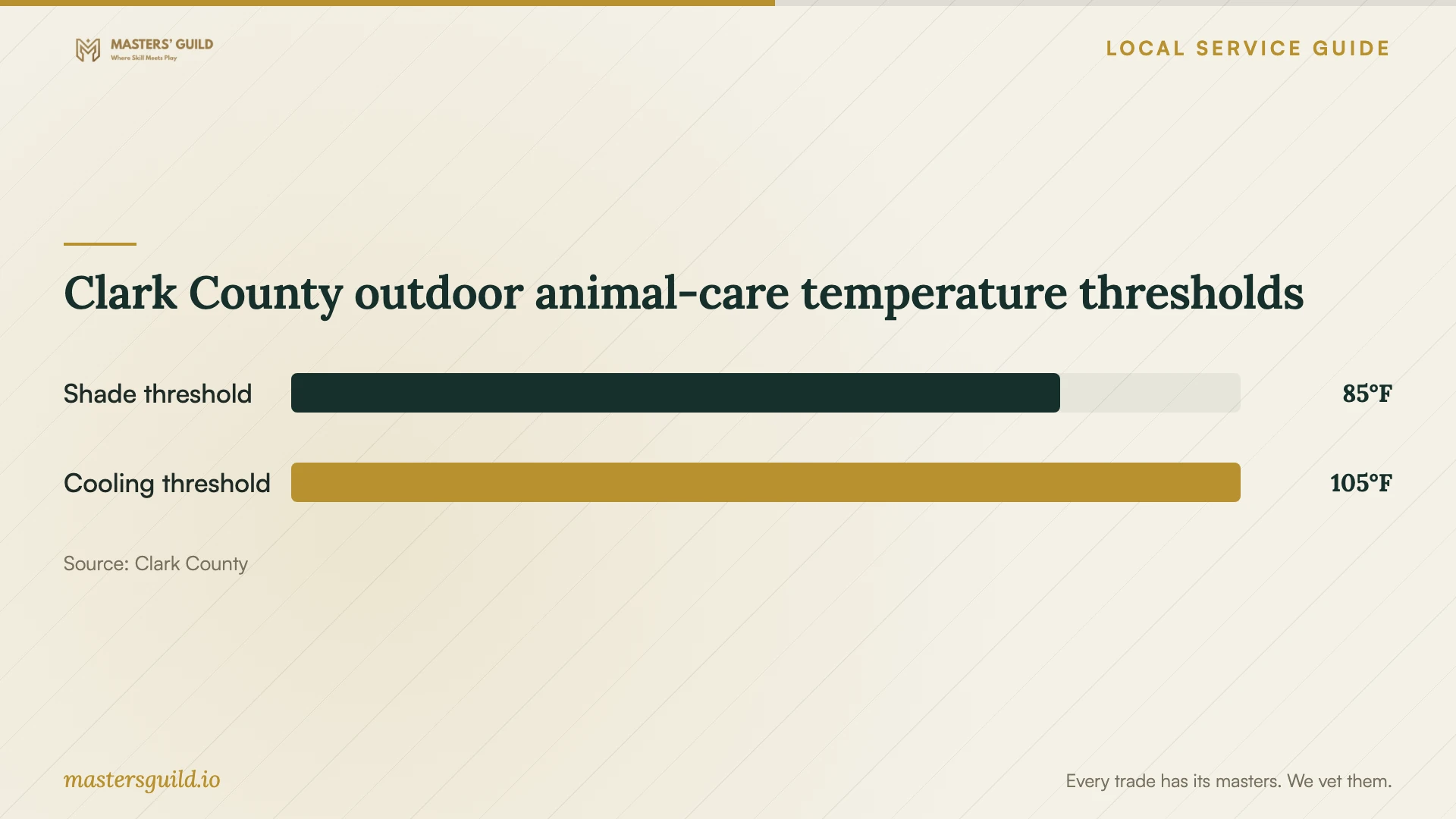
Clark County outdoor animal-care temperature thresholds
Local details that affect your job
County training checks need a transition-date question
As of October 16, 2026, Clark County’s transition period for existing pet-service owners and employees is still underway. Ask a provider serving unincorporated Clark County whether they have completed training or which deadline applies. The county sends a confirmation email after successful completion. Avoid treating the February 4, 2027 deadline as permission for an existing owner to wait past an earlier business-license renewal. [2]
Wetlands Park outings need a specific route
Ask a walker proposing Wetlands Park to name the trail. Dogs cannot enter the 210-acre Nature Preserve. The park identifies Duck Creek trails and the Wetlands Loop Trail as options for leashed pets outside the preserve, and trails open from dawn to dusk. Arrange another location for an after-sunset walk; the city’s heat advice does not override park hours. [1] [4]
County outdoor care requires more than a water refill
For outdoor care in unincorporated Clark County, the county requires access to water at all times, adequate shade above 85°F, and supplemental cooling during a National Weather Service heat advisory or when temperatures are expected to exceed 105°F. Ask how the sitter will meet those conditions, and specify indoor care in your instructions where appropriate. The county also limits walking leashes to six feet. [3]
Match the arrangement to the care task
| Your need | Arrangement to discuss | Confirm before booking |
|---|---|---|
| Feeding and home checks | Drop-in visits | Completed duties, arrival window and time with your pet |
| Exercise and toilet breaks | Scheduled walks | Route, handling equipment and heat substitution |
| Company through the night | Overnight sitting | Arrival, departure, daytime absences and extra visits |
| Medication support | Caregiver willing to follow veterinary instructions | Dose demonstration, records and escalation plan |
| Wetlands Park outing | Designated trails outside the Nature Preserve | Dawn-to-dusk timing and leash no longer than six feet |
Your hiring checklist
- Write the visit schedule, duties and periods of overnight absence.
- Meet the assigned caregiver and demonstrate handling and medication routines.
- Confirm the service jurisdiction and ask about applicable business requirements.
- Agree on heat substitutions, approved routes and transport permission.
- Request insurance evidence and name the backup caregiver.
- Test access and leave veterinary instructions and emergency contacts.
- Confirm the total price, cancellation terms and visit-report format.
Frequently Asked Questions
Can I arrange a midday walk in hot weather?
Discuss an indoor care visit with an essential toilet break instead. The city recommends keeping pets indoors during the hottest hours, especially 10 a.m. to 6 p.m., and scheduling walks early in the morning or after sunset. Agree on the replacement duties before booking. [1]
Must every Las Vegas sitter complete Clark County’s course?
The county says its course requirement applies to businesses operating in unincorporated Clark County. It includes professional pet sitting. Incorporated cities have their own business requirements, so check the service address rather than assuming one rule covers the valley. [2]
What should I ask about an overnight quote?
Ask for exact arrival and departure times, expected absences, included walks or drop-ins, medication duties and the charge for additional coverage. Put your expectations for company and supervision in writing.
Sources and scope
This guide combines the sources below with practical planning guidance. Figures apply to the stated geography and period; request a written quote for your property.