
Local service guide
Lawn Mowing in Las Vegas, NV: Hiring and Scheduling
Arrange Lawn Mowing in Las Vegas by agreeing on the cut, cleanup and visit schedule before accepting a recurring plan. Ask for separate prices for routine mowing, an overgrown first visit and any irrigation work. Give the provider your watering schedule and specify who reports damaged sprinklers or runoff. SNWA limits fall landscape watering to three assigned days per week through October 31, so keep irrigation settings separate from the mowing calendar. [1]
Define the work before comparing quotes
Send each provider the same description: the grass areas to cut, access through gates, slopes, obstacles and the condition of the lawn. Include photos of the whole lawn and close views of difficult edges. Ask the provider to confirm the scope after seeing the property.
Specify whether the visit includes edging along pavement, trimming beside walls and beds, collecting clippings and clearing hard surfaces. Agree on where the provider may leave bagged material. Keep shrub pruning, weed treatment, fertilizing, aeration and irrigation repairs as separate quote items unless you want them included.
Request a per-visit price and the billing terms for a recurring plan. Ask about the first cut, extra disposal, missed visits, cancellation and charges for inaccessible gates. Compare the total for the same scope and frequency; leave room to approve additional work before the provider starts.
Set a mowing schedule you can revise
Ask the provider to identify the grass and propose a cutting height before choosing weekly or biweekly visits. For an overgrown lawn, request a first-visit plan and a separate price. Agree on how the provider will notify you if the lawn needs a different interval or an additional cut.
Keep the mowing appointment separate from permission to water. SNWA allows landscape irrigation Monday through Saturday during May through August, but prohibits it from 11 a.m. to 7 p.m. During September and October, SNWA limits landscape watering to three assigned days per week. A mowing visit does not change those irrigation restrictions. [1]
Ask whether the provider will check the lawn before each cut and contact you about standing water or damaged sprinkler heads. Decide how you will approve a skipped visit and whether the provider will charge for it. Put seasonal frequency reviews in the agreement so you can discuss the next interval before billing changes.
Assign responsibility for sprinklers and brown patches
SNWA recommends checking sprinklers each week, keeping grass clear of spray patterns and leveling sprinkler heads with the surrounding ground. Ask whether your mowing provider includes visual checks or only cuts the grass. Require a message or photo when the provider notices a broken head, blocked spray or water leaving the property. [1]
Ask for an irrigation assessment before approving extra watering for brown patches. SNWA identifies sprinkler faults as the cause of most brown spots, including blocked spray, mixed head types, spacing and pressure problems. Have the provider describe the observed fault and quote any repair apart from routine mowing. [1]
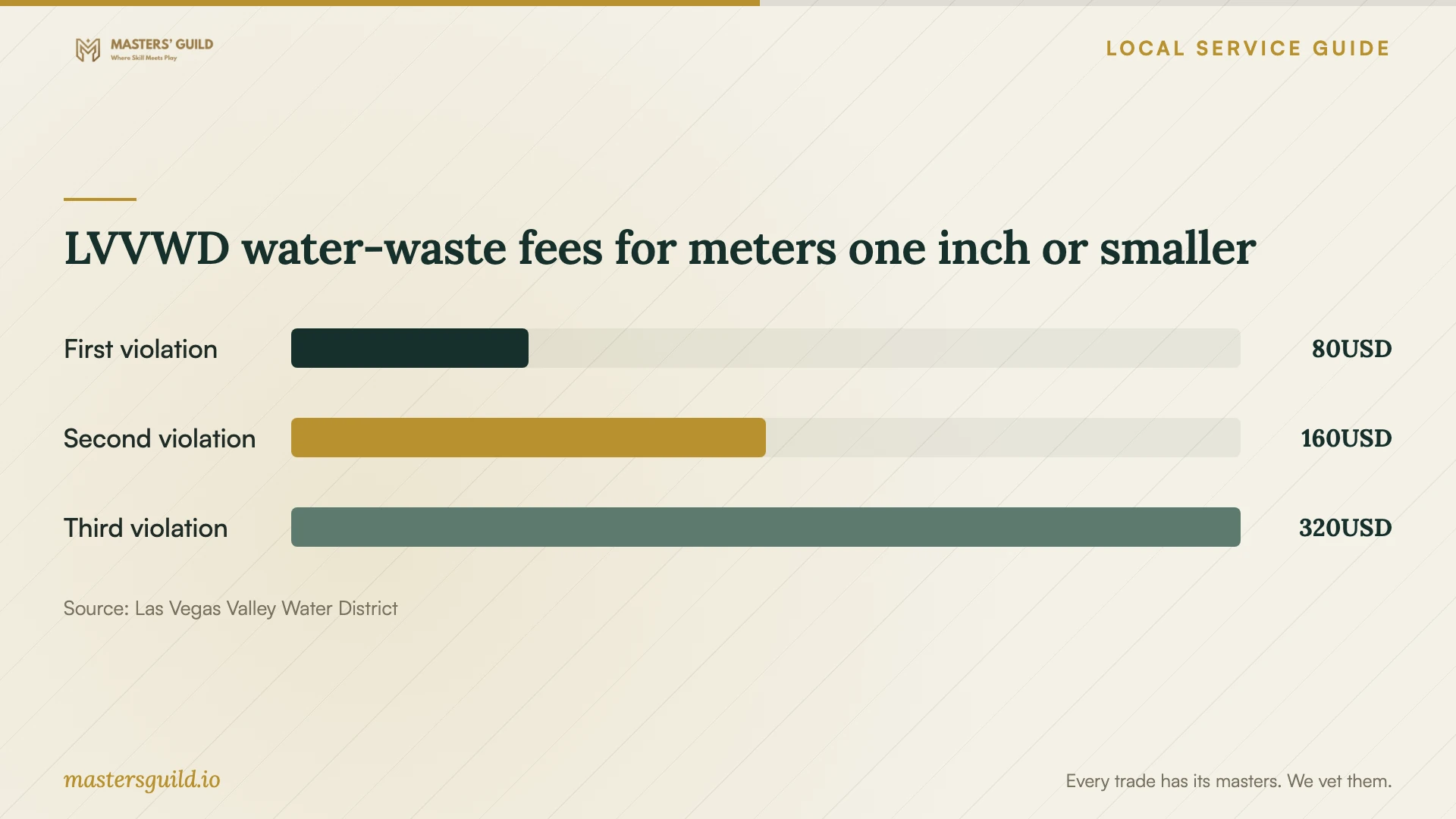
For customers in the Las Vegas Valley Water District service area, water-waste fees depend on meter size, violation history and drought stage. The published table starts at $80 for a first violation on a meter of one inch or less. If the provider will operate irrigation, specify who may change settings and who must report runoff. [4]
Choose seasonal extras for a stated reason
Ask the provider to explain the problem before adding a lawn treatment. SNWA says compacted soils are common in the Las Vegas Valley and recommends September or October aeration to improve water penetration. If the provider proposes aeration, request a separate scope and price, and ask how they will protect irrigation equipment. [1]
Before renewing maintenance for shared grass, establish who owns and manages it. SNWA includes certain HOA-managed areas without recreational benefit in its nonfunctional-turf definition. Its 2027 restriction concerns irrigation with Colorado River water delivered by member agencies. Ask the association to confirm the status and maintenance plan for common turf. [3]
LVVWD water-waste fees for meters one inch or smaller
Local details that affect your job
Prepare for the fall-to-winter watering change
As of October 16, 2026, SNWA tells residents to water grass on their three assigned days through October 31. Its winter guidance limits sprinkler irrigation to one assigned day per week. Give your provider your assigned days and agree who will update the controller before winter; do not let a recurring mowing appointment determine watering days. [1] [2]
Separate private yard grass from common-area turf
SNWA says the 2027 nonfunctional-grass irrigation law does not apply to single-family front and back yards. It does cover qualifying nonfunctional turf on commercial, multifamily and other properties, including certain HOA-managed areas. For your own existing yard, plan mowing around the lawn you intend to keep. For common areas, obtain the association's turf decision before arranging ongoing service. [3]
Match the service scope to your lawn
| Your situation | Request | Confirm before agreeing |
|---|---|---|
| You want routine upkeep | A mowing quote with edging and cleanup itemized | Cutting height, frequency, clipping handling and cancellation terms |
| The lawn is overgrown | A separate first-visit plan and price | How the provider will handle the cut and obtain approval for extra work |
| You see brown patches | An irrigation assessment before extra watering | SNWA identifies sprinkler faults as the cause of most brown spots |
| You manage HOA common grass | Confirmation of turf status before a recurring commitment | Certain HOA-managed turf falls within SNWA's nonfunctional-turf definition |
Your hiring checklist
- Send photos and identify every grass area included in the quote.
- Confirm gate access, pet arrangements and obstacles before the first visit.
- Record the proposed cutting height and visit interval.
- Specify edging, trimming, clipping handling and hard-surface cleanup.
- Separate the first-cut price and optional treatments from recurring mowing.
- Give the provider your assigned watering days and name the person responsible for controller changes.
- Agree on damage reporting, extra-work approval, skipped visits and cancellation.
Frequently Asked Questions
Should I choose weekly or biweekly mowing?
Ask the provider to recommend an interval after identifying the grass, reviewing its current growth and proposing a cutting height. Agree on a review point and the price for each frequency. Avoid choosing the interval from the per-visit price alone.
Does a mowing visit include sprinkler repairs?
Include repairs only if you want them in the written scope. Ask whether the provider will inspect, report or repair sprinkler problems, and require approval for repair charges. SNWA recommends weekly sprinkler checks, which you should assign to yourself or a provider. [1]
Must I remove my existing single-family lawn before 2027?
SNWA says the 2027 nonfunctional-grass irrigation restriction does not apply to single-family front and back yards. Confirm ownership if the grass forms part of an HOA-managed common area, because SNWA includes certain common-area turf in its nonfunctional-turf definition. [3]
How much should I budget for mowing?
Obtain written quotes for your grass area, access, current condition and requested cleanup. Ask for the recurring per-visit charge, first-cut charge and optional work as separate items. The utility fees shown here concern water waste and provide no estimate of mowing prices. [4]
Sources and scope
This guide combines the sources below with practical planning guidance. Figures apply to the stated geography and period; request a written quote for your property.