
Local service guide
Gardening in Las Vegas: Hiring and Care Planning
Arrange Gardening in Las Vegas with a written scope covering cleanup, plant care, irrigation checks, and any chemical treatment. Compare quotes for the same tasks and assign responsibility for care between visits. Before approving weed spraying, check treatment credentials: Nevada requires a pest control license for anyone applying pesticides for hire, including herbicides. [3]
Define the work before comparing quotes
Walk through the yard and name the result you want in each area: weeds removed from gravel, shrubs pruned, a vegetable bed prepared, or replacement plants installed. Mark plants to retain. Separate the initial cleanup from recurring visits so you can compare matching scopes.
Request a total for the agreed work and separate amounts for plants, amendments, irrigation parts, and hauling. For hourly work, clarify whether the rate covers one worker or the crew. Set a spending limit for extras and agree on access, gate security, and debris removal.
Request proof of liability insurance. If the gardener proposes chemical treatment, check the credentials for that work. Nevada requires a pest control license for paid application of pesticides, including insecticides, herbicides, and fungicides. [3]
Include an irrigation inspection
Have the gardener run each irrigation zone and identify broken lines, clogged emitters, blocked spray, and runoff. SNWA advises checking drip lines and emitters and keeping lawn watering separate from tree and shrub schedules. Record controller changes before the gardener leaves. [2]
For scorched leaves, request an assessment before approving more water. SNWA identifies both overwatering and underwatering as possible causes of leaf damage and also points to improper fertilization. Have the gardener explain the diagnosis and proposed adjustment. [1]
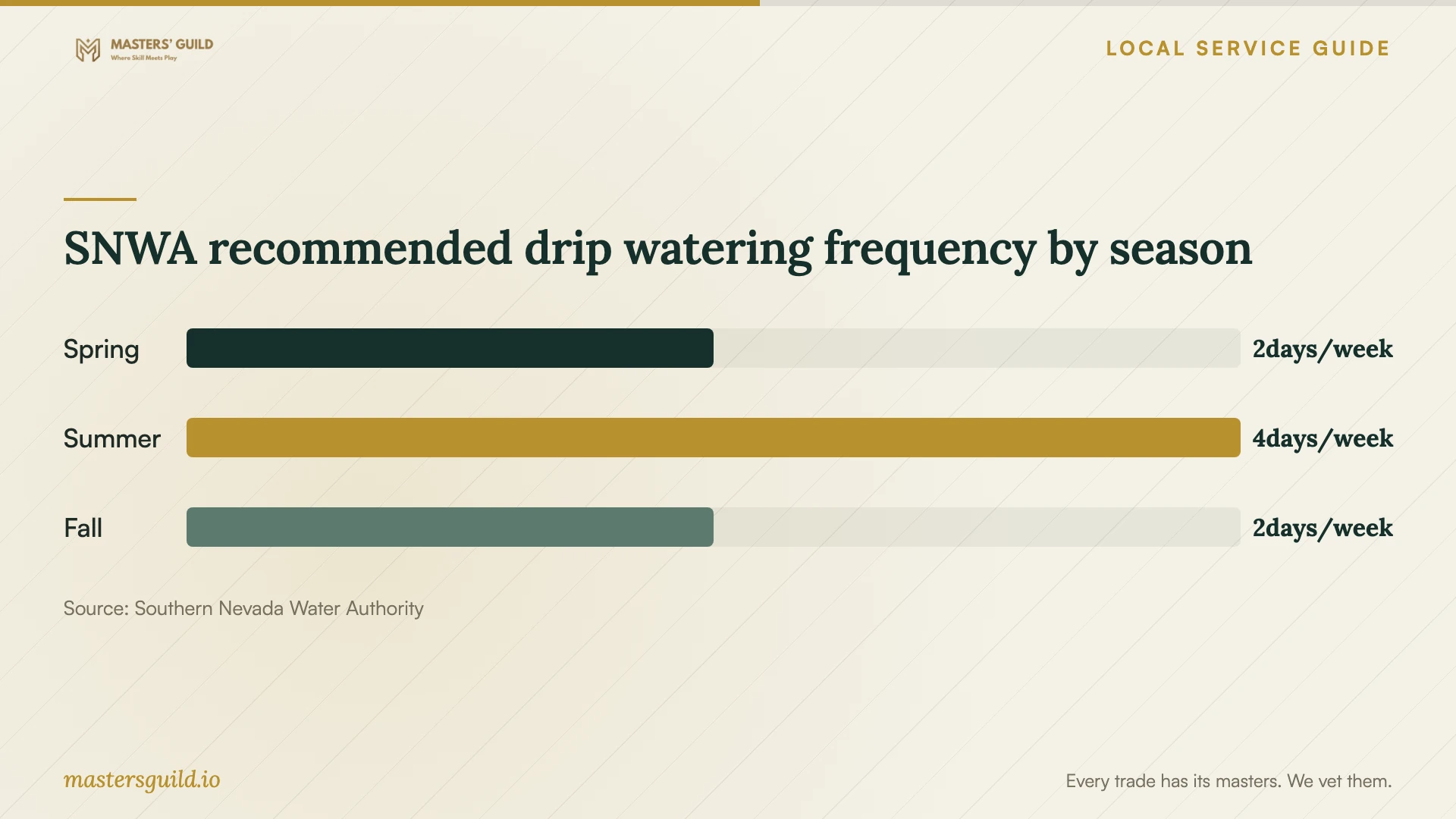
Use the drip-frequency chart to discuss settings, rather than copying it into the controller without checking conditions. SNWA bases drip runtime on emitter flow, soil type, and weather. Include emitter identification and an explanation of each zone's settings in the visit. [2]
Plan planting and follow-up together
For planting work, request names, quantities, placement, and care instructions. SNWA provides a first-eight-week establishment schedule for low-water-use and desert-adapted plants. Have the gardener identify which plants fit that guidance and provide separate instructions for other selections. [1]
SNWA allows extra watering for new plants during the first 14 days. That exception does not cover the entire eight-week establishment period. After week eight, SNWA advises checking drainage and signs of stress and watering based on need. Assign responsibility for those checks and confirm how the care plan fits current restrictions. [1]
Name the plants and extent of pruning you approve. SNWA identifies late winter, when trees and shrubs are mostly dormant, as the ideal pruning time and advises finishing heavy pruning by mid-February before buds swell. Have the gardener explain any proposed heavy pruning outside that timing. [1]
For a vegetable bed, request an assessment of compaction and a reason for each proposed amendment. UNR Extension's 1987 Southern Nevada checklist discusses salty, alkaline soils and compaction. Use this older publication as background for a site assessment rather than an automatic fertilizer or sulfur prescription. [5]
Set boundaries for weed treatment
Write down whether the gardener will pull weeds, use tools, or apply herbicide. Nevada requires licensing for anyone applying pesticides for hire. A restricted-use pesticide certificate alone does not authorize someone to offer paid pest control. [3]
Check which category covers the treatment. Nevada lists landscape weed control under C6. C1 covers specified ornamental and turf pest and disease treatments and plant regulators. Request credentials that match the proposed service. [4]
Before approving an application, request the product name, target weed or pest, treatment area, and label-based precautions for people, pets, and edible plants. Require approval before substitutions or expansion of the treatment area.
SNWA recommended drip watering frequency by season
Local details that affect your job
Distinguish sprinkler assignments from drip limits
For September 1 through October 31, SNWA's seasonal guidance limits sprinkler watering to three assigned days per week; winter sprinkler watering drops to one assigned day. Its dedicated drip guidance permits watering on any day subject to seasonal day-count limits and recommends two days per week in fall. Seasonal summaries also contain Sunday restrictions. Confirm applicable days, including Sunday eligibility, with your water provider for your property and irrigation type before changing the controller. Assign responsibility for the winter adjustment. [1] [2]
Protect mature trees during lawn removal
SNWA warns that removing turf can disturb tree roots and remove the water source supplied by lawn sprinklers. Before approving grass removal around mature trees, request root protection and replacement irrigation. SNWA recommends avoiding trenching beneath the canopy and supplying drip water beneath the canopy out to the drip line. [1]
Check fall vegetable timing before purchasing
UNR Extension's 1987 Southern Nevada checklist gives August 10 through October 10 as its fall vegetable planting window. An October 16 planting falls beyond that published window. Have the gardener assess the crop, variety, and choice of seeds or transplants before you buy. The older checklist does not establish suitability for planting every listed crop at this point in the season. [5]
Match the request to the work
| Your need | Scope to request | Before approving |
|---|---|---|
| Overgrown beds or gravel | Weeding, plant identification, and debris removal | Specify hand removal or herbicide; paid pesticide application requires Nevada licensing. |
| Scorched plants | Watering and fertilizer assessment | Check the cause before adding water; excess and insufficient watering can damage leaves. |
| Low-water-use or desert-adapted planting | Planting and an establishment plan | SNWA gives an eight-week schedule for these plants; drainage and stress checks follow week eight. |
| Lawn removal near trees | Root protection and replacement irrigation | Agree on tree watering before removing sprinkler coverage. |
Your hiring checklist
- Send yard photos and mark plants to retain or remove.
- Separate cleanup, pruning, planting, and irrigation inspection in the scope.
- Request itemized materials and hauling charges.
- Set an approval limit for extra work.
- Specify hand weeding or chemical treatment and check relevant credentials.
- Agree on gate access, debris removal, and completion criteria.
- Record controller settings and assign between-visit plant care.
Frequently Asked Questions
How much should I budget for a gardener?
Request a property-specific quote using photos or a walkthrough. Compare matching cleanup, pruning, materials, and hauling scopes. For recurring care, separate the initial visit from later maintenance and clarify charges for extra work.
Should drip irrigation follow the lawn schedule?
SNWA recommends separate schedules. Drip systems deliver water more slowly and should run longer but less often than sprinklers. Runtime depends on emitter flow, soil, and weather. Confirm watering-day rules for your property and system type. [2]
Can a gardener spray weeds during cleanup?
Paid herbicide application requires a Nevada pest control license. Check authorization for the proposed work; the state identifies C6 as the landscape weed-control category. A restricted-use pesticide certificate alone does not authorize paid pest control. [3] [4]
What should I receive after planting?
Request the plant list, care instructions, controller settings, and responsibility for follow-up. For low-water-use and desert-adapted plants, discuss SNWA's eight-week establishment schedule. Keep the first-14-day extra-watering exception separate from that longer care plan. [1]
Sources and scope
This guide combines the sources below with practical planning guidance. Figures apply to the stated geography and period; request a written quote for your property.