
Local service guide
Las Vegas concrete work: Hiring and Planning
Arrange concrete work in Las Vegas by defining the intended use, confirming the property’s jurisdiction and comparing written bids for the same scope. Before commissioning a driveway extension or RV pad, check whether the proposed parking use meets city rules. The city limits front-yard vehicle parking and storage on single-family residential lots and ties approved driveways to applicable curb-cut requirements. [1] [2]
Define the work and budget
Prepare a sketch and photographs before inviting bids. Mark proposed edges, doors, gates, existing paving and places where you have observed standing water. Describe the intended use: walking, outdoor furniture, passenger vehicles or RV storage. Have bidders explain how their proposed preparation and slab specifications suit that use.
For damaged concrete, have the contractor explain why they recommend repair, leveling, partial replacement or full removal. Include uneven edges and drainage concerns in that discussion. Compare the proposed remedies and their limits before choosing a surface treatment or authorizing demolition.
Obtain site-specific bids to set your budget. Separate demolition and disposal, excavation and base preparation, concrete placement, reinforcement, finish and drainage changes. Have bidders identify allowances for conditions they cannot inspect before removal, along with how they will price additional work.
Confirm approvals before demolition
The City of Las Vegas directs applicants to confirm city jurisdiction first. Its permit page offers application routes with and without plans, a fee estimator, permit-status lookup and inspection scheduling. Describe the exact project to city staff and confirm which application route and reviews apply. [1]
City staff provide permit-application assistance at 702-229-6251. Explain whether you intend to replace a slab, expand paved space or change the street connection. The city identifies planning, zoning and engineering review as possible steps before construction, so resolve the applicable reviews before committing to a pour date. [1]
Assign responsibility for applications, fees and inspection arrangements in the contract. Have the contractor identify approvals needed before demolition and inspections needed before placement. Keep the approved scope and permit records with your agreement.
Check qualifications and compare complete bids
The Nevada State Contractors Board organizes licenses by work classification. It lists A-16 for paving streets, driveways and parking lots and identifies concrete contracting within its specialty classification framework. Give the Board your project scope and confirm which classification and limitations to check rather than choosing from a company’s advertising. [3]
Collect the contractor’s license number, evidence of insurance and a written agreement naming the business responsible for the work. Discuss comparable projects and who will supervise preparation and placement. Include responsibility for damage to adjacent paving, irrigation and landscaping.
Compare dimensions, slab thickness, base preparation, reinforcement, joint layout, finish and drainage direction across bids. Use a sketch to clarify elevations and transitions. Include written change-order terms so you can review additional work and its price before authorizing it.
Plan access, weather decisions and return to use
Walk the equipment and delivery route with the contractor. Check gate clearance, vehicle relocation, access to the house and protection for nearby surfaces. Confirm whether the price includes pumping or other placement arrangements if the truck cannot reach the work area.
Agree on weather conditions that would change the placement schedule, the curing method and who maintains protection after the crew leaves. Get written instructions for walking, moving furniture and driving on the slab, with project-specific dates for each use.
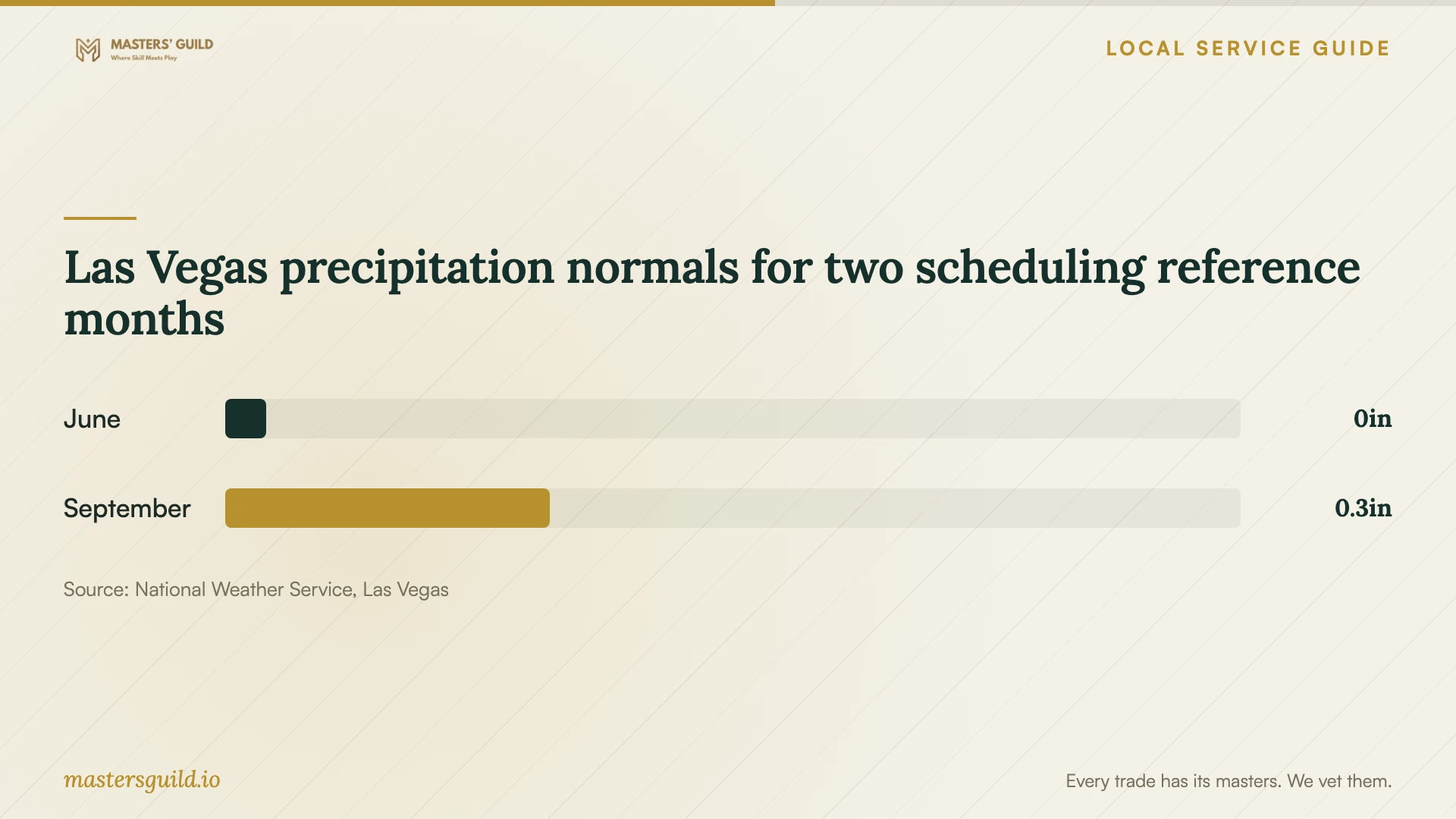
The National Weather Service publishes Las Vegas precipitation normals of 0.04 inches for June and 0.32 inches for September for 1991–2020. Use these as historical context, then review the workday forecast with the contractor before confirming placement. [4]
Las Vegas precipitation normals for two scheduling reference months
Local details that affect your job
Confirm jurisdiction before choosing the application route
Start with the city’s jurisdiction check. For properties within its jurisdiction, the City of Las Vegas provides separate application routes for permits requiring plans and those without plans. Call 702-229-6251 with the address and proposed scope to confirm the process before assigning permit costs and responsibilities in the bid. [1]
Check the parking footprint before widening a driveway
For single-family residential lots, the city code limits front-yard vehicle storage or parking to 50 percent of the front-yard area, subject to its exceptions. It defines an approved driveway through compliance with applicable city curb-cut requirements. Have city staff review the proposed parking footprint and street connection before finalizing a widening layout. [2]
Check RV zoning, length and lot size before ordering a pad
For RVs, trailers or combinations stored or parked outside a completely enclosed building, the city permits front-yard storage or parking only in R-E, R-D or R-1 zoning districts, subject to additional conditions. For that outdoor front-yard storage or parking, the code prohibits a unit exceeding 24 feet in length on a lot of 0.2 acres or less. Give planning staff the zoning, lot size, vehicle length and proposed location to check all additional storage conditions before sizing the concrete. [2]
Choose the next step for your project
| Project | Resolve before hiring | Include in the bid |
|---|---|---|
| Driveway widening | Check front-yard parking limits and applicable curb-cut requirements with the city. | A dimensioned parking footprint and street connection. |
| Front-yard RV pad | Ask the city to check zoning, lot size, vehicle length and all conditions for storage outside a completely enclosed building. | A layout using the confirmed location and vehicle dimensions. |
| Patio or walkway | Confirm the application route and reviews for the exact scope with the permit office. | Finished elevations, drainage direction, access and surface finish. |
| Repair or replacement | Have the contractor explain the proposed remedy and its limits. | Separate repair and removal scopes, disposal and adjacent-surface work. |
Your hiring checklist
- Photograph the site and sketch dimensions, intended use and observed drainage concerns.
- Confirm jurisdiction and the approval process for the exact project.
- Resolve parking footprint, RV storage and street-connection questions before finalizing the layout.
- Confirm the appropriate license classification with the Contractors Board.
- Compare bids with matching preparation, reinforcement, drainage, finish and access specifications.
- Assign responsibility for fees, inspections, disposal and adjacent-property protection.
- Agree on change-order terms and written curing and return-to-use instructions.
Frequently Asked Questions
How do I check whether my concrete project needs a permit?
Confirm the property’s jurisdiction, then describe the exact work to the responsible permit office. For a property within city jurisdiction, call 702-229-6251 to confirm whether a permit, plans or other reviews apply before scheduling demolition or placement. [1]
Can I pave the front yard for more parking?
Have the city review the intended parking use before approving a layout. For single-family residential lots, the code limits front-yard vehicle parking or storage to 50 percent of that area, subject to exceptions. Approved driveways must also comply with applicable city curb-cut requirements. [2]
Which Nevada contractor license classification should I check?
Give the Contractors Board the exact scope and confirm the appropriate classification and limitations. The Board lists A-16 for paving streets, driveways and parking lots and includes concrete contracting within its specialty classification framework. [3]
How should I compare bids with different prices?
Have bidders price the same scope. Compare removal, base preparation, thickness, reinforcement, drainage, finish, access and cleanup. Resolve omissions and allowances before comparing the total price for the work you intend to authorize.
Sources and scope
This guide combines the sources below with practical planning guidance. Figures apply to the stated geography and period; request a written quote for your property.