
Local service guide
Las Vegas basement remodeling: Planning and hiring
For basement remodeling in Las Vegas, confirm your parcel’s permitting jurisdiction, define the intended room use and compare at least three written bids from appropriately licensed contractors. Verify each contractor’s classification and monetary limit before signing. The city provides a parcel-number jurisdiction check because much of the valley falls outside city boundaries. [1] [5]
Define the rooms before choosing finishes
Describe your intended use: family room, office, exercise space, bedroom or separate living area. Prepare a measured sketch showing proposed rooms, fixtures, storage and equipment access. During each site visit, ask the bidder to identify assumptions that need a designer’s review.
For a bedroom, ask the designer and responsible building department to confirm emergency escape and rescue requirements before settling the layout. The city lists regional detail B-112 for emergency escape and rescue openings. Have your designer confirm its application to your project. [2]
If you intend to create a separate rental or living unit, disclose that use when discussing planning approvals. Request confirmation of whether the proposed use is allowed and which approvals you need. Keep that response with the drawings.
Confirm jurisdiction, permits and existing conditions
Use the city’s parcel-number check to establish jurisdiction, then contact the responsible building department about your scope. CLV EPLAN describes planning applications, including zoning matters. Confirm the building-permit route with the building department before submitting a planning application. [1]
The city lists its adopted 2024 residential, existing-building, plumbing, mechanical and energy codes, plus the 2023 electrical code, as effective January 2026. For a property within city jurisdiction, ask your designer to identify the applicable editions and amendments in the proposal. [2]
Show the contractor stains, odors, cracks, previous repairs and any history of water entry. Request separate scopes for investigation, repairs and finishing. Ask for a review of ceiling clearance, stairs, electrical capacity, bathroom drainage, ventilation and equipment access before authorizing coverings.
For a contractor-led project, the Nevada State Contractors Board advises having the contractor obtain any required building permit before work starts. Agree on who will schedule inspections and supply the completion records. [5]
Build a budget from comparable proposals
Build your budget from written proposals based on an inspection of your basement. The Contractors Board recommends at least three written bids using accurate plans or drawings. It cautions that a substantially lower bid may contain a mistake or omit work that other bidders included. [5]
Request separate prices for design, permit handling, demolition, repairs, framing, electrical work, plumbing, heating and ventilation, finishes and cleanup. For a bathroom or structural alteration, ask for a separate option so you can decide whether to include it.
Record who supplies fixtures and which selections remain undecided. For each allowance, state the amount, what it covers and how the contractor will charge for a different selection. For concealed conditions, agree on an investigation step and written approval before additional work proceeds.
Verify the contractor’s business name, license status, classification and monetary limit. The Board explains that the classification must fit the work and that contractors have limits on the value of contracts they can undertake. Record who will perform the specialty work. [5]
Plan testing, construction and handover
Include radon testing in preparation for regular basement use. In its real estate testing guidance, University of Nevada, Reno Extension describes placing a test in the lowest level that could receive regular use, including unfinished space. Ask a qualified tester how to coordinate testing with construction and the intended room layout. [4]
Request a schedule that separates design, permit review, purchasing, construction and inspections. Record the selections you must make before each stage. Agree on dust control, material delivery, household access and utility interruptions.
Use a signed contract stating the scope, materials, price, start date and completion period. The Contractors Board recommends a payment schedule, warranty terms and written change orders signed by both parties. Keep permits, inspection records, payment records and lien releases in your project file. [5]
Walk through the finished space with the contractor and write a punch list, as the Board recommends. Agree on completion dates for outstanding items. Collect product instructions, warranty information and the agreed inspection documentation before closing your project file. [5]
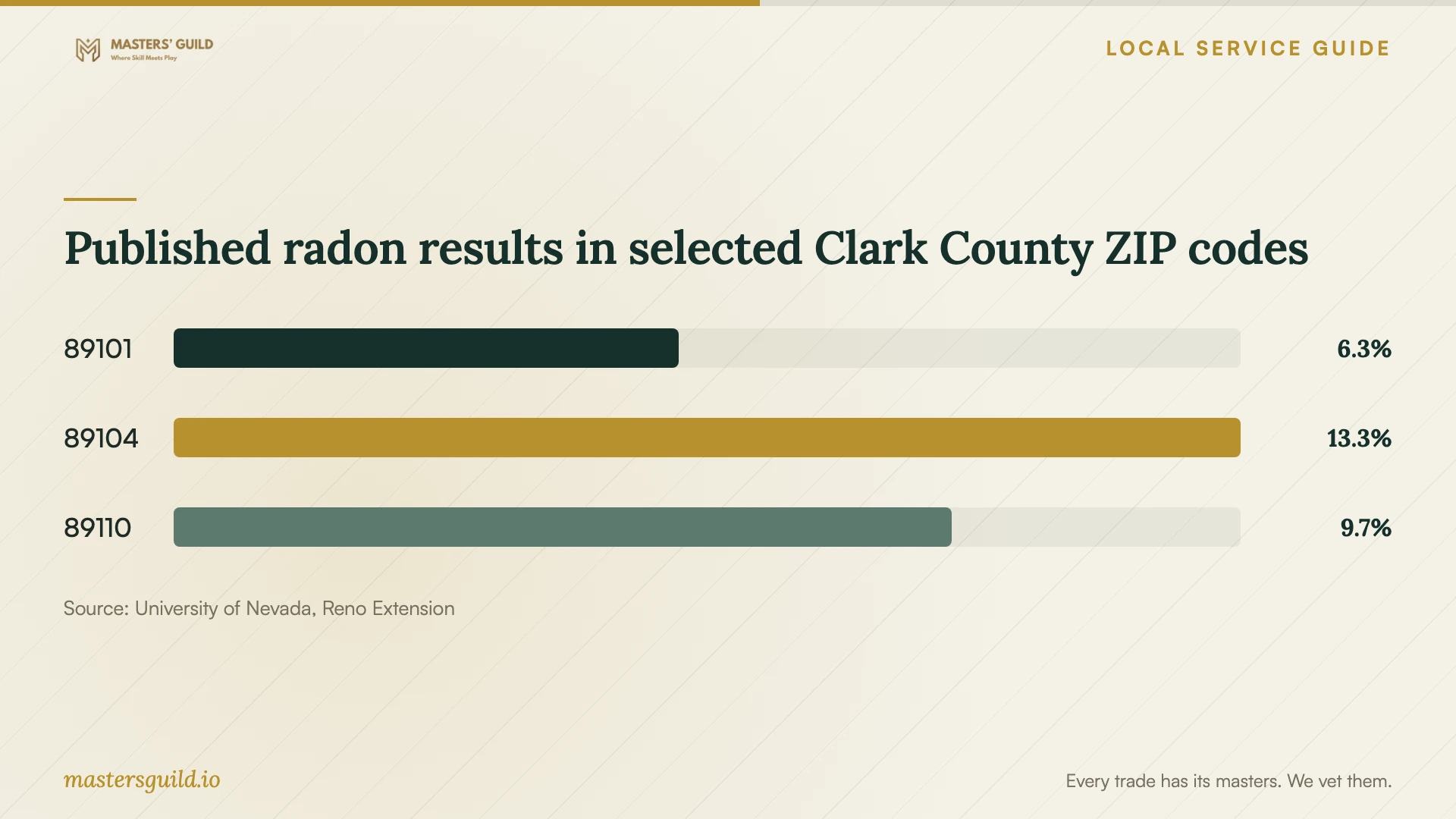
Published radon results in selected Clark County ZIP codes
Local details that affect your job
Check the parcel before paying for permit drawings
The city warns that a large portion of the Las Vegas valley falls outside its jurisdiction. Its CLV EPLAN page offers an Assessor’s parcel number check. Establish the responsible department first, then ask that department which drawings and application route your remodel requires. [1]
Specify the current city code basis
For properties within city jurisdiction, ask the designer to identify the applicable code editions and amendments. The city lists January 2026 as the effective date for its adopted package, including the 2024 IRC and 2023 NEC. Request a current review before reusing an older remodel’s details. [2]
Use county radon data to plan a property test
Extension publishes Clark County radon results by ZIP code. The chart draws from that dataset; the separate testing publication supplies placement guidance rather than independent corroboration of the results. Arrange testing for your home before committing to the occupied-space plan. [3] [4]
Choose the next step for your basement
| Your situation | Next step | Request before proceeding |
|---|---|---|
| Uncertain property jurisdiction | Use the parcel-number jurisdiction check | Confirmation of the responsible department |
| Proposed bedroom | Request a project-specific escape and layout review | Drawings addressing applicable requirements |
| Proposed bathroom | Ask bidders to inspect the plumbing route | A separate plumbing scope and price |
| Substantially lower bid | Compare the scope against other written bids | An explanation of exclusions and allowances |
| Planned regular basement use | Arrange a home radon test | Placement instructions and a documented result |
Your hiring checklist
- Record your parcel number and confirm the responsible permitting department.
- Prepare a measured sketch with intended room uses and proposed fixtures.
- Photograph existing conditions and list previous leaks or repairs.
- Ask the designer to review bedroom escape, stairs and equipment access.
- Coordinate radon testing with the planned basement use.
- Compare written scopes, allowances, exclusions and optional work.
- Record permit responsibility, inspection stages and change approval.
- Agree on payment records, lien releases and handover documents.
Frequently Asked Questions
Does a Las Vegas address mean I apply to the city?
Confirm the parcel jurisdiction first. The city states that much of the valley lies outside its boundaries and provides a parcel-number check on its CLV EPLAN page. Contact the responsible building department about your remodel. [1]
Which contractor credentials should I check?
Verify the business name, license status, classification and monetary limit. The Nevada State Contractors Board advises checking that the classification covers the work and the monetary limit covers the contract. Ask for the specialty contractors’ details too. [5]
Can the ZIP-code chart tell me whether my basement needs mitigation?
You need a result from your home to assess its radon concentration. The chart summarizes published tests in selected county ZIP codes. Extension’s testing guidance accounts for the lowest level that could receive regular use, including unfinished space. [3] [4]
How should I handle changes during construction?
Require a written change order signed by you and the contractor, as the Contractors Board recommends. Record the changed work, price and schedule before authorizing it, then keep the signed document with your contract. [5]
Sources and scope
This guide combines the sources below with practical planning guidance. Figures apply to the stated geography and period; request a written quote for your property.