
Local service guide
Pest Control in Laredo, TX: Hiring and Treatment
For Pest Control in Laredo, compare written proposals from several companies, verify the business's Texas Structural Pest Control Service license, and request a total that includes applicable tax. Agree on the identified pest, treatment area and follow-up terms before booking. For termite treatment, obtain the state-required disclosures with the bid and review the warranty before approving work. [1] [2] [3]
Identify the pest and inspection limits
Send photographs and describe where you see activity. List affected rooms, outdoor areas and previous treatments. Tell each company whether you want help with a current problem or a prevention plan, then request proposals for the same scope.
For suspected termites, have the inspector explain the evidence. TDA identifies mud shelter tubes as a possible sign of subterranean termites. Drywood termites can leave wings and waste resembling sawdust. If you find swarmers, save several in a plastic bag for the inspector. [1]
A Texas wood-destroying insect inspector examines accessible areas for visible evidence without dismantling objects. TDA explains that this inspection does not guarantee the absence of hidden insects or assess structural damage. Discuss a separate repair assessment if you need to understand damaged framing or other building components. [1]
Verify credentials and match the service scope
Texas Department of Agriculture's Structural Pest Control Service licenses and regulates professionals who apply pesticides in and around structures. Request the business's license details and confirm its status with the regulator. TDA states that an expired business cannot operate until the agency renews and issues its license, even if the business has paid a late fee. [2]
Request the inspector's name and ask about training and experience with your identified pest. TDA recommends comparing several termite companies because prices, treatment options and contract terms can vary. [1]
Have each company describe the treatment area, proposed method, included return visits and response if activity continues. Clarify what an ongoing agreement commits you to, how you cancel it, and which visits cost extra. Keep the proposal and treatment records together for follow-up.
Compare the complete bill
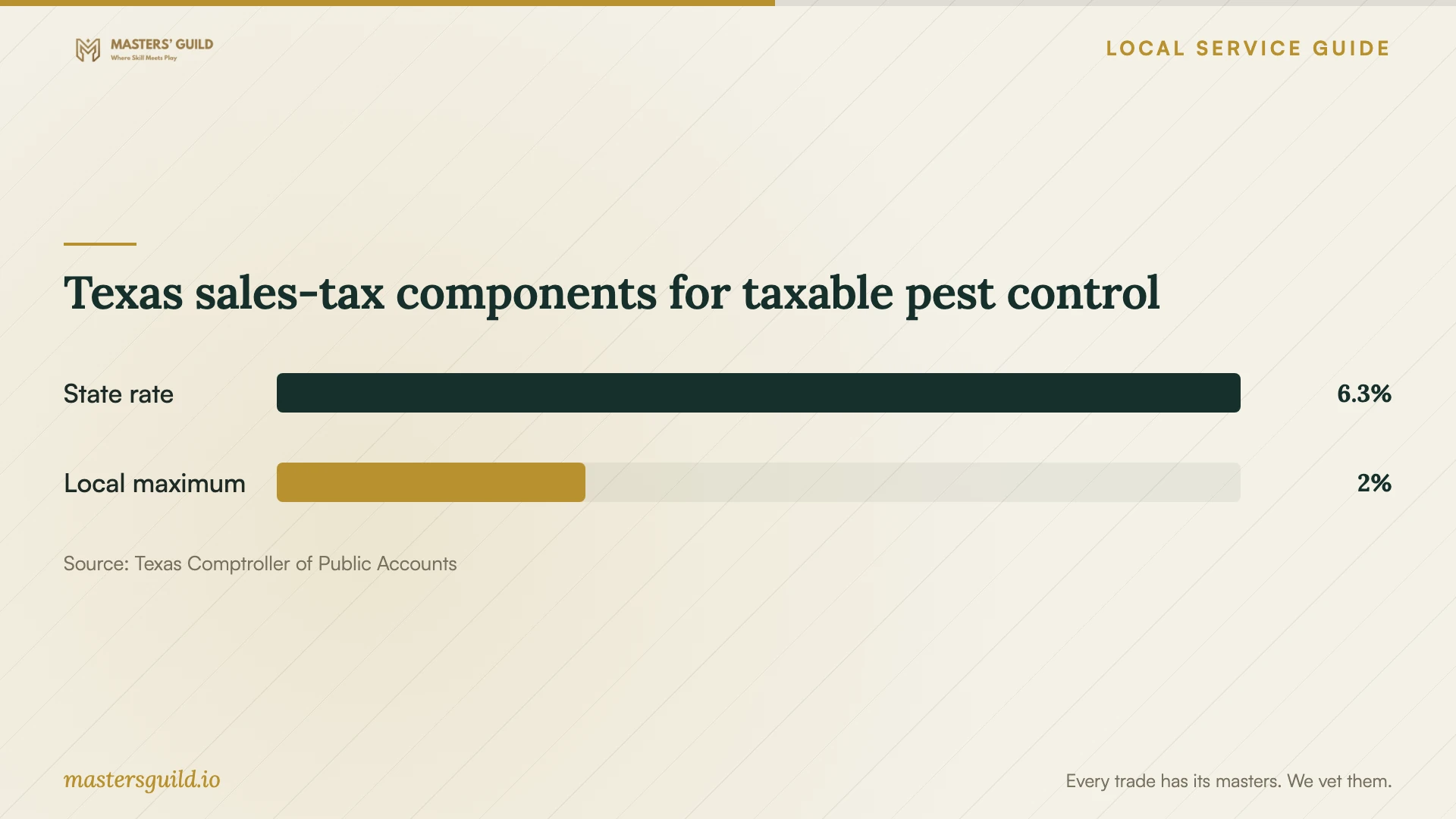
Texas requires providers to collect sales tax on structural pest control services, including inspections when no pests are found. The Comptroller also lists pest-control reports, recommendations, estimates and related extended warranties as taxable. Request the complete amount, including applicable tax and related fees. [3]
The Comptroller lists live-trap animal removal and non-pesticidal animal barriers among nontaxable services. For a mixed invoice, the provider must separately state taxable and nontaxable charges to collect tax only on the taxable portion. The nontaxable service must also be distinct, identifiable and a type the provider commonly supplies by itself. Separate invoice lines alone do not make exclusion work nontaxable. [3]
Have the provider explain how each proposed service meets those conditions. Compare the initial bill and the full agreement cost, including renewals and optional visits. Match coverage before comparing a single treatment with an ongoing service agreement.
Review termite documents before approving treatment
Texas requires the proposing company to provide termite treatment disclosures with its bid and before treatment. The package must include a structure diagram, the proposed pesticide label and concentration, warranty details, treatment definitions, and approval from a certified applicator or technician licensed in the termite category. [1]
Compare the diagram with the areas you expect the company to treat. Check the warranty's duration, renewal options and cost, covered areas, and homeowner obligations. TDA requires the company to explain its retreatment or damage-repair obligations and conditions that could void coverage. [1]
Tell the termite company about planned construction, excavation or landscaping near an existing treatment barrier. TDA identifies barrier disruption as a possible basis for subterranean termite retreatment. It prohibits annual retreatment without qualifying evidence of reinfestation or barrier disruption. Clarify whether a renewal covers inspection, monitoring or another pesticide application. [1]
Arrange preparation, access and return
Request written preparation and re-entry instructions for the proposed treatment before booking. Discuss children, pets, aquariums and any health concerns. Confirm which rooms, cupboards, gates or storage areas the technician needs to access and who will move belongings.
For fumigation, agree on arrangements for leaving and returning home. TDA requires a certified applicator to be present when the company releases the gas and when it releases the house for occupancy after fumigation and aeration. [1]
Texas sales-tax components for taxable pest control
Local details that affect your job
Apply Texas mixed-service tax rules to exclusion quotes
For a Laredo home, have the provider explain the tax treatment of animal removal, barriers and pesticide work before you compare totals. Texas lists live trapping and non-pesticidal animal barriers as nontaxable services. On a mixed invoice, qualifying nontaxable work must be distinct, identifiable, commonly supplied by that provider on its own, and separately stated from taxable work. Itemization alone does not establish eligibility. [3]
Get Texas termite disclosures at the bid stage
Texas requirements apply to termite proposals for your Laredo property. Obtain the disclosure package with the bid, then compare the treatment diagram and warranty coverage before approval. If the warranty excludes part of the treated structure, the company must identify the covered areas. Resolve any mismatch between the diagram, your requested scope and the warranty before signing. [1]
Choose your next step
| Situation | Next step | Question to resolve |
|---|---|---|
| Uncertain pest identity | Request identification before approving treatment. | What evidence supports the diagnosis? |
| Possible termite damage | Arrange an accessible-area inspection and discuss a separate repair assessment. | Which areas remain inaccessible, and who will assess structural damage? |
| Animal removal plus pesticide work | Request separate charges and confirm that proposed nontaxable work is distinct, identifiable and commonly supplied by the provider on its own. | How does each service qualify? Itemization alone does not establish nontaxable treatment. |
| Excavation near an existing termite barrier | Discuss possible barrier disruption with the termite company. | Does the work affect treatment protection or warranty obligations? |
| Termite treatment proposal | Review the required disclosures with the bid. | Which areas, retreatments and damage repairs does the warranty cover? |
Your hiring checklist
- Photograph activity and list affected rooms and outdoor areas.
- Gather previous inspection reports, treatment records and warranties.
- Confirm the business license with Texas Structural Pest Control Service.
- Request matching scopes and totals that include applicable tax.
- Have the provider explain mixed-service tax eligibility and itemization.
- Compare included visits, renewal charges and cancellation terms.
- Obtain preparation, access and re-entry instructions.
- Review termite treatment disclosures before approving work.
Frequently Asked Questions
Do I need recurring service?
Have the company explain the purpose and scope of each proposed visit. For subterranean termites, Texas prohibits automatic annual retreatment without qualifying evidence of reinfestation or barrier disruption. Clarify whether recurring charges cover inspections, monitoring or pesticide applications. [1]
Will I pay tax if the inspector finds nothing?
Texas requires sales tax on structural pest inspection services even when the inspector finds no pests. Confirm the inspection charge and applicable tax before the appointment. [3]
How do I handle an unresolved termite treatment complaint?
Discuss the issue with the company first. If you cannot resolve it, contact Texas Structural Pest Control Service. TDA advises preserving visible damage and avoiding another treatment before its inspector investigates. The agency cannot compel damage payments or settle contractual disputes. [1]
Sources and scope
This guide combines the sources below with practical planning guidance. Figures apply to the stated geography and period; request a written quote for your property.