
Local service guide
mold removal in Laredo, TX: Hiring and Planning
For mold removal in Laredo, identify the moisture source, compare written scopes and verify Texas mold credentials before hiring. If you hire a licensed remediator, arrange for an independent mold assessment consultant to prepare the protocol before cleanup. Texas restricts assessment and remediation on the same project, including shared ownership between the firms. [1] [3]
Start with the moisture problem
Tell the assessor where you see growth, notice a musty odor or recall a leak. TDLR advises inspecting hidden areas when mold or musty odors are present. Its guidance calls for correcting the moisture problem, removing growth and keeping the home dry. Painting over mold or applying bleach to affected drywall without removing the source does not provide a lasting solution. [1]
Before the visit, photograph affected surfaces and gather leak-repair invoices. Ask which areas the assessor intends to inspect and whether anyone needs to open a wall. Request a separate moisture-repair scope and name the person responsible for completing it. Before authorizing reconstruction, agree on how the team will check the cleanup and moisture repairs.
Choose independent assessment and cleanup providers
Check the proposed assessor and remediator through TDLR using their names and license numbers. Texas requires licenses for non-exempt assessment and remediation. The Attorney General warns that a person cannot own an interest in both firms doing those jobs on the same project. Ask each provider to disclose its role and any ownership connection. [1] [3]
Arrange the protocol before cleanup. TDLR says a consultant who did not prepare a remediation protocol in advance cannot later declare that the project achieved clearance. A consultant without that prior role may inspect the property afterward and sign the limited assessor certification stating that the property does not contain evidence of mold damage. That certification differs from clearance under a previously prepared protocol. [1]
Discuss sampling before paying for it. TDLR says identifying mold species is generally unnecessary and that no standards establish an acceptable quantity of indoor mold. If the consultant proposes sampling, ask what decision the results will inform and what interpretation criteria the consultant will establish before taking samples. [1]
Compare scope, price and proposed dates
For regulated remediation, Texas consumer guidance describes an assessment that identifies work areas, material quantities, cleanup methods and clearance criteria. The remediator then prepares a work plan and gives the owner a copy before starting. Ask bidders to price the same assessment scope so you can compare what they include. [3]
Get property-specific written bids to budget for cleanup. Request separate prices for assessment, containment, removal, disposal, clearance, moisture repairs and rebuilding. Ask who pays for another clearance visit if the first inspection finds unfinished work. Put exclusions and the process for approving work on hidden damage in writing.
For work requiring notification, Texas consumer guidance describes at least five days of advance notice, except in emergencies. TDLR allows the mold licensee to determine whether delay would increase contamination from water damage. For that emergency route, the contractor or company must submit notification by the following working day after identifying the emergency. [2] [3]
Define completion before authorizing work
For licensed remediation, identify who will conduct the post-remediation assessment and which criteria they will check. Texas consumer guidance says the licensed remediator must give the owner a remediation certificate within ten days after completing remediation. The certificate includes an assessor’s statement and indicates whether the team fixed the underlying cause. [3]
Exempt cleanup by unlicensed workers does not qualify for a remediator-issued Certificate of Mold Damage Remediation. TDLR describes a separate option: a licensed assessment consultant may inspect and complete the limited assessor certification portion of the form. Discuss the documentation you need before choosing an exempt cleanup route. [1]
Keep water-damage repairs on a separate completion list. The Attorney General explains that the remediation certificate covers mold removal rather than other water-damage repair. Its guidance also advises withholding full payment until you inspect satisfactory completed work and retaining the assessment, contract, certificate and photographs. [3]
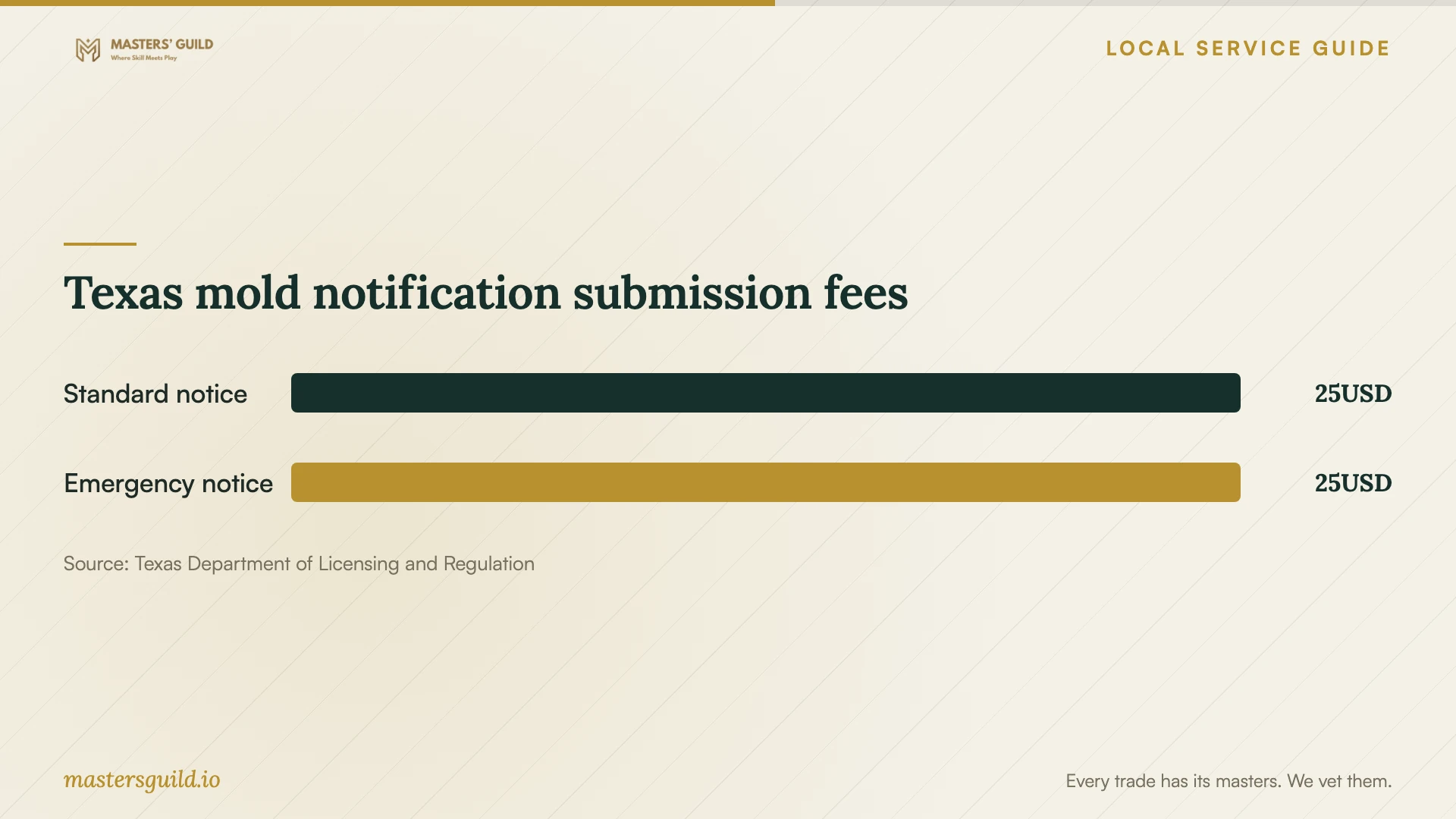
Texas mold notification submission fees
Local details that affect your job
Texas requirements for a small licensed job
For a Laredo homeowner hiring a licensed mold remediation contractor, an affected area below 25 contiguous square feet does not remove the contractor’s obligations. TDLR requires a work plan following a licensed assessment consultant’s protocol, although that small project does not require notification. Before accepting a small-area cleanup proposal, ask the bidder to identify its license status and explain any claimed exemption. These are statewide requirements applicable here, rather than separate municipal rules. [1]
Texas notification affects scheduling and quote review
For a non-exempt project reaching 25 contiguous square feet of contamination, ask the contractor to identify the notification date and proposed work dates. TDLR publishes a $25 notification fee and requires amendments for specified schedule or personnel changes. Ask whether a quoted administrative charge includes other contractor services. These statewide filing requirements apply in Laredo; the published fee does not establish a cleanup price. [1] [2]
Choose your next step
| Situation | Next step | Source-backed reason |
|---|---|---|
| Visible growth or musty odor | Arrange an inspection and moisture investigation. | TDLR recommends inspecting the home, including hidden areas. |
| A proposal includes species testing | Ask how the results will change the work. | TDLR says identifying mold species is generally unnecessary. |
| A licensed contractor offers a small cleanup | Request the consultant’s protocol and contractor’s work plan. | Licensed remediators must follow the rules below 25 contiguous square feet. |
| Licensed remediation has finished | Request the assessment findings and remediation certificate. | Texas guidance requires a certificate with an assessor’s statement for licensed remediation. |
| Exempt unlicensed cleanup has finished | Discuss a separate inspection with a licensed assessment consultant. | Unlicensed workers cannot issue a remediation certificate; a consultant may provide the limited assessor certification after inspection. |
Your hiring checklist
- Photograph affected surfaces and gather previous leak-repair records.
- Write down affected rooms, odors and previous cleanup attempts.
- Request provider names, license numbers and insurance documentation.
- Identify the independent assessment consultant and remediation contractor.
- Request itemized prices, exclusions and written approval for changes.
- Agree on access, containment boundaries and occupant arrangements.
- List clearance, moisture repairs, rebuilding and final documents as separate completion steps.
Frequently Asked Questions
Can the same provider assess and remove the mold?
Texas prohibits a provider from performing both roles on the same project, apart from the school-district exception TDLR describes. The Attorney General also identifies restrictions on shared ownership between the assessment and remediation firms. [1] [3]
Does a small affected area remove licensing requirements?
Texas has exemptions, including a minimum-area exemption for unlicensed persons handling less than 25 contiguous square feet. A licensed remediator must still follow the rules on a smaller job. Ask the provider to explain the exemption it proposes to use. [1]
Will homeowners insurance pay for remediation?
Review your policy and the proposed costs with your insurer. Texas consumer guidance warns that some policies exclude mold remediation or limit coverage. Confirm which assessment, cleanup and repair costs your policy covers before agreeing to the work. [3]
Sources and scope
This guide combines the sources below with practical planning guidance. Figures apply to the stated geography and period; request a written quote for your property.