
Local service guide
Lighting Installation in Laredo, TX
For Lighting Installation in Laredo, hire a licensed electrical contractor and ask for a written scope covering fixture locations, wiring, controls, access, cleanup and permit responsibility. Texas requires electrical contractors to have a Master Electrician of Record and liability insurance. Before approving new wiring, ask the contractor to confirm the applicable code and permit requirements with the city, because the supplied state and city records identify different code editions. [1] [2] [3]
Define the work before requesting quotes
List each fixture and say whether you want to reuse its location, move it or add a new light. Include the fixture model, dimensions and weight if you have chosen it. Send room photos and ceiling-height information, and ask the electrician to assess the existing wiring, electrical box and support before committing to the installation scope.
For pendants, mark your preferred position relative to the table or counter. For recessed lights, describe the areas you want illuminated and ask the contractor to review access above the ceiling. Identify who will repair and paint any openings. Keep those responsibilities in the quote so you can compare offers for the same finished result.
Check the business behind the installation
Ask for the electrical contractor’s business name and license number, then use TDLR’s license verification option. TDLR requires the contractor’s name, address, phone number and license number on proposals, invoices and written contracts. Match those details to the business you intend to hire. [2]
Request current proof of liability insurance. Texas requires electrical contractors to maintain minimum coverage of $300,000 per occurrence, $600,000 aggregate for property damage and bodily injury, and $300,000 aggregate for products and completed operations. Ask who will supervise the work and who will handle questions after installation. [1]
Check the license category if someone offers lighting work under an appliance-installation license. TDLR says residential appliance installers cannot install luminaires except for specified ceiling-fan light kits and qualifying pool lights. For ordinary hardwired lighting, choose an electrical contractor with personnel licensed for the work. [2]
Resolve permits before setting the installation date
Have the contractor confirm whether your exact scope needs a permit, who will obtain it and whether inspections affect the schedule. TDLR assigns local permitting and code inspections to the authority with jurisdiction; TDLR does not perform those inspections. Ask for the permit number and inspection arrangements when applicable. [2]
For work that involves opening walls or ceilings, agree with the contractor on when repairs can begin. Ask whether the inspector needs access before anyone closes the openings. Include responsibility for inspection scheduling and correction work in the written agreement.
Choose the light and controls together
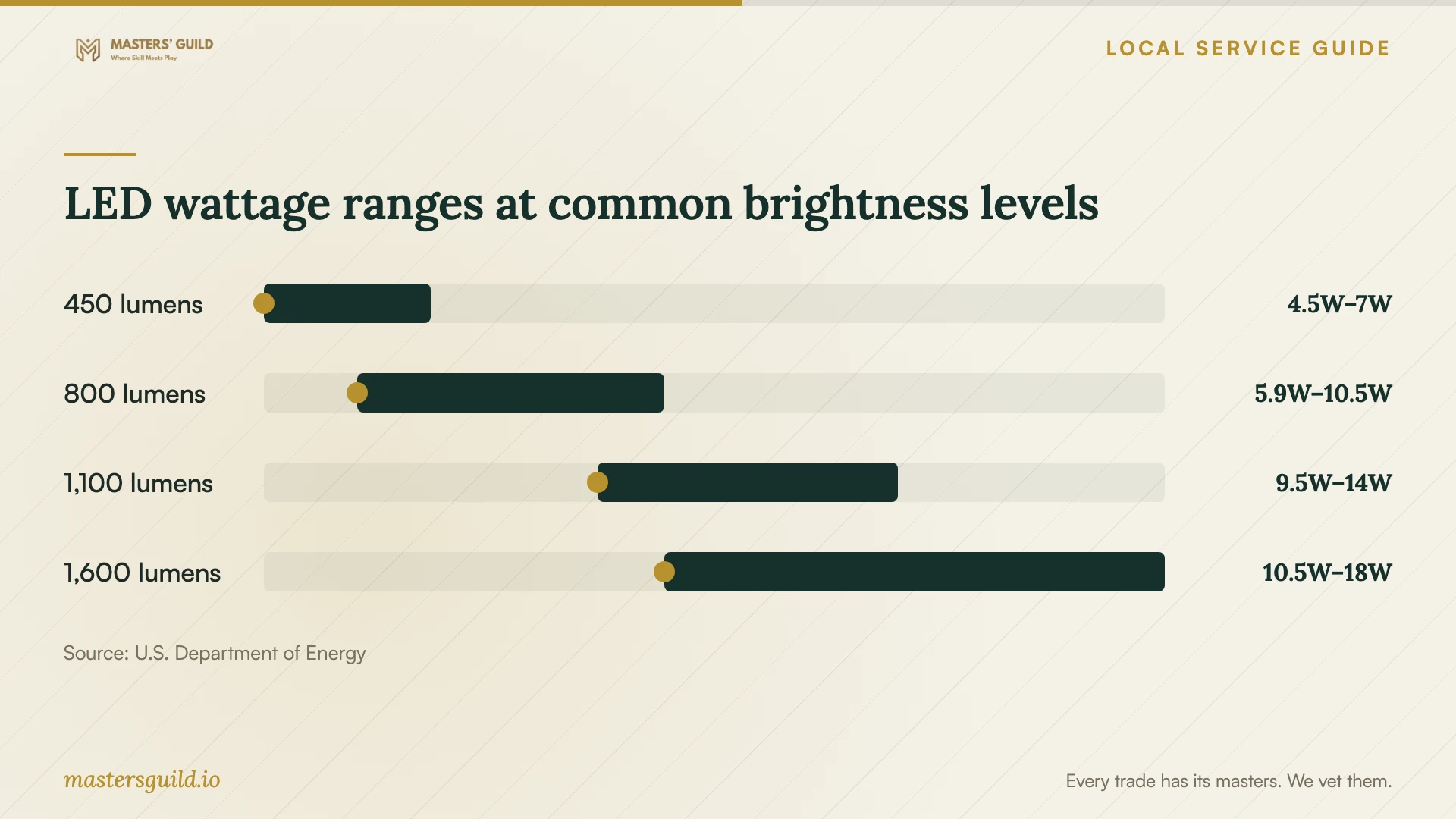
Compare brightness in lumens and power consumption in watts. DOE’s national reference table lists LED power ranges for several brightness levels. Use those ranges to understand bulb choices; they do not establish the number of fixtures your room needs or the price of installation. [5]
For a warm appearance, DOE lists 2,700 K and 3,000 K among typical household lighting choices. Try your preferred color temperature in the room before ordering all the bulbs. Ask the installer to confirm that your chosen LEDs support dimming and match the proposed dimmer, since DOE identifies compatibility as a purchasing check. [5]
Check enclosed-fixture suitability before buying replacement lamps. DOE explains that enclosed fixtures trap heat, which can affect LED performance and life. Read the packaging or technical specifications for approval for that use, and give the contractor the fixture and lamp details before installation. [5]
Compare the complete quote
Ask each contractor to separate fixtures, installation labor, wiring or switch changes, access equipment, permit allowances and surface repairs. Specify whether you or the contractor will supply the lights. Agree on how the contractor will price additional work if the initial assessment reveals a wiring or support problem.
Before accepting the work, walk through each light and control with the installer. Check your chosen dimming range, fixture alignment and switch operation. Keep the invoice, product information and any permit or inspection records together, and confirm whom to contact for workmanship and product warranty questions.
LED wattage ranges at common brightness levels
Local details that affect your job
Confirm the applicable electrical code
Laredo’s file 2024-O-148 names the 2020 NEC in its title and background, but its previous-action paragraph says 2021. TDLR’s compliance guide identifies the state’s adopted code as the 2023 NEC, effective September 1, 2023. These supplied records do not resolve which requirements govern your project. Before approving new lighting wiring, ask the contractor to confirm the applicable edition and local requirements with the city’s inspecting authority. [2] [3]
Treat the proposed permit increase as unconfirmed
Laredo’s file 2026-O-188 proposes raising the electrical permit basic fee from $50 to $60. The fetched record shows Agenda Ready status, no final action and no history entries. It does not establish passage or an effective date. Ask the contractor to confirm the current fee and show the permit allowance in the quote rather than treating either amount as your total permit cost. [4]
Questions to settle for your lighting project
| Your project | Ask before approving | Include in the scope |
|---|---|---|
| Replace a ceiling fixture | Can you reuse the existing box and support? | Assessment, mounting and removal of the old fixture |
| Add recessed lights | Where will wiring run, and what access do you need? | Locations, wiring route and responsibility for ceiling repairs |
| Install a heavy pendant | How will you assess and provide support? | Fixture weight, mounting method and access arrangements |
| Add dimming | Have you checked LED and dimmer compatibility? | Exact lamp and control models |
| Use an enclosed fixture | Do the lamp specifications permit enclosed use? | Approved lamp selection |
Your hiring checklist
- Prepare a fixture list with locations, model numbers and preferred controls.
- Send photos and identify ceiling height and access constraints.
- Check the electrical contractor’s license details and request insurance evidence.
- Get written confirmation of permit responsibility and applicable code requirements.
- Identify who supplies bulbs, dimmers and mounting hardware.
- Agree on pricing approval for additional wiring or support work.
- Include patching, painting, cleanup and inspection scheduling in the scope.
- Test the lights and controls with the installer before accepting completion.
Frequently Asked Questions
How much should I budget for installation?
Request a project-specific written quote. The supplied sources do not establish verified local installation prices. Give each bidder the same fixture list, locations, access information and control choices, and ask them to identify allowances and exclusions.
Does replacing a light require a city permit?
The supplied city records do not establish a fixture-replacement exemption. Ask the contractor to confirm the requirement for your exact scope with the local authority. TDLR says cities retain authority over local ordinances and permit fees. [2]
Can an appliance installer install ordinary ceiling lights?
TDLR limits residential appliance installers’ luminaire work to specified fan light kits and qualifying pool lights. An appliance-installation license alone does not authorize general ceiling-light installation. [2]
Should I keep my existing dimmer when switching to LEDs?
Ask the installer to check the specific lamp and dimmer combination. DOE advises buyers to choose dimmable lamps and confirm compatibility with the dimming system. [5]
Sources and scope
This guide combines the sources below with practical planning guidance. Figures apply to the stated geography and period; request a written quote for your property.