
Local service guide
Legal Document Preparation in Laredo, TX
For Legal Document Preparation in Laredo, ask who will select and draft your documents, whether an attorney will advise you, and who will handle signing and filing. Texas does not authorize a person to prepare legal documents or give legal advice through a notary commission. Request a written scope separating professional charges, notarization, county fees and copies before you hire. [3] [4]
Choose the right person for the document
Describe the outcome you want before requesting a document by name. For example, explain that you want someone to act for you or that you need help with paperwork involving your home. Ask an attorney to address document selection and legal consequences if you need advice. Ask any other provider to explain the precise administrative work they propose to perform and who takes responsibility for legal decisions.
The Texas Secretary of State prohibits notaries from preparing, drafting, selecting or advising on legal documents through their notarial role. Its guidance also says a non-attorney notary cannot choose the type of notarial certificate for you. Arrange those decisions before the signing appointment. [4]
If you prefer Spanish, ask who will explain the document in that language and whether that person is your attorney or an interpreter. Texas guidance warns that a notary public does not have the same authority as a notario público in other countries. Language fluency and notarial authority do not establish authority to give legal advice. [3] [4]
Compare quotes by the work included
Ask each provider to quote the same scope: document names, attorney involvement, draft delivery, review meeting, revisions, signing arrangements and filing assistance. Identify who will receive your questions after delivery. For work involving your home, ask who will check the property description and explain the effect of the proposed document.
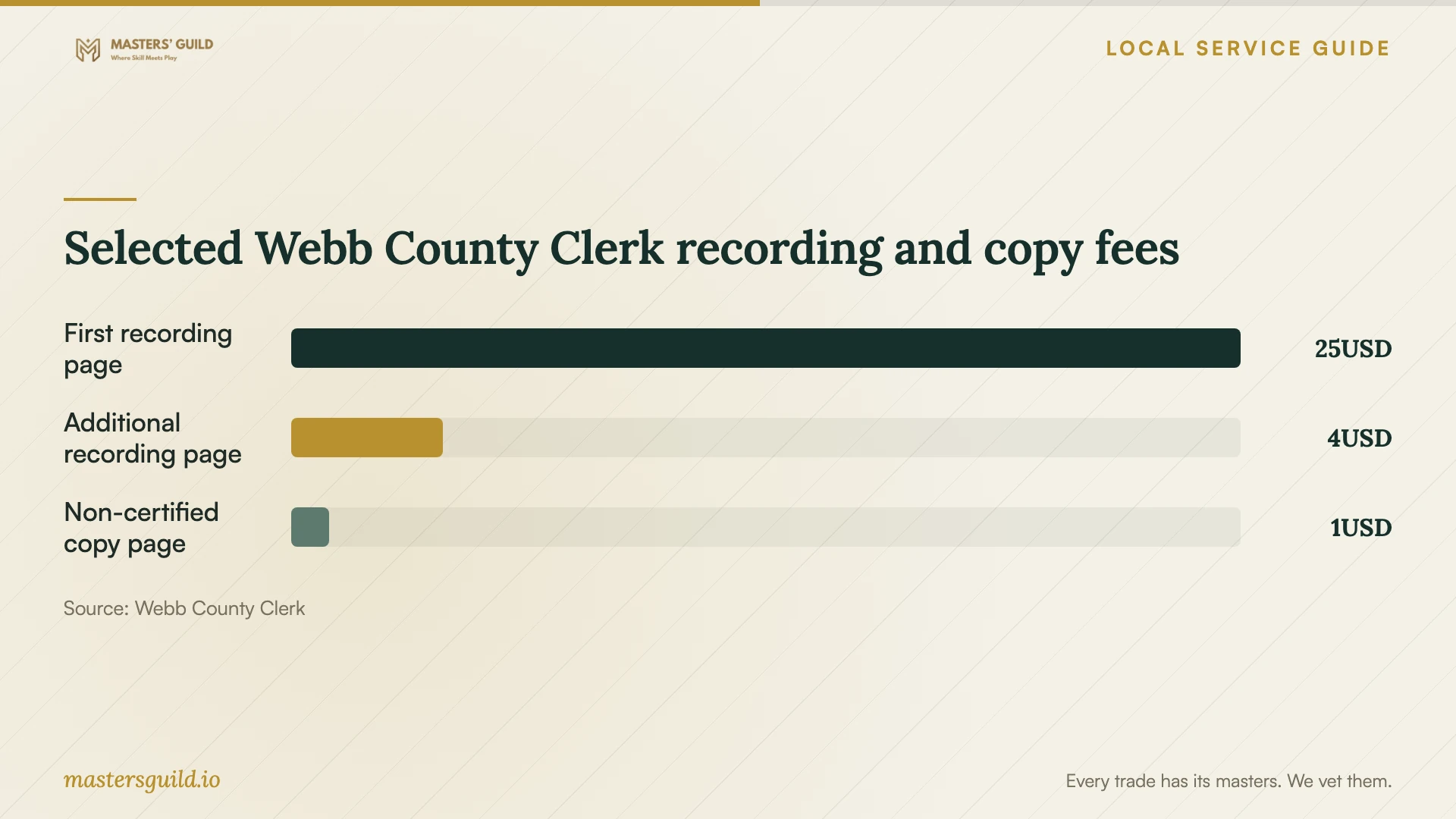
County recording fees, court-copy charges and notarial fees do not establish what a provider will charge to prepare your documents. Get a written professional-services quote rather than treating the county fee chart as a preparation estimate. [1] [2] [4]
Texas lists a maximum acknowledgment fee of $10 for the first signature and $1 for each additional signature. A notary must itemize, or be ready to itemize, notarial charges. Ask the provider to distinguish those charges from other quoted services. [4]
Plan records retrieval before the draft
Ask your provider which existing documents they need and whether informational copies will suffice. Gather the complete prior document, amendments and any relevant case information. Confirm a secure method for sharing personal information and agree on who retains your originals.
For District Clerk case records, include the case number if known, party names, the document description, your contact information and preferred delivery method. If you lack the case number, the office accepts identifying details such as full names, approximate dates and court type. [2]
The District Clerk describes email as the quickest route for non-certified electronic copies and says staff respond to most email requests within 24 hours during normal business hours. Older files and large requests can take longer. Treat that response window as staff review, rather than a promised completion date for your document project. [2]
Agree on signing, filing and final delivery
Before approving the draft, check names, addresses and factual details against your records. Ask the attorney or document issuer to explain the signing instructions and any witness arrangements. Confirm what identification to bring with the person handling the appointment.
For property-record filings, Webb County requires photo identification at filing. The clerk also lists extra charges for problems including a missing grantee address on a conveyance, illegible pages and names missing beneath signatures. Ask who will check these details and cover correction work before submission. [1]
Set separate dates for receiving the draft, reviewing it, signing and submitting it. Ask for a final copy and, when filing forms part of the job, a receipt or recorded copy. Specify whether the quote includes obtaining that copy and responding to a returned submission.
Selected Webb County Clerk recording and copy fees
Local details that affect your job
Property recordings go through the County Clerk
The Webb County Clerk lists its public-records office at 1110 Victoria Street, Suite 201, Laredo, with phone 956-523-4266. Its schedule requires photo ID for property filings and lists a 3% convenience fee for credit or debit card payments. Confirm the filing total and payment method before arranging a visit or authorizing a provider to submit documents. [1]
Court-copy pickup uses a different office and process
The District Clerk lists its Records Division at 1110 Victoria Street, Suite 203, with phone 956-523-4268. Certified copies generally go by mail or will call. State your pickup preference in the request and bring valid photo ID for will call. The office accepts credit cards in person and does not accept telephone payments, so settle payment arrangements before scheduling collection. [2]
Match the next step to your paperwork
| Your situation | Next step | Reason |
|---|---|---|
| You need help choosing a legal document | Arrange attorney advice before the notary appointment. | Texas prohibits a notary acting through that role from selecting or advising on legal documents. |
| You have a completed document needing notarization | Confirm the certificate and ask for itemized notarial charges. | A non-attorney notary cannot choose the certificate; a notary must itemize or be prepared to itemize notarial fees. |
| You need an existing court document | Ask the District Clerk for the required copy type and delivery method. | Non-certified copies generally arrive electronically; certified copies generally go by mail or will call. |
| Your project includes a property recording | Confirm the County Clerk's filing requirements and charges. | Webb County requires photo ID and charges recording fees by page, with specified additional charges. |
Your hiring checklist
- Describe the result you want and ask who will advise on document selection.
- Confirm the name and role of anyone providing legal advice.
- Request a quote separating preparation, legal review, notarization, filing and copies.
- Ask which prior documents the provider needs and whether copies must be certified.
- Agree on language assistance and a secure way to share records.
- Confirm signing instructions, identification and any witness arrangements.
- Assign responsibility for filing, corrections and delivery of final copies.
Frequently Asked Questions
Can a notario público prepare my legal documents?
A Texas notary commission does not authorize legal document preparation or legal advice. The Secretary of State warns that the title does not carry the same authority as a notario público in other countries. Ask whether the person offering advice is an attorney and in what capacity they will work. [3] [4]
Can a notary certify my marriage license copy?
Texas guidance says a notary cannot certify copies of recordable documents such as marriage licenses or birth certificates. Obtain certified copies from the entity holding the record. [4]
How much do electronic District Clerk copies cost?
The published schedule charges $1 for a non-certified electronic document up to 10 pages, then $0.10 per additional page. Certified copies add a $5 certification fee to the copy cost. Ask staff to confirm the total for your request. [2]
Does the county recording fee include preparation?
The County Clerk publishes recording and filing charges, not a professional drafting package. Ask your provider to show preparation and county charges as separate items and identify who will submit the document. [1]
Sources and scope
This guide combines the sources below with practical planning guidance. Figures apply to the stated geography and period; request a written quote for your property.