
Local service guide
Gardening in Laredo: Hiring and Cleanup Guide
Gardening in Laredo starts with a written scope: identify the beds and shrubs to maintain, specify hand weeding or chemical treatment, and decide who removes the debris. Before approving planting, agree on establishment watering. Check city brush-collection eligibility and the applicator’s pesticide credentials before accepting those parts of an offer. [1] [2]
Define the work before comparing offers
Walk the garden with the provider or send photos that show each work area. Mark plants you want to keep and identify weeds you want removed. Describe the result you expect: cleared beds, trimmed shrubs, replacement planting, mulch installation, or a recurring maintenance visit.
Ask the gardener to list labor, plants, mulch, delivery, and debris removal as separate items. For an hourly offer, request an estimated total and a spending limit that requires your approval before further work. For a fixed price, ask which tasks and quantities it covers.
Agree on access through gates, parking, use of your water supply, and cleanup of paths. For recurring work, specify the tasks at each visit and how you will approve extra work. Ask for proof of liability insurance and identify who will perform the job.
Choose a disposal plan before the cleanup
City crews collect clean brush free for residents who pay Laredo residential garbage fees. For commercial customers and residents who do not pay those fees, the city lists a $35 minimum for up to 5 cubic yards, plus $7 for each additional cubic yard or portion. Confirm eligibility and collection arrangements with Solid Waste Services at 956-796-1098. [1]
The city requires brush piles within the right-of-way, accessible from the street, and at least 10 feet from large objects. Crews do not collect from private property. Keep sidewalks, streets, and traffic clear. Ask the gardener to identify a compliant placement area before agreeing to leave brush for city collection. [1]
The city excludes dirt, rocks, concrete, gravel, and whole trees greater than 3 inches in diameter from this collection service. If your cleanup includes these materials, require a separate removal plan and price. Describe the debris in the quote so you do not finish the job with an uncollectible pile. [1]
Separate hand weeding from pesticide treatment
Ask whether weed control means pulling, digging, or applying a product. The Texas Department of Agriculture requires providers who apply pesticides to plants, trees, shrubs, grass, or other horticultural plants for hire to hold TDA licensing, regardless of the pesticide’s classification. [2]
For proposed chemical treatment, request the applicator’s license details, product name, treatment area, and instructions for keeping children and pets away. Ask the provider to explain those instructions before work begins. If you want hand weeding, write that into the scope and require approval before any substitution.
Approve plants together with their care plan
Texas A&M International University’s Webb County plant inventory documents cenizo, desert willow, and Texas wild olive among the area’s plants. Use these as candidates to discuss with a gardener. The inventory records regional occurrence; it does not establish suitability for your bed’s sun, drainage, available space, or maintenance needs. [5]
Request plant names, container sizes, quantities, and proposed spacing before purchase. Have the gardener explain the placement and estimate establishment watering. Assign responsibility for watering between visits and ask what replacement terms, if any, apply if a new plant fails.
The city’s adopted water-conservation amendment sets single-family surcharge thresholds at 20,000 gallons in Stage 3 and 15,000 gallons in Stage 4, with a $10-per-thousand-gallons surcharge when the applicable threshold is exceeded. This ordinance record does not establish the active drought stage. Confirm current restrictions with the utility before approving a watering schedule. [4]
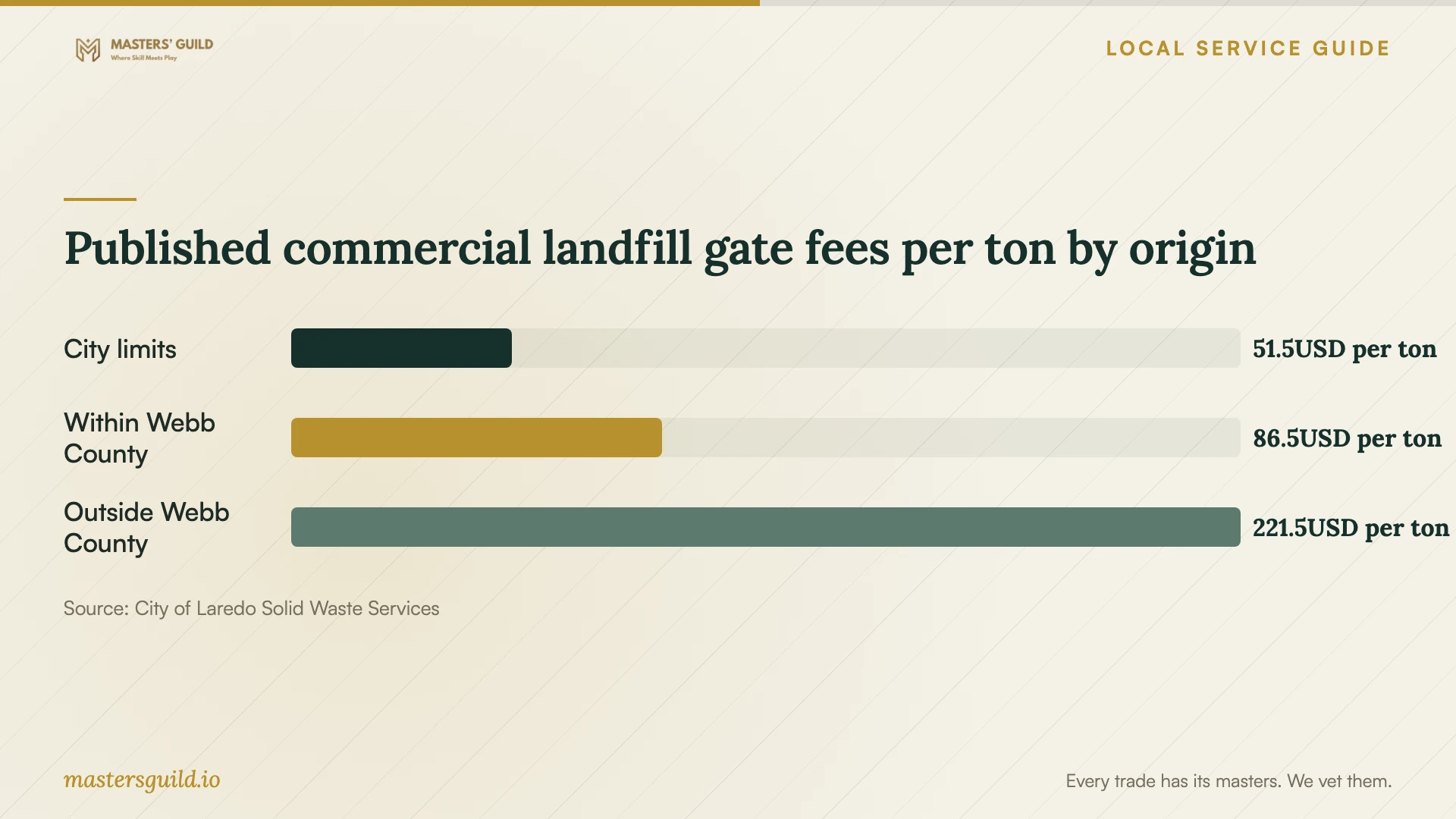
Published commercial landfill gate fees per ton by origin
Local details that affect your job
City brush pickup can change the hauling scope
If you pay city residential garbage fees, ask whether the gardener can prepare eligible clean brush for city collection and quote hauling as an option. Confirm the set-out location first: the city requires street access and 10 feet of clearance from large objects, and it excludes collection from private property. [1]
Planting decisions need a household watering check
Before approving a planting order, compare the proposed watering demand with your household usage and confirm the active drought stage. Laredo’s adopted amendment uses a lower single-family surcharge threshold in Stage 4 than Stage 3. Do not treat the ordinance’s adoption record as a current watering authorization. [4]
Match the provider and scope to your garden
| Your job | Scope to request | Check before accepting |
|---|---|---|
| Bed weeding and light maintenance | Named beds, hand weeding, and cleanup | How the provider identifies plants to keep |
| Shrub cleanup with clean brush | Trimming and a separate disposal option | City collection eligibility and compliant set-out space |
| Cleanup with dirt or rocks | Removal and disposal of those materials | A separate hauling plan because city brush collection excludes them |
| Chemical weed or pest treatment | Treatment area, product, and applicator | TDA licensing for pesticide application to horticultural plants for hire |
| New planting | Plant list, quantities, and care responsibilities | Current watering restrictions and an agreed establishment plan |
Your hiring checklist
- Send photos and mark plants to keep before requesting offers.
- List bed areas, shrub work, plant quantities, and the desired cleanup result.
- Request separate labor, materials, delivery, and disposal amounts.
- Choose hand weeding or request pesticide applicator credentials.
- Confirm debris types and a collection or hauling arrangement.
- Approve a watering plan and assign care between visits.
- Set a spending limit and require approval for added work.
Frequently Asked Questions
How much should I budget for a gardener?
Request a site-specific quote based on the tasks, materials, access, and disposal arrangement. The published local fees below concern landfill disposal; they do not establish gardening labor prices. Compare offers with the same scope and ask for the initial cleanup and recurring visits as separate amounts. [3]
Can the gardener leave brush for city collection?
Agree on that arrangement before work. The city offers free clean-brush removal to residents paying city residential garbage fees, subject to set-out rules and material exclusions. Confirm collection details with Solid Waste Services and identify a compliant location for the pile. [1]
Does a gardener need credentials to spray weeds?
Texas requires TDA licensing for pesticide application to horticultural plants for hire, regardless of pesticide classification. Ask for the applicator’s license details before approving treatment. Specify hand weeding in writing if you want the provider to avoid chemical treatment. [2]
Which plants should I discuss with a local gardener?
Cenizo, desert willow, and Texas wild olive appear in TAMIU’s Webb County inventory. Ask the gardener to assess each candidate against your planting space, sun exposure, drainage, and care plan. Regional occurrence alone does not establish that a plant fits your property. [5]
Sources and scope
This guide combines the sources below with practical planning guidance. Figures apply to the stated geography and period; request a written quote for your property.